

5 Rupees – India
Circulating commemorative coins
Commemoration: 2nd International Crop Science Congress
India
Context

Material
Diameter: 23 mm
Weight: 9 g
Shape: Round
Composition: Copper-nickel
Technique: Milled
Alignment: Medal alignment
flip
References
KM: #Click to copy to clipboard160
Numista: #36791
Value
Exchange value: 5 INR = $0.05
Inflation-adjusted value: 31.53 INR
Obverse
Description:
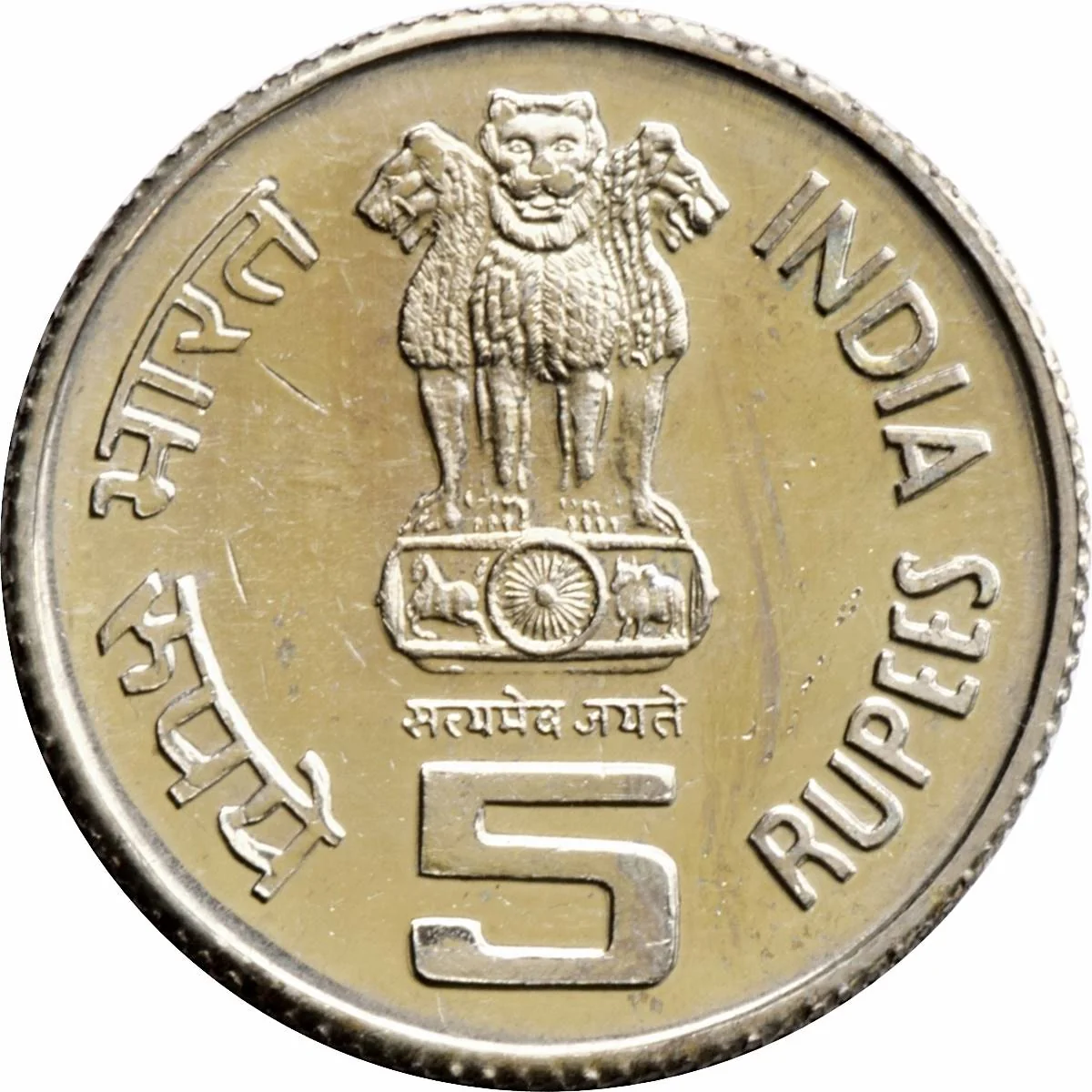
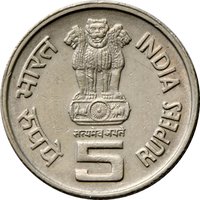
Ashoka pillar with lion capital, value beneath.
Inscription:
भारत INDIA
सत्यमेव जयते
रूपये 5 RUPEES
सत्यमेव जयते
रूपये 5 RUPEES
Translation:
India
Truth Alone Triumphs
Rupees 5
Truth Alone Triumphs
Rupees 5
Scripts: Devanagari, Latin
Reverse
Description:
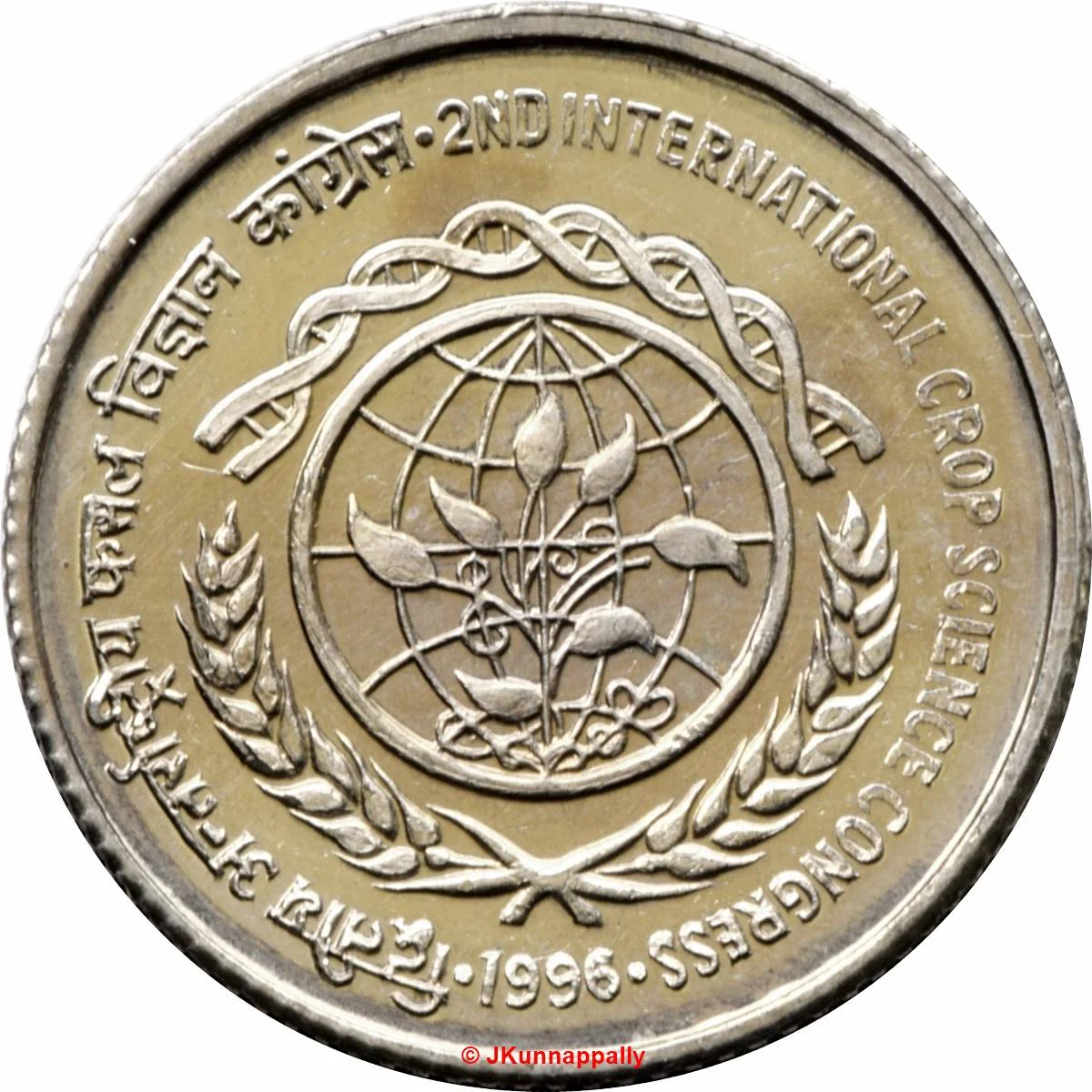
Globe covered in crops, flanked by wheat sprigs below and a DNA double helix above.
Inscription:
दि्वतीय अन्तऱाष्टृीय फसल विझान कांगेॄस
2ND INTERNATIONAL CROP SCIENCE CONGRESS-1996
2ND INTERNATIONAL CROP SCIENCE CONGRESS-1996
Translation:
Second International Crop Science Congress-1996
Scripts: Devanagari, Latin
Edge
Security
Mintings
| Year | Mint Mark | Mintage | Quality | Collection |
|---|---|---|---|---|
| 1996 | 1996-2006 | 11,000 |
Historical background
In 1996, India's currency situation was characterized by a period of relative stability and consolidation following the profound economic reforms initiated in 1991. The Indian Rupee (INR) was operating under a managed float system, where the Reserve Bank of India (RBI) intervened to curb excessive volatility while allowing market forces to influence the exchange rate. This was a significant shift from the earlier pegged regime and helped build foreign exchange reserves, which had recovered from the critical lows that precipitated the 1991 crisis. Inflation, though moderated from previous highs, remained a persistent concern for policymakers, influencing monetary decisions aimed at maintaining macroeconomic stability.
A key feature of the year was the introduction of the "Mahatma Gandhi Series" of banknotes, starting with the ₹10 and ₹500 denominations. This series, which remains in circulation today (with subsequent redesigns), incorporated enhanced security features like intaglio printing, watermarks, and latent images to combat counterfeiting. This redesign was part of a broader, ongoing modernization of India's currency infrastructure. Furthermore, 1996 saw the continued process of "current account convertibility," which had been established in 1994, allowing for freer foreign exchange transactions related to trade and services, thus further integrating India with the global economy.
However, underlying challenges persisted. The fiscal deficit remained high, exerting inflationary pressure and constraining the government's ability to invest in infrastructure. Externally, the East Asian Financial Crisis was brewing, and while its full impact would hit in 1997, it served as a cautionary tale for Indian policymakers about the vulnerabilities of open capital accounts. Consequently, India maintained capital controls, which provided a buffer. Overall, 1996 was a year of cautious progress, where the reforms of the early 1990s were being institutionalized, setting a foundation for future growth while navigating domestic fiscal pressures and emerging global economic uncertainties.
A key feature of the year was the introduction of the "Mahatma Gandhi Series" of banknotes, starting with the ₹10 and ₹500 denominations. This series, which remains in circulation today (with subsequent redesigns), incorporated enhanced security features like intaglio printing, watermarks, and latent images to combat counterfeiting. This redesign was part of a broader, ongoing modernization of India's currency infrastructure. Furthermore, 1996 saw the continued process of "current account convertibility," which had been established in 1994, allowing for freer foreign exchange transactions related to trade and services, thus further integrating India with the global economy.
However, underlying challenges persisted. The fiscal deficit remained high, exerting inflationary pressure and constraining the government's ability to invest in infrastructure. Externally, the East Asian Financial Crisis was brewing, and while its full impact would hit in 1997, it served as a cautionary tale for Indian policymakers about the vulnerabilities of open capital accounts. Consequently, India maintained capital controls, which provided a buffer. Overall, 1996 was a year of cautious progress, where the reforms of the early 1990s were being institutionalized, setting a foundation for future growth while navigating domestic fiscal pressures and emerging global economic uncertainties.


🌟 Limited