

10 đồng – South Vietnam
Add to wishlist
Vietnam
Context
Years: 1964–1967
Year:: 1964
Country: Vietnam
Issuer: South Vietnam
Currency:
(1953—1975)
Demonetized: Yes
Total mintage: 45,000,000
Material
References
KM: #
Numista: #3179
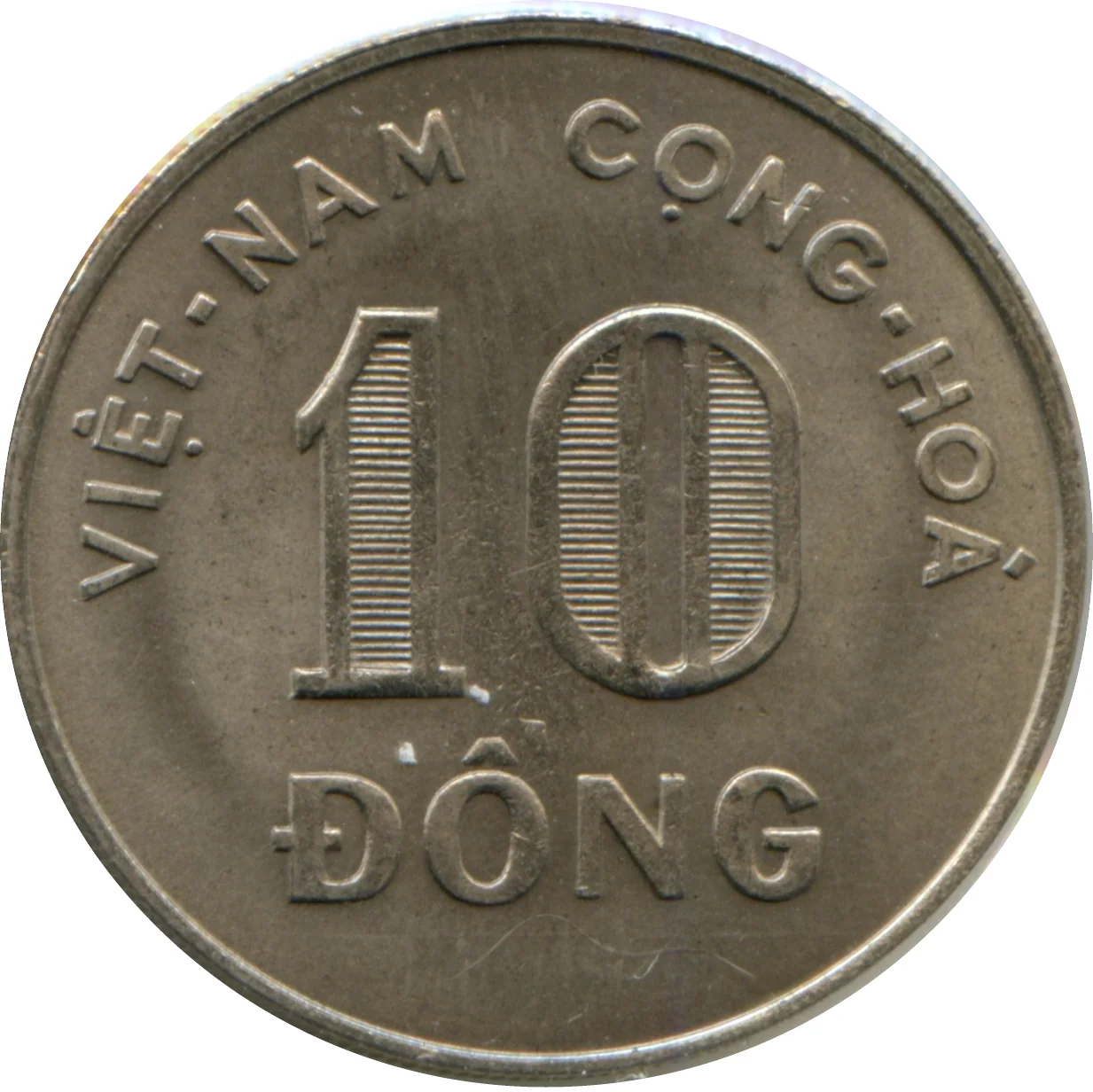
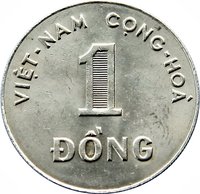
Obverse
Description:
Value legend
Inscription:
VIỆT-NAM CỌNG-HOÀ
10
ĐỒNG
10
ĐỒNG
Translation:
VIETNAM REPUBLIC
10
DONG
10
DONG
Script: Latin
Language: Vietnamese
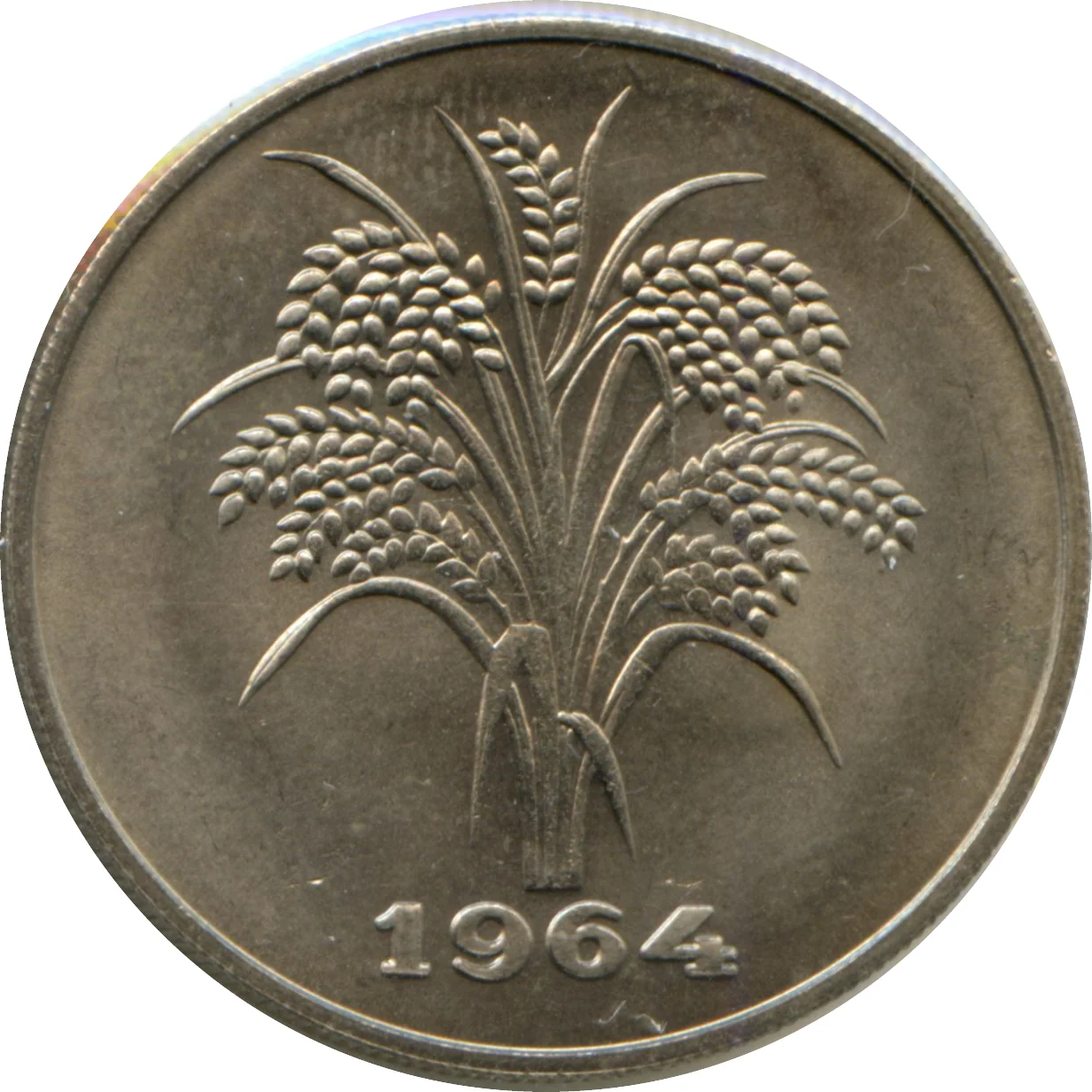
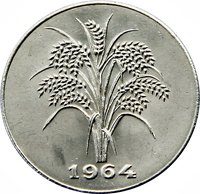
Reverse
Edge
Reeded
Categories
| Agriculture |
Mints
| Name | Mark |
|---|---|
| Heaton and Sons / The Mint Birmingham | — |
| Royal Mint (Tower Hill) | — |
Mintings
| Year | Mint Mark | Mintage | Quality | Collection |
|---|---|---|---|---|
| 1964 | — | — | ||
| 1964 | 1964-1967 | 45,000,000 |
Historical background
By 1964, the currency situation in South Vietnam was a critical economic front in the escalating war, characterized by severe inflation and a crisis of confidence. The primary currency, the South Vietnamese piastre (VNS), was officially pegged to the U.S. dollar at a fixed rate of 73 to 1, a rate maintained by substantial American aid. However, this official rate masked a thriving black market where the piastre traded for as little as 150 to the dollar, reflecting widespread public doubt in the stability of the Saigon government and the economic future of the country. This divergence created a two-tier economy that distorted trade, encouraged corruption, and drained foreign exchange reserves.
The root causes were directly tied to the war effort. The South Vietnamese government, unable to fund its massive military expenditures through taxation, resorted to simply printing more money to cover its deficits. Simultaneously, the massive influx of U.S. personnel and dollars—spent on local goods, services, and a growing import sector—flooded the economy with purchasing power without a corresponding increase in domestic production. This classic demand-pull inflation was exacerbated by Viet Cong disruption of agriculture and transportation, which drove up the prices of basic goods like rice, further eroding the piastre's real value and public trust.
The currency instability had profound strategic consequences. It undermined the legitimacy of the U.S.-backed regime in Saigon, as skyrocketing prices hurt the urban poor and civil servants on fixed salaries. Economically, it forced the United States to provide even greater direct budgetary support to prop up the artificial exchange rate, making the war effort more costly. Ultimately, the failing piastre was not just an economic indicator but a stark symbol of a state struggling to maintain basic functions, highlighting the interconnectedness of monetary stability, political confidence, and military success in the conflict.
The root causes were directly tied to the war effort. The South Vietnamese government, unable to fund its massive military expenditures through taxation, resorted to simply printing more money to cover its deficits. Simultaneously, the massive influx of U.S. personnel and dollars—spent on local goods, services, and a growing import sector—flooded the economy with purchasing power without a corresponding increase in domestic production. This classic demand-pull inflation was exacerbated by Viet Cong disruption of agriculture and transportation, which drove up the prices of basic goods like rice, further eroding the piastre's real value and public trust.
The currency instability had profound strategic consequences. It undermined the legitimacy of the U.S.-backed regime in Saigon, as skyrocketing prices hurt the urban poor and civil servants on fixed salaries. Economically, it forced the United States to provide even greater direct budgetary support to prop up the artificial exchange rate, making the war effort more costly. Ultimately, the failing piastre was not just an economic indicator but a stark symbol of a state struggling to maintain basic functions, highlighting the interconnectedness of monetary stability, political confidence, and military success in the conflict.
🌱 Very Common