

50 rupiah – Indonesia
Add to wishlist
Indonesia
Context
Years: 1971–1990
Year:: 1971
Issuer: Indonesia
Issuing organization: Bank Indonesia
Period:
(since 1950)
Currency:
(since 1965)
Demonetization: 26 June 2002
Total mintage: 1,035,435,000
Material
References
KM: #
Numista: #3083
Value
Exchange value: 50 IDR
Inflation-adjusted value: 7506.18 IDR
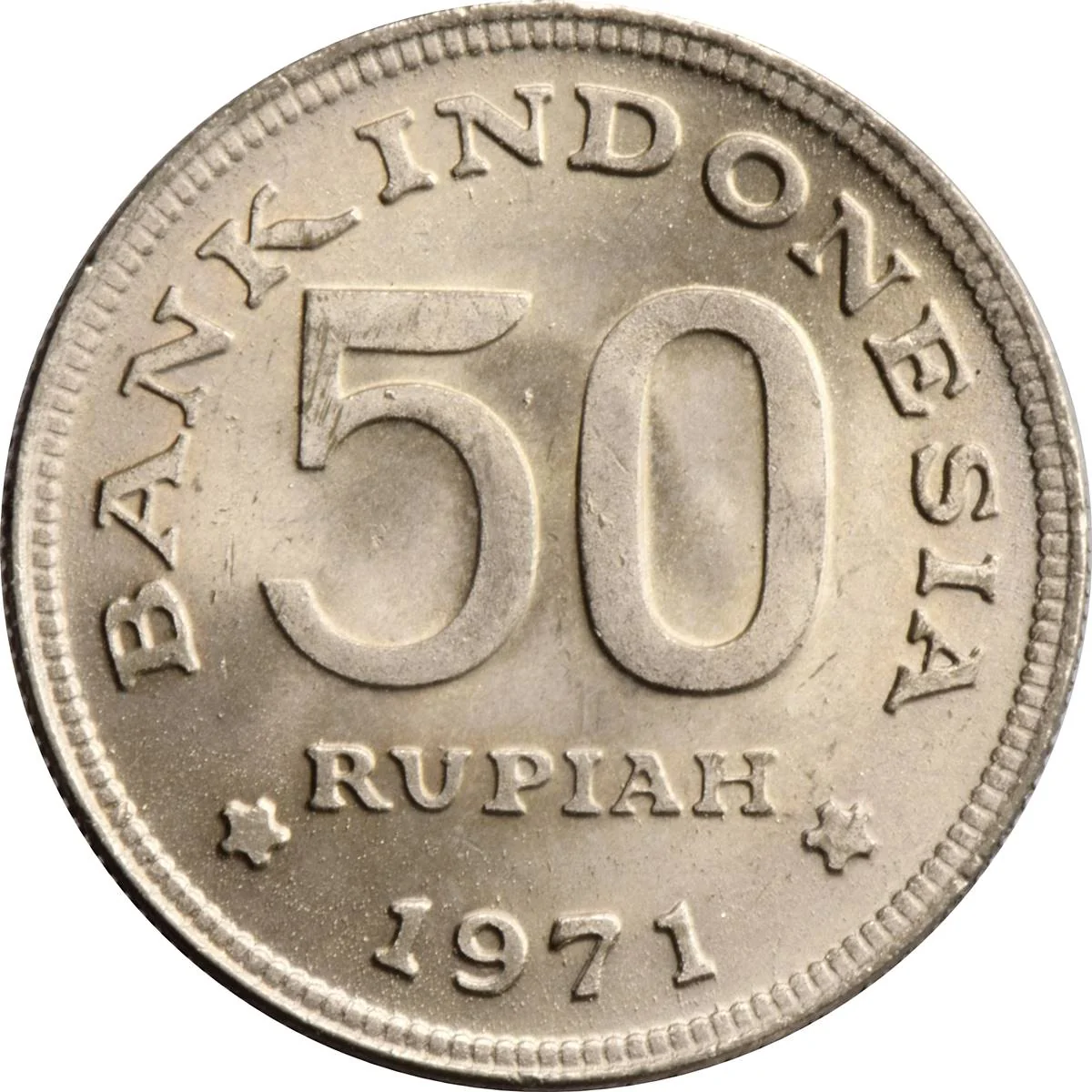
Obverse
Description:
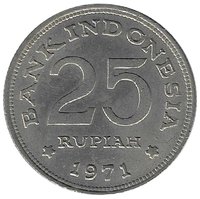
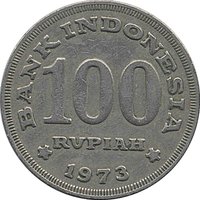
Large number encircled by text.
Inscription:
BANK INDONESIA
50
RUPIAH
1971
50
RUPIAH
1971
Translation:
BANK INDONESIA
50
RUPIAH
1971
50
RUPIAH
1971
Script: Latin
Languages: Indonesian, English
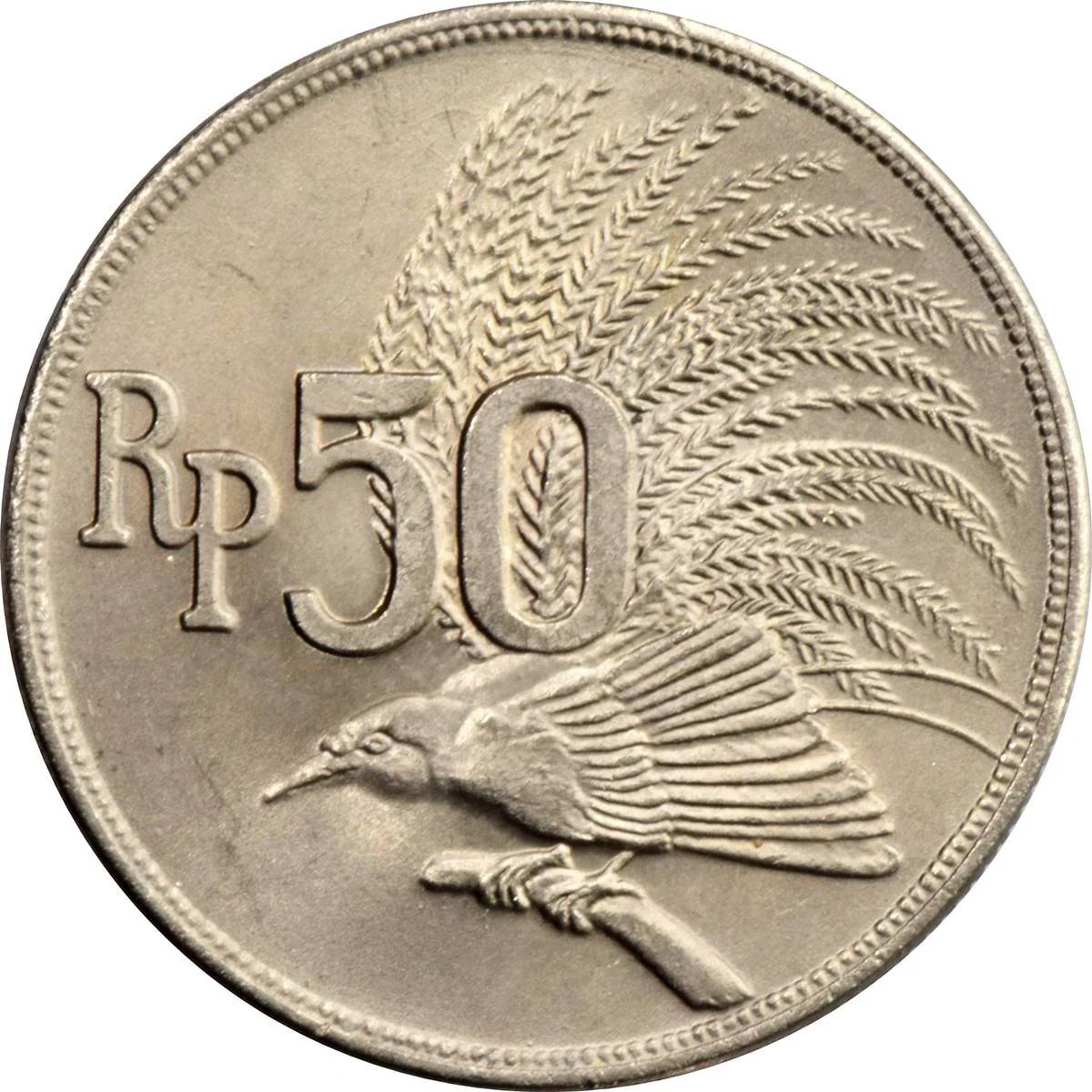
Reverse
Edge
Milled
Mints
| Name | Mark |
|---|---|
| Perum Peruri | — |
Mintings
| Year | Mint Mark | Mintage | Quality | Collection |
|---|---|---|---|---|
| 1971 | 1971-1990 | 1,035,435,000 | ||
| 1971 | — | — |
Historical background
In 1971, Indonesia's currency situation was fundamentally shaped by the legacy of severe hyperinflation under the Sukarno regime, which had only recently been stabilized by the New Order government of President Suharto. A key pillar of this stabilization was the "Rupiah Baru" (New Rupiah) reform of 1965, which introduced the currency still in use today by slashing three zeros (1 new rupiah = 1000 old rupiah). However, the currency remained fragile and was officially pegged to the US dollar at a fixed rate of Rp 415, a rate maintained since 1970 to foster economic predictability and attract foreign investment.
This fixed exchange rate existed within the context of the Bretton Woods system, which tied global currencies to the US dollar convertible to gold. The year 1971 was therefore one of external monetary crisis, culminating in US President Richard Nixon's August announcement suspending dollar-gold convertibility—the "Nixon Shock." This event effectively ended the Bretton Woods system and caused global currency turmoil, forcing nations to reconsider their own pegs.
In response, Indonesia initially maintained its Rp 415/USD peg, a decision reflecting the government's primary focus on domestic price stability and continued economic rehabilitation. This choice signaled a commitment to conservative monetary policy, prioritizing the control of the hyperinflation that had devastated the country just years earlier. The stability of the rupiah in 1971, therefore, was a carefully guarded achievement, insulated from immediate international fluctuations as the Suharto administration continued to build the foundations for the economic growth that would follow in the 1970s.
This fixed exchange rate existed within the context of the Bretton Woods system, which tied global currencies to the US dollar convertible to gold. The year 1971 was therefore one of external monetary crisis, culminating in US President Richard Nixon's August announcement suspending dollar-gold convertibility—the "Nixon Shock." This event effectively ended the Bretton Woods system and caused global currency turmoil, forcing nations to reconsider their own pegs.
In response, Indonesia initially maintained its Rp 415/USD peg, a decision reflecting the government's primary focus on domestic price stability and continued economic rehabilitation. This choice signaled a commitment to conservative monetary policy, prioritizing the control of the hyperinflation that had devastated the country just years earlier. The stability of the rupiah in 1971, therefore, was a carefully guarded achievement, insulated from immediate international fluctuations as the Suharto administration continued to build the foundations for the economic growth that would follow in the 1970s.
🌱 Very Common