

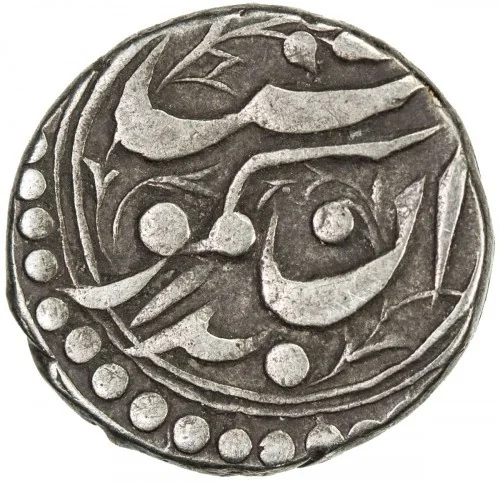
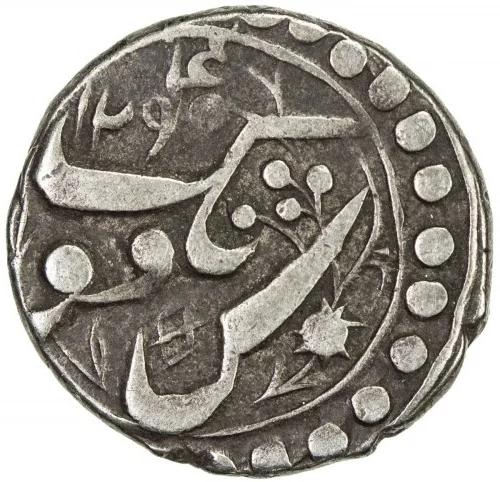
½ Miscal / 5 Fen – Sinkiang Province
China
Context
Years: 1877–1878
Islamic (Hijri) Year: 1294
Country: China 
Issuer: Sinkiang Province
Ruler: Guangxu
Demonetized: Yes
Material
Diameter: 13 mm
Weight: 1.5 g
Silver weight: 1.50 g
Thickness: 1.4 mm
Shape: Irregular round
Composition: Silver
Magnetic: No
References
Y: #Click to copy to clipboardA7.3 var.
Numista: #296623
Value
Bullion value: $4.32
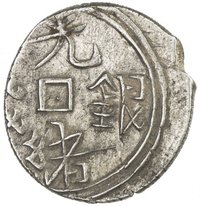
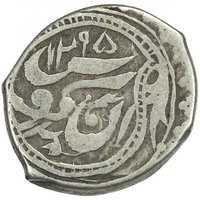
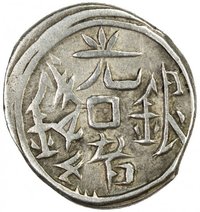
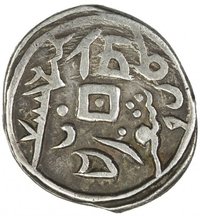
Obverse
Description:
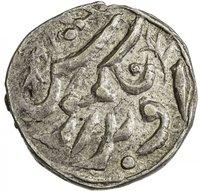
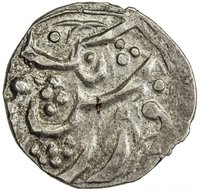
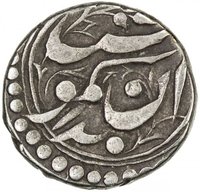
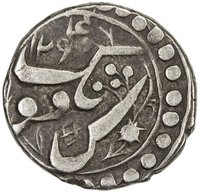
Arabic legend inside circular frame.
Inscription:
ش
كمو
وبران
كمو
وبران
Translation:
Coin of Komor and Bran.
Language: Arabic
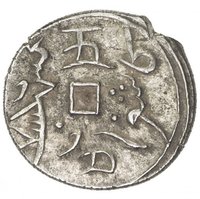
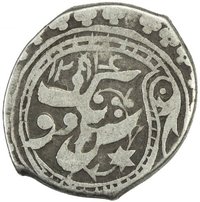
Reverse
Edge
Plain
Mintings
| Year | Mint Mark | Mintage | Quality | Collection |
|---|---|---|---|---|
| 1877 | — | — | ||
| — | — | — |
Historical background
In 1877, the currency situation in Sinkiang (Xinjiang) was chaotic and unstable, a direct legacy of the region's recent turmoil. The province had just emerged from over a decade of conflict, including the Dungan Revolt (1862–1877) and the establishment of Yaqub Beg's independent Kashgaria (1865–1877). This period shattered the unified Qing monetary system that had previously operated there. Yaqub Beg's regime issued its own crude, low-quality copper coins (pul) and silver tanga coins, often with religious inscriptions, which circulated alongside older Qing cash coins and various foreign currencies, particularly Russian Tsarist rubles and silver kronas from British India.
The Qing reconquest of the region, culminating in 1877, faced the immediate economic challenge of reimposing monetary order. The victorious Qing general, Zuo Zongtang, recognized that a stable currency was essential for restoring administration, paying troops, and reviving trade along the Silk Road. He urgently advocated for the establishment of a modern mint, arguing that locally produced, high-quality coinage bearing the Emperor's reign title was crucial for asserting Qing sovereignty and displacing the debased coins of the rebel regime and foreign powers.
Therefore, the background of 1877 is one of transition from fragmentation to attempted consolidation. It marks the pivotal moment when the Qing state, having achieved military victory, began the difficult process of economic reintegration. The planned mint in Kashgar (established shortly thereafter) was a key part of this policy, aiming to replace a heterogeneous mix of rebel, legacy, and foreign currencies with a unified Qing standard, thereby solidifying political control through financial means in a strategically vital borderland.
The Qing reconquest of the region, culminating in 1877, faced the immediate economic challenge of reimposing monetary order. The victorious Qing general, Zuo Zongtang, recognized that a stable currency was essential for restoring administration, paying troops, and reviving trade along the Silk Road. He urgently advocated for the establishment of a modern mint, arguing that locally produced, high-quality coinage bearing the Emperor's reign title was crucial for asserting Qing sovereignty and displacing the debased coins of the rebel regime and foreign powers.
Therefore, the background of 1877 is one of transition from fragmentation to attempted consolidation. It marks the pivotal moment when the Qing state, having achieved military victory, began the difficult process of economic reintegration. The planned mint in Kashgar (established shortly thereafter) was a key part of this policy, aiming to replace a heterogeneous mix of rebel, legacy, and foreign currencies with a unified Qing standard, thereby solidifying political control through financial means in a strategically vital borderland.

✨ Legendary