

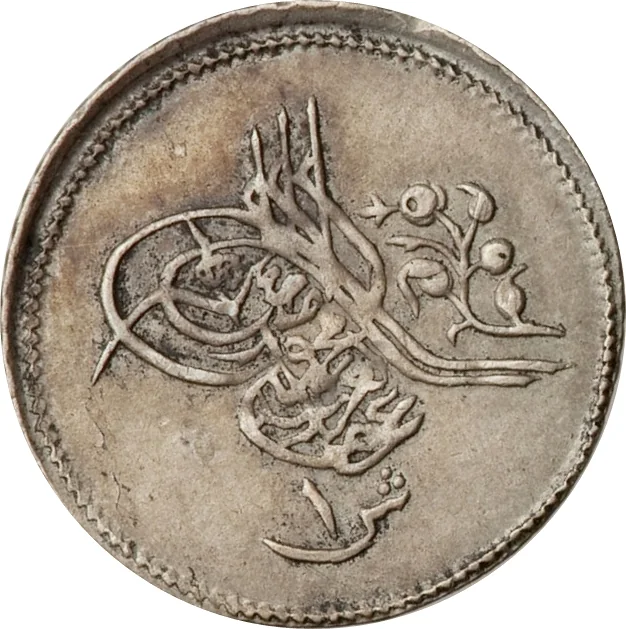
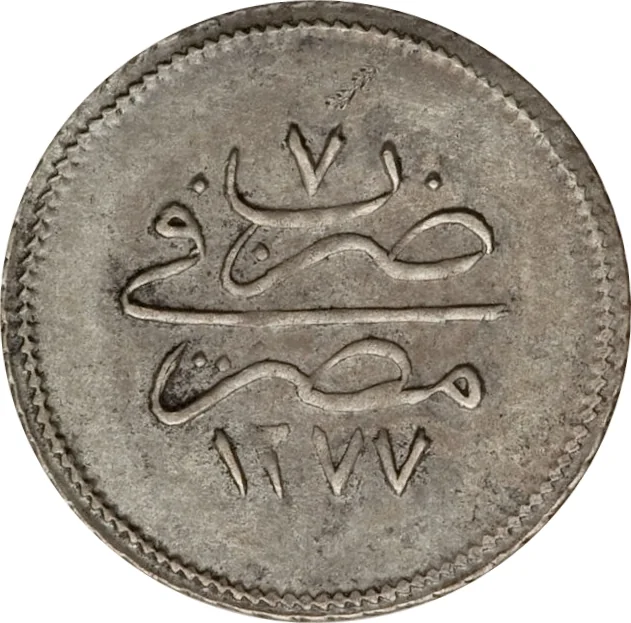
1 qirsh – Egypt
Add to wishlist
Egypt
Context
Years: 1861–1868
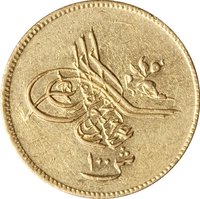
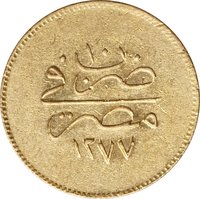
Islamic (Hijri) Year:: 1277
Issuer: Egypt
Ruler: Abdülaziz
Currency:
(1834—1916)
Demonetized: Yes
Material
References
KM: #
Numista: #29046
Value
Bullion value: $2.75
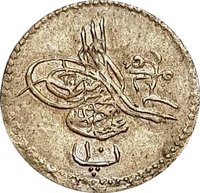
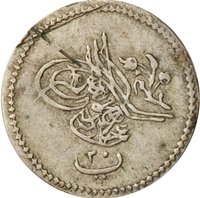
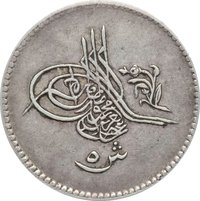
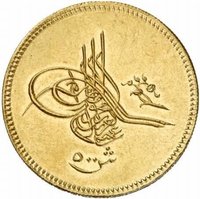
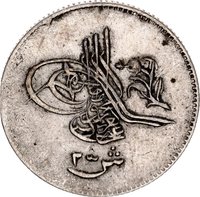
Obverse
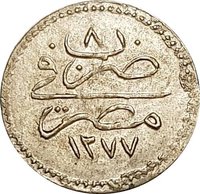
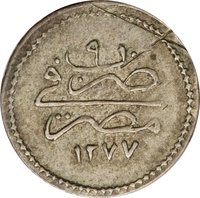
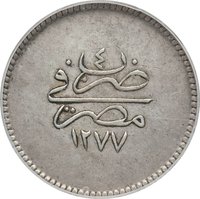
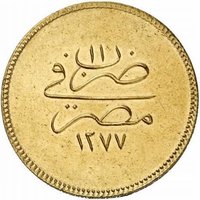
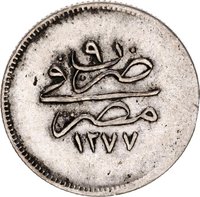
Reverse
Edge
Mintings
| Year | Mint Mark | Mintage | Quality | Collection |
|---|---|---|---|---|
| 1861 | — | — | ||
| 1862 | — | — | ||
| 1863 | — | — | ||
| 1864 | — | — | ||
| 1865 | — | — | ||
| 1866 | — | — | ||
| 1867 | — | — | ||
| 1868 | — | — |
Historical background
In 1861, Egypt's currency system was a complex and unstable mixture of Ottoman, European, and local monetary units, reflecting its political position as an autonomous province of the Ottoman Empire under the rule of the Khedive. The official currency was the Egyptian piastre (qirsh), which was theoretically a silver-based coin tied to the Ottoman monetary system. However, a severe global shortage of silver, driven by discoveries of gold in California and Australia, had caused the value of silver coins to plummet relative to gold. This created a significant divergence between the official exchange rate and market reality, leading to widespread confusion and economic distortion.
Compounding this instability was the rampant circulation of debased and counterfeit coins, alongside a multitude of foreign currencies, particularly European gold coins like the British sovereign and French franc. The government's own finances were under immense strain due to the extravagant spending of Khedive Ismail, who had recently ascended to power in 1863 and was already embarking on ambitious modernization projects, including the early stages of planning for the Suez Canal. This fiscal pressure, combined with the chaotic monetary environment, stifled trade and complicated both domestic and international transactions.
Consequently, by 1861, Egypt stood on the brink of a monetary crisis that would necessitate major reform. The inherent weaknesses of the bimetallic system, the collapse in silver value, and the government's growing debt would soon force the issue. This precarious situation set the stage for the landmark currency reforms of the mid-1860s, which would introduce a decimalized, gold-based currency (the Egyptian pound) and establish the National Bank of Egypt, fundamentally restructuring the country's financial system to meet the demands of its integration into the global economy.
Compounding this instability was the rampant circulation of debased and counterfeit coins, alongside a multitude of foreign currencies, particularly European gold coins like the British sovereign and French franc. The government's own finances were under immense strain due to the extravagant spending of Khedive Ismail, who had recently ascended to power in 1863 and was already embarking on ambitious modernization projects, including the early stages of planning for the Suez Canal. This fiscal pressure, combined with the chaotic monetary environment, stifled trade and complicated both domestic and international transactions.
Consequently, by 1861, Egypt stood on the brink of a monetary crisis that would necessitate major reform. The inherent weaknesses of the bimetallic system, the collapse in silver value, and the government's growing debt would soon force the issue. This precarious situation set the stage for the landmark currency reforms of the mid-1860s, which would introduce a decimalized, gold-based currency (the Egyptian pound) and establish the National Bank of Egypt, fundamentally restructuring the country's financial system to meet the demands of its integration into the global economy.
Series: 1861 Egypt circulation coins
⭐ Rare