

25 Pesetas – Spain
Spain
Context
Years: 1976–1980
Year: 1975
Issuer: Spain 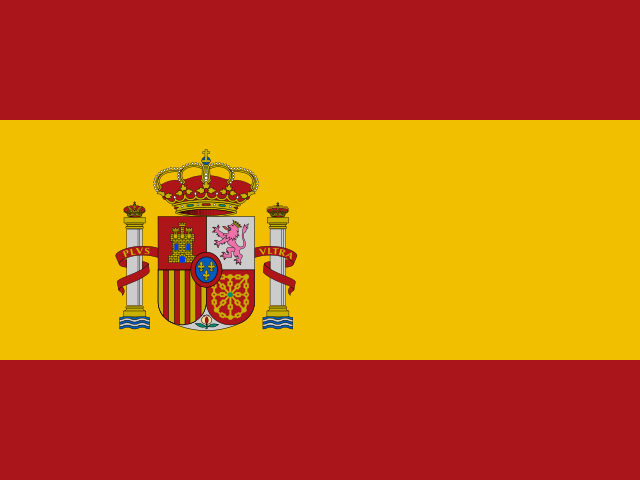
Ruler: Juan Carlos I
Currency:
(1868—2001)
Demonetization: 1 January 1997
Total mintage: 487,952,000
Material
References
KM: #Click to copy to clipboard808
Numista: #2736
Value
Exchange value: 25 ESP
Inflation-adjusted value: 366.04 ESP
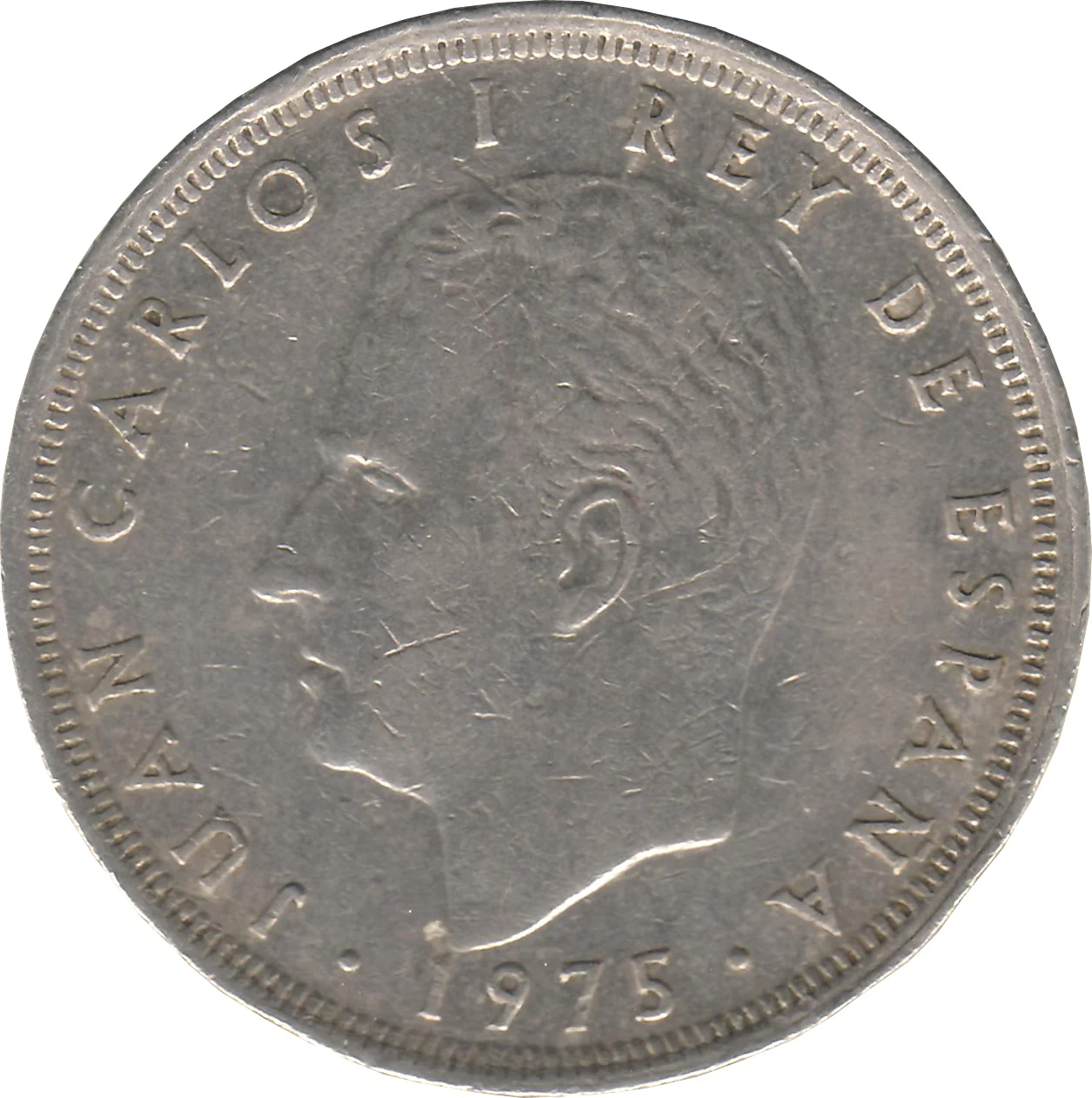
Obverse
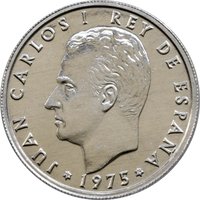
Description:
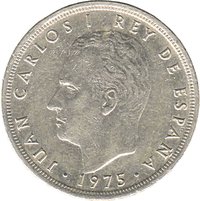
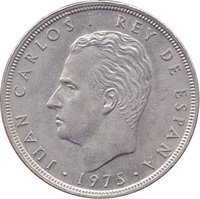
King Juan Carlos I facing left.
Inscription:
JUAN CARLOS I REY DE ESPAÑA
· 1975 ·
· 1975 ·
Translation:
Juan Carlos I King of Spain
· 1975 ·
· 1975 ·
Script: Latin
Language: Spanish
Engraver: Manuel Marín Jimeno
Reverse
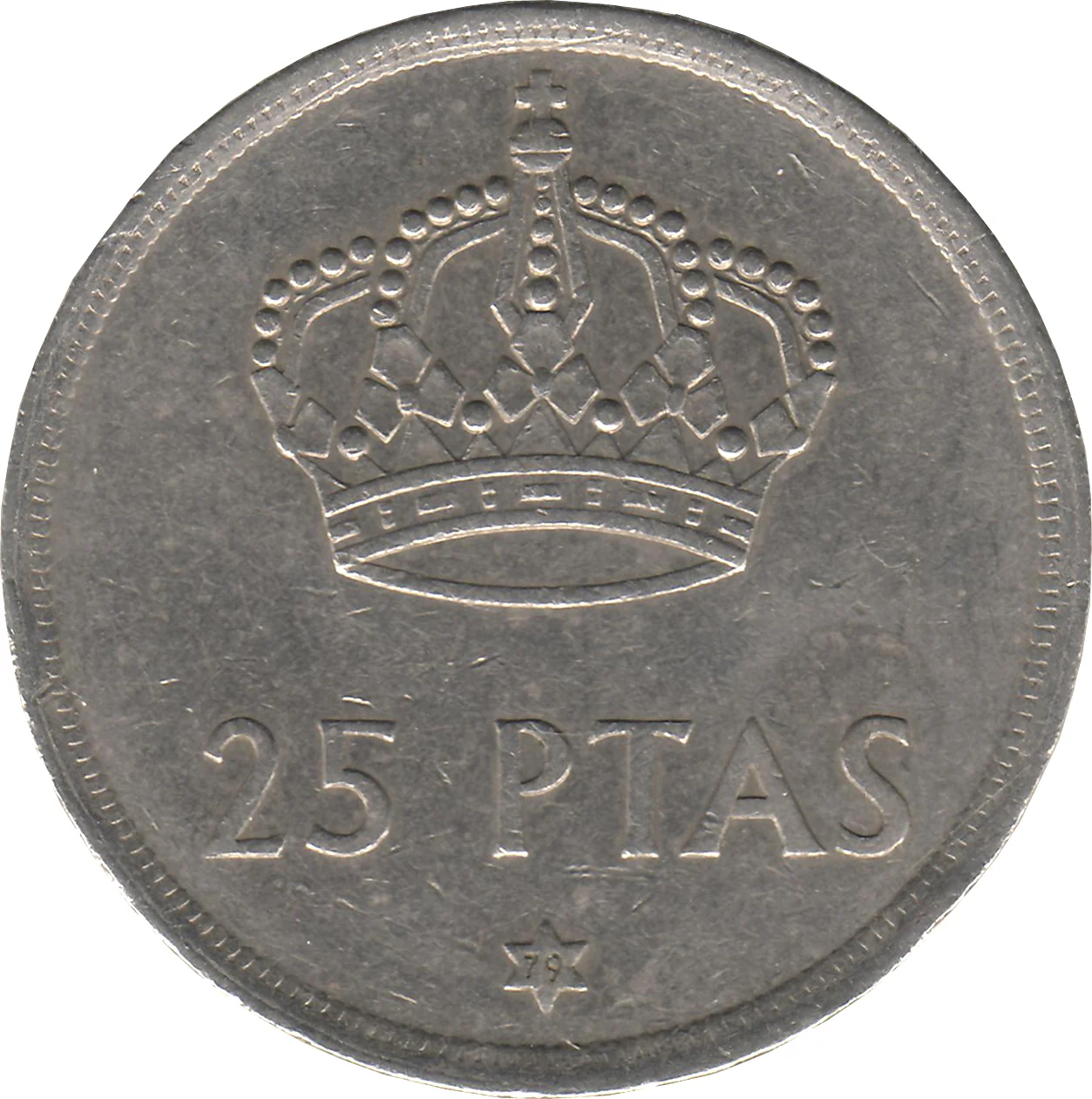
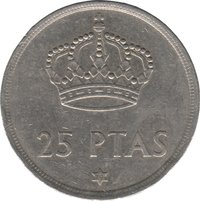
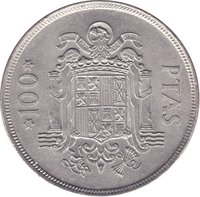
Description:
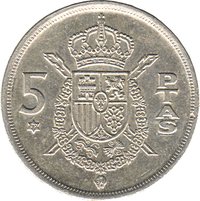
Spanish Crown.
Inscription:
25 PTAS
79
79
Script: Latin
Engraver: Francisco Martínez Tornero
Edge
Mints
| Name | Mark |
|---|---|
| Royal Mint of Madrid | — |
Mintings
| Year | Mint Mark | Mintage | Quality | Collection |
|---|---|---|---|---|
| 1976 | — | — | Proof | |
| 1976 | — | 35,707,000 | ||
| 1977 | — | — | Proof | |
| 1977 | — | 46,690,000 | ||
| 1978 | — | 97,555,000 | ||
| 1979 | — | — | Proof | |
| 1979 | — | 172,000,000 | ||
| 1980 | — | 136,000,000 |
Historical background
In 1976, Spain was in a period of profound political and economic transition following the death of dictator Francisco Franco the previous year. The currency, the Spanish peseta, operated under a managed exchange rate system, pegged to the US dollar within the Bretton Woods framework. However, this system was under significant strain. The first oil crisis of 1973 had severely impacted the Spanish economy, leading to high inflation (over 17% in 1976), a growing trade deficit, and declining foreign currency reserves. This created persistent downward pressure on the peseta, forcing the Bank of Spain to frequently intervene to maintain the official parity, depleting its reserves.
Economically, the country faced a stagflationary crisis, combining stagnant growth with rampant inflation. The Francoist model of autarky and protectionism was crumbling, but the new democratic government, led by Prime Minister Adolfo Suárez, had not yet implemented decisive economic reforms. Investor confidence was low, and capital flight was a serious concern, further weakening the peseta. The government was caught between the need to control inflation through tight monetary policy and the political imperative to stimulate the economy and reduce soaring unemployment.
Consequently, 1976 was a year of mounting pressure that would soon force decisive action. The unsustainable peg and economic imbalances led to a major devaluation of the peseta in July 1977, shortly after the first democratic elections. This devaluation, a condition for international assistance, marked the beginning of a series of economic stabilization plans and liberalization measures aimed at integrating Spain into the European and global economic order, setting the stage for future entry into the European Monetary System.
Economically, the country faced a stagflationary crisis, combining stagnant growth with rampant inflation. The Francoist model of autarky and protectionism was crumbling, but the new democratic government, led by Prime Minister Adolfo Suárez, had not yet implemented decisive economic reforms. Investor confidence was low, and capital flight was a serious concern, further weakening the peseta. The government was caught between the need to control inflation through tight monetary policy and the political imperative to stimulate the economy and reduce soaring unemployment.
Consequently, 1976 was a year of mounting pressure that would soon force decisive action. The unsustainable peg and economic imbalances led to a major devaluation of the peseta in July 1977, shortly after the first democratic elections. This devaluation, a condition for international assistance, marked the beginning of a series of economic stabilization plans and liberalization measures aimed at integrating Spain into the European and global economic order, setting the stage for future entry into the European Monetary System.
Series: 1976 Spain circulation coins
🌱 Very Common