

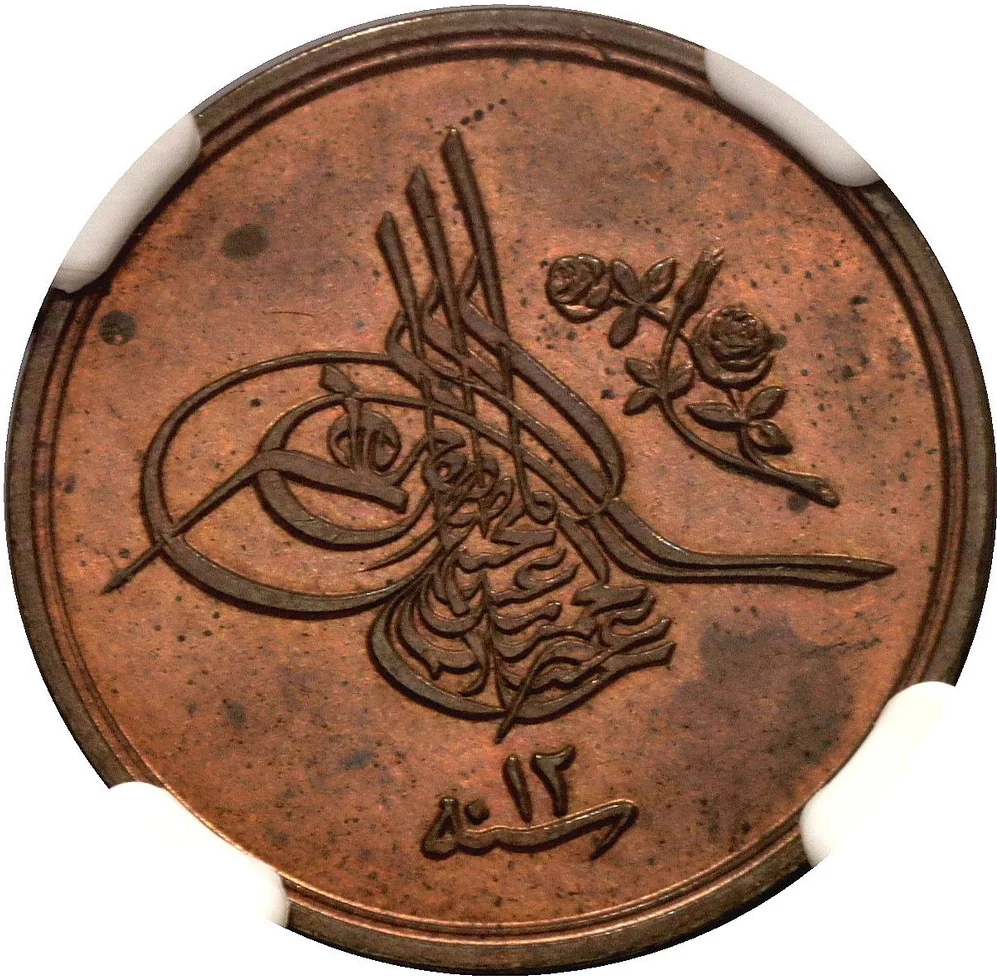
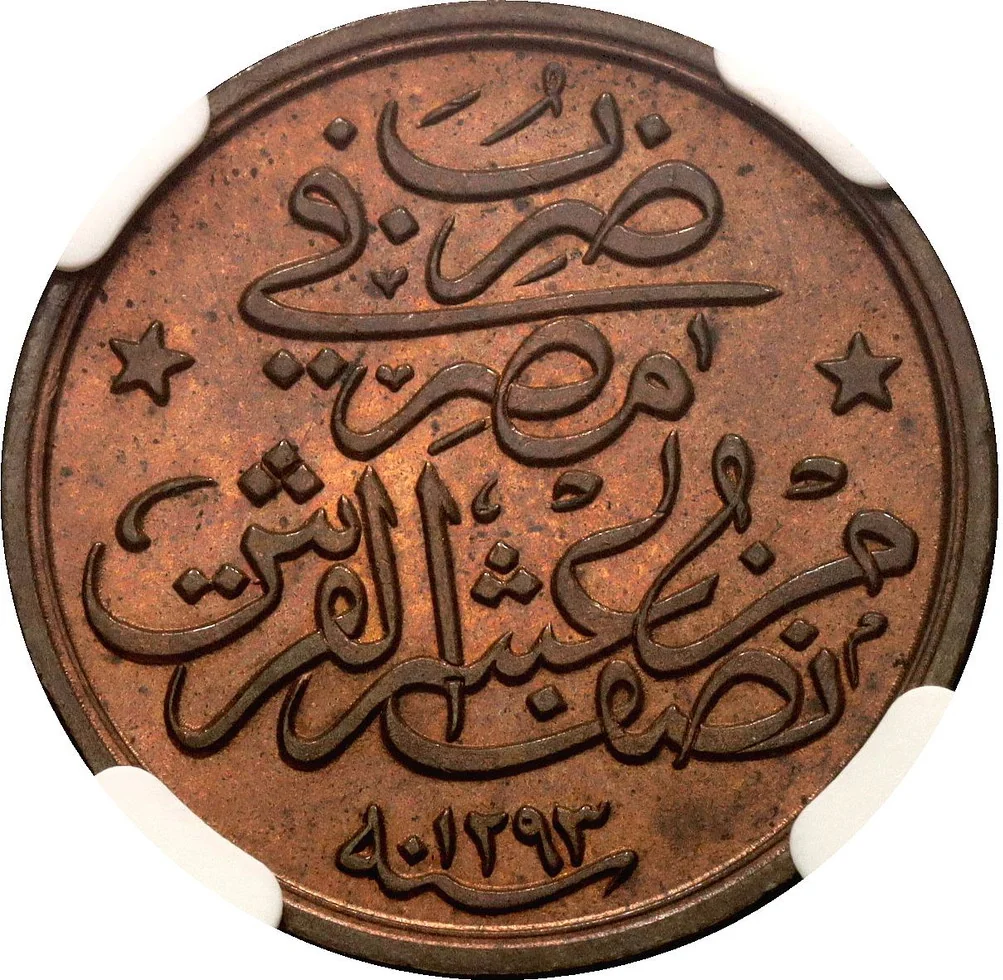
1⁄20 Qirsh – Egypt
Egypt
Context
Years: 1884–1909
Islamic (Hijri) Year: 1293
Issuer: Egypt 
Ruler: Abdul Hamid II
Currency:
(1834—1916)
Demonetized: Yes
Total mintage: 20,970,000
Material
Diameter: 20.1 mm
Weight: 3.12 g
Shape: Round
Composition: Bronze
Standard: Gold tenth ounce
Magnetic: No
Technique: Milled
Alignment: Medal alignment
flip
References
KM: #Click to copy to clipboard288
Numista: #10923
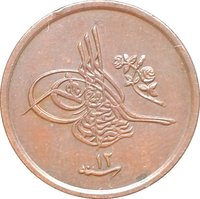
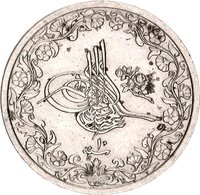
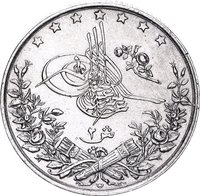
Obverse
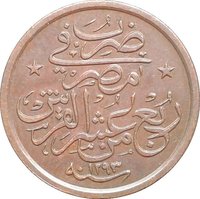
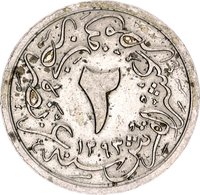
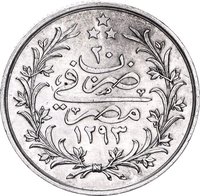
Reverse
Edge
Plain
Mints
| Name | Mark |
|---|---|
| Royal Mint of Belgium | — |
| Heaton and Sons / The Mint Birmingham | H |
Mintings
| Year | Mint Mark | Mintage | Quality | Collection |
|---|---|---|---|---|
| 1884 | — | 4,105,000 | ||
| 1886 | — | 4,457,000 | ||
| 1892 | — | — | ||
| 1893 | — | — | ||
| 1894 | — | — | ||
| 1895 | — | — | ||
| 1898 | — | 801,000 | ||
| 1900 | — | 1,405,000 | ||
| 1901 | — | 1,402,000 | ||
| 1903 | — | 3,000,000 | ||
| 1905 | — | 3,000,000 | ||
| 1906 | — | — | ||
| 1907 | — | 1,400,000 | ||
| 1909 | — | 1,400,000 |
Historical background
In 1884, Egypt’s currency situation was a direct legacy of its crippling debt crisis and the subsequent British occupation that began in 1882. The country was effectively under the financial control of the Anglo-French Caisse de la Dette Publique (Public Debt Commission), established in 1876 to manage Egypt's bankruptcy. This authority severely limited the Khedive’s fiscal autonomy, with a large portion of state revenue earmarked for debt servicing. The monetary system itself was chaotic, characterized by the circulation of multiple, often depreciated, coins and notes, including the Egyptian pound (ginēh), the Turkish gold pound, and the silver piastre, with unstable exchange rates between them.
The core instability stemmed from the government's persistent issuance of irredeemable paper money, known as Treasury Notes. First issued in large quantities during the reign of Khedive Ismail to fund his expansive projects, these notes were not backed by sufficient silver reserves, leading to a severe loss of public confidence and a sharp divergence between their face value and their market worth in silver. By 1884, these notes traded at a significant discount, sometimes as high as 25%, causing inflation, hampering trade, and creating a dual-price system that undermined the economy.
Recognizing that monetary chaos was an impediment to colonial administration and economic exploitation, the British authorities, led by Consul-General Sir Evelyn Baring (later Lord Cromer), moved decisively to impose order. In 1885, they introduced the Egyptian Currency Reform, which established a gold standard based on the British sovereign and created a new national bank to manage issuance. Thus, the situation in 1884 represents the final year of a disordered system, immediately preceding a sweeping British-imposed reform designed to stabilize the currency, facilitate colonial control, and integrate Egypt more firmly into the British imperial economy.
The core instability stemmed from the government's persistent issuance of irredeemable paper money, known as Treasury Notes. First issued in large quantities during the reign of Khedive Ismail to fund his expansive projects, these notes were not backed by sufficient silver reserves, leading to a severe loss of public confidence and a sharp divergence between their face value and their market worth in silver. By 1884, these notes traded at a significant discount, sometimes as high as 25%, causing inflation, hampering trade, and creating a dual-price system that undermined the economy.
Recognizing that monetary chaos was an impediment to colonial administration and economic exploitation, the British authorities, led by Consul-General Sir Evelyn Baring (later Lord Cromer), moved decisively to impose order. In 1885, they introduced the Egyptian Currency Reform, which established a gold standard based on the British sovereign and created a new national bank to manage issuance. Thus, the situation in 1884 represents the final year of a disordered system, immediately preceding a sweeping British-imposed reform designed to stabilize the currency, facilitate colonial control, and integrate Egypt more firmly into the British imperial economy.
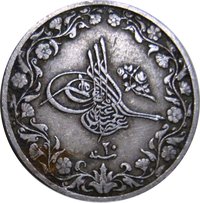
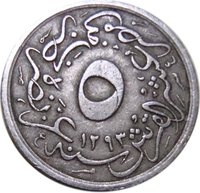
Series: 1884 Egypt circulation coins
🌱 Common