

1 Drachma – Greece
Greece
Context
Years: 1926–1930
Year: 1926
Issuer: Greece 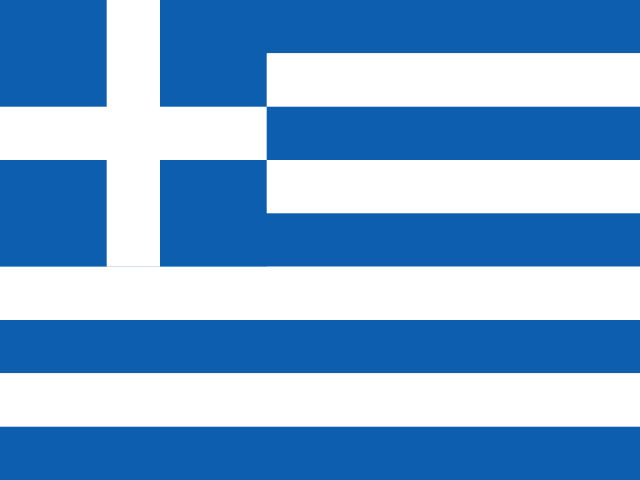
Period:
(1924—1935)
Currency:
(1832—1944)
Demonetized: Yes
Total mintage: 35,000,000
Material
Diameter: 23 mm
Weight: 4.9 g
Thickness: 1.47 mm
Shape: Round
Composition: Copper-nickel
Technique: Milled
Alignment: Coin alignment
flip
References
KM: #Click to copy to clipboard69
Numista: #2363
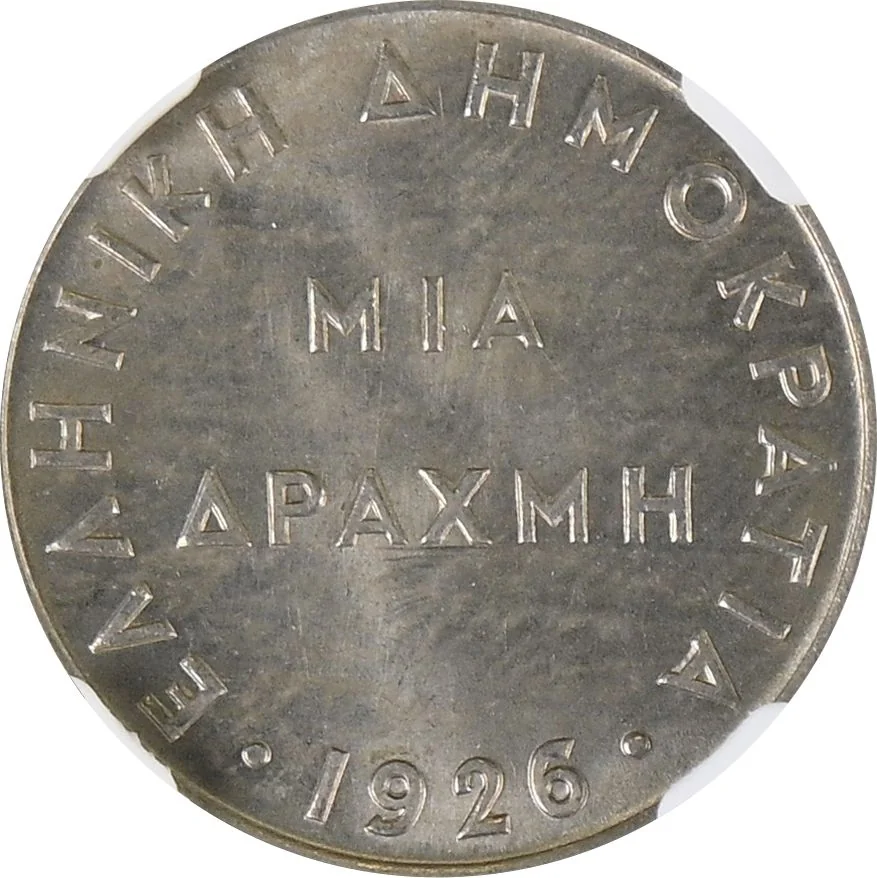
Obverse
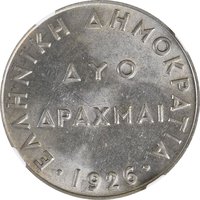
Description:
Denomination above date, mintmark over date if present.
Inscription:
•ΕΛΛΗΝΙΚΗ ΔΗΜΟΚΡΑΤΙΑ•
ΜΙΑ
ΔΡΑΧΜΗ
1926
ΜΙΑ
ΔΡΑΧΜΗ
1926
Translation:
HELLENIC REPUBLIC
ONE
DRACHMA
1926
ONE
DRACHMA
1926
Script: Greek
Language: Greek
Engraver: Émile Gilliéron Jr.
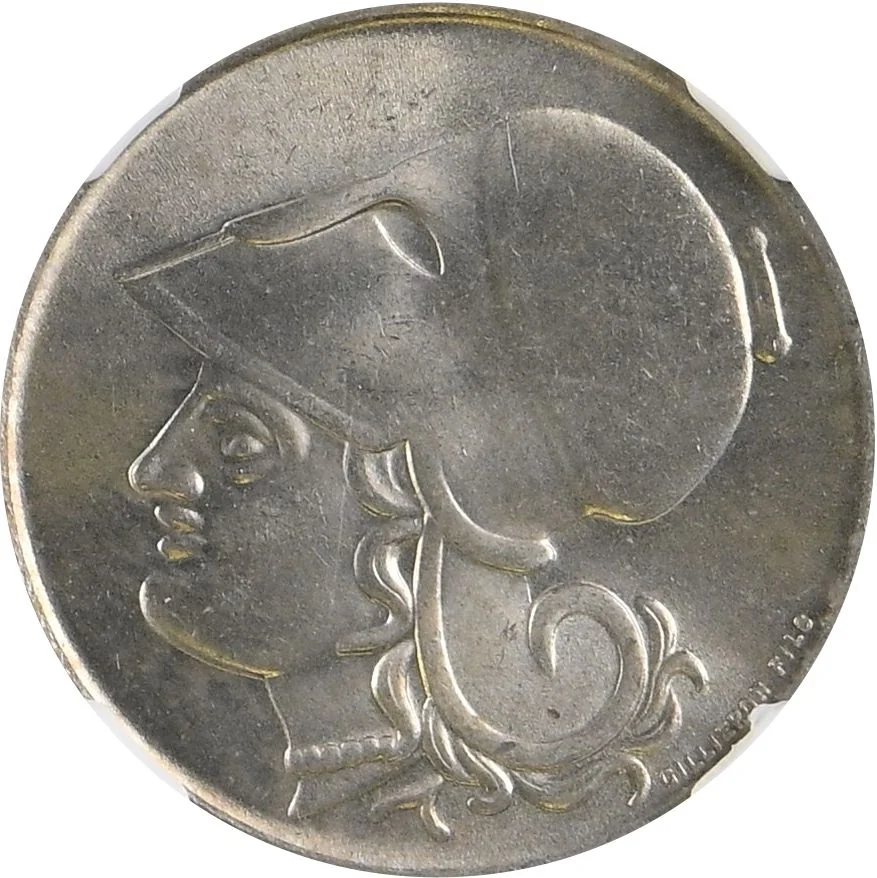
Reverse
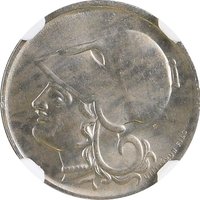
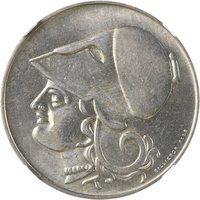
Description:
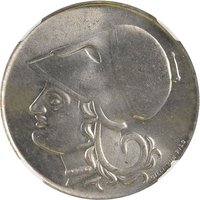
Athena left, engraver’s name behind.
Inscription:
GILLIERON FILS
Script: Latin
Engraver: Émile Gilliéron Jr.
Edge
Reeded
Mints
| Name | Mark |
|---|---|
| Münze Österreich | — |
Mintings
| Year | Mint Mark | Mintage | Quality | Collection |
|---|---|---|---|---|
| 1926 | — | 15,000,000 | ||
| 1930 | — | 20,000,000 |
Historical background
By 1926, Greece was in the midst of a profound monetary crisis and a pivotal attempt at stabilization. The period following World War I and the catastrophic Greco-Turkish War (1919-1922) had left the country financially devastated, burdened with over a million refugees and massive debt. To cover these expenses, the government relied heavily on the printing press, causing hyperinflation to ravage the drachma. By late 1922, the currency had lost almost all its value, trading at nearly 9,000 drachmae to one British pound, compared to just 25 drachmae to the pound in 1914. This period of "catastrophic inflation" eroded savings, crippled the economy, and created widespread social distress.
The situation demanded drastic reform, which began with the arrival of the League of Nations in 1923. After negotiations, a major stabilization loan was secured in 1924, and a pivotal Currency Committee was established in 1925. This independent body, controlled by foreign experts, was given absolute authority over the money supply and government borrowing. Its primary achievement in 1926 was the creation of a new, stable currency: the "gold drachma" (or drachma chrysou), introduced at a rate of 375 new drachmae to one British pound. This was a classic example of a currency board system, where the new drachma's issuance was strictly backed by gold and foreign exchange reserves.
Therefore, the currency situation in 1926 was one of transition from chaos to enforced discipline. The old, worthless paper drachma was being replaced by a hard, credible currency under foreign supervision. This stabilization successfully ended hyperinflation and restored international confidence, laying the groundwork for a brief period of economic growth in the late 1920s. However, it came at a significant political cost, as it represented a major loss of national sovereignty over monetary and fiscal policy, a point of intense domestic controversy.
The situation demanded drastic reform, which began with the arrival of the League of Nations in 1923. After negotiations, a major stabilization loan was secured in 1924, and a pivotal Currency Committee was established in 1925. This independent body, controlled by foreign experts, was given absolute authority over the money supply and government borrowing. Its primary achievement in 1926 was the creation of a new, stable currency: the "gold drachma" (or drachma chrysou), introduced at a rate of 375 new drachmae to one British pound. This was a classic example of a currency board system, where the new drachma's issuance was strictly backed by gold and foreign exchange reserves.
Therefore, the currency situation in 1926 was one of transition from chaos to enforced discipline. The old, worthless paper drachma was being replaced by a hard, credible currency under foreign supervision. This stabilization successfully ended hyperinflation and restored international confidence, laying the groundwork for a brief period of economic growth in the late 1920s. However, it came at a significant political cost, as it represented a major loss of national sovereignty over monetary and fiscal policy, a point of intense domestic controversy.
Series: 1926 Greece circulation coins
🌱 Very Common