

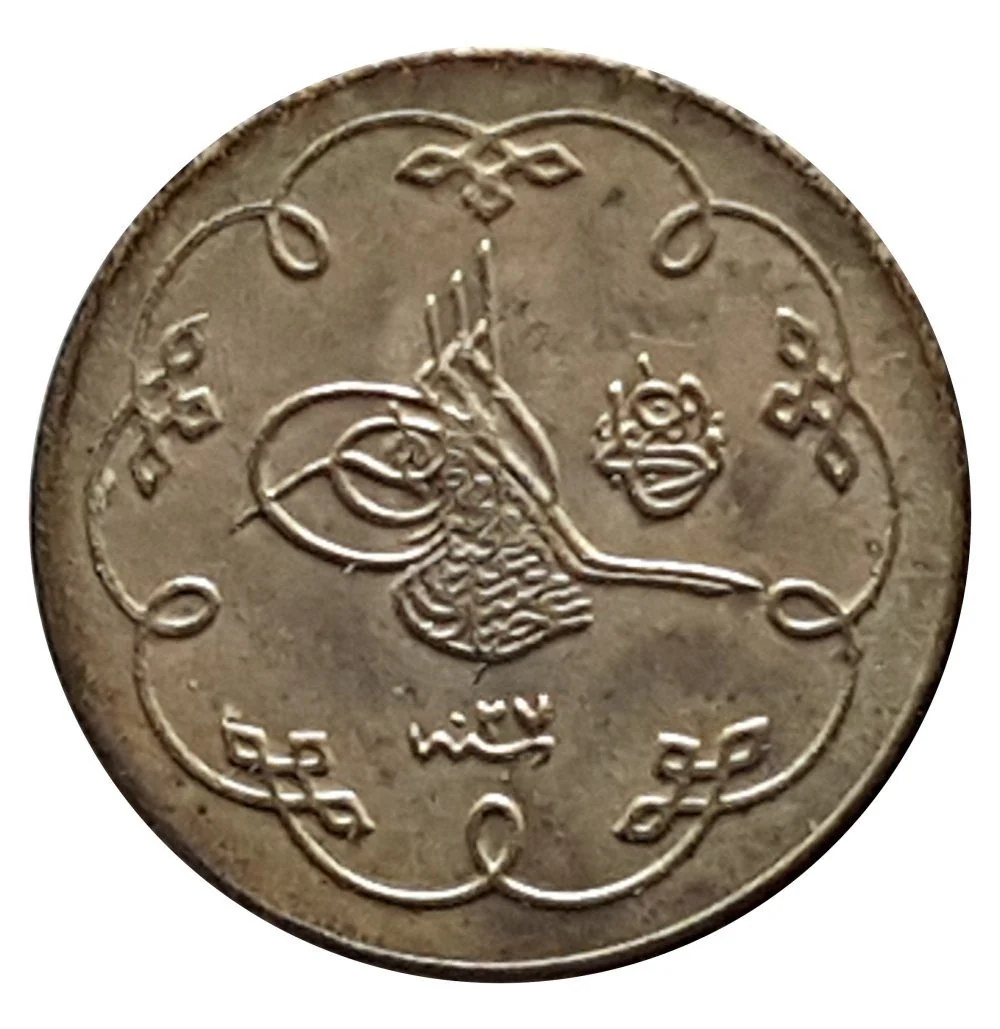
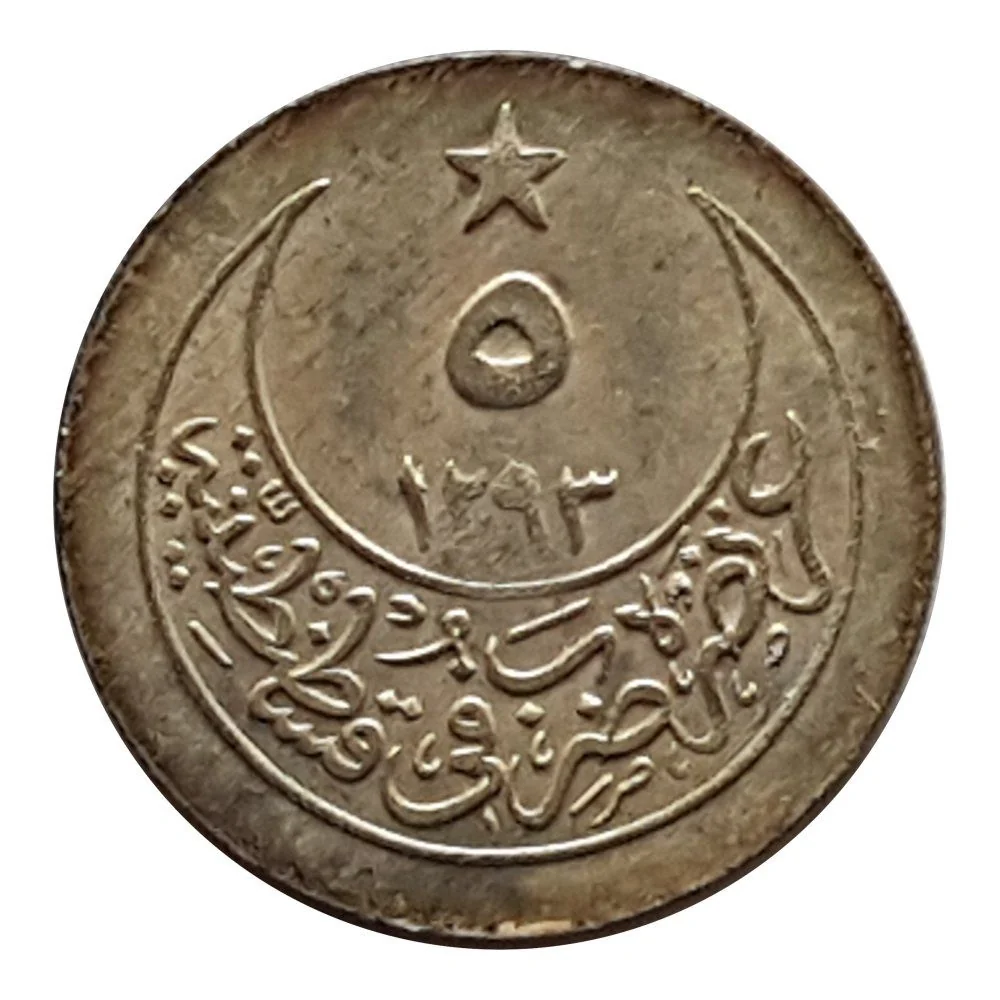
5 para – Ottoman Empire
Add to wishlist
Turkey
Context
Years: 1900–1904
Islamic (Hijri) Year:: 1293
Country: Turkey
Issuer: Ottoman Empire
Ruler: Abdul Hamid II
Currency:
(1844—1923)
Demonetized: Yes
Total mintage: 3,336,000
Material
References
KM: #
Numista: #23026
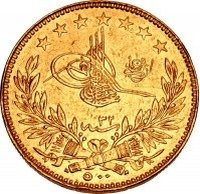
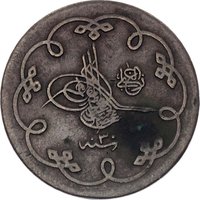
Obverse
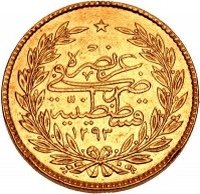
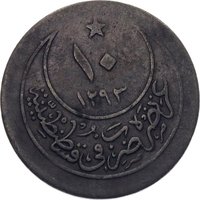
Reverse
Edge
Plain
Mints
| Name | Mark |
|---|---|
| Constantinople | — |
Mintings
| Year | Mint Mark | Mintage | Quality | Collection |
|---|---|---|---|---|
| 1900 | — | 3,336,000 | ||
| 1901 | — | — | ||
| 1902 | — | — | ||
| 1903 | — | — | ||
| 1904 | — | — |
Historical background
By 1900, the Ottoman Empire's currency system was a complex and fragile reflection of its broader economic and political decline. The empire operated on a bimetallic standard in theory, but in practice it was dominated by the Ottoman Lira (or Mecidiye gold pound), which struggled to maintain parity with European gold standards like the British sovereign. Alongside this were silver kuruş and copper para, creating a multi-tiered system. However, the state's chronic budget deficits, financed through high-interest foreign loans, had led to the establishment of the Ottoman Public Debt Administration (OPDA) in 1881. This European-controlled body effectively took over key revenue streams, severely limiting the Porte's financial sovereignty and its ability to manage its currency.
The monetary landscape was characterized by severe fragmentation and instability. A plethora of foreign gold and silver coins—especially British, French, and Austrian—circulated freely alongside Ottoman issues, undermining the domestic currency's authority. More damagingly, the paper kaime, originally introduced as treasury bonds, had been over-issued to the point of becoming virtually worthless fiat money, causing rampant inflation and deep public distrust. This resulted in a widespread "gold premium," where transactions in gold commanded a significant markup over paper, effectively creating a dual economy that hampered trade and state finances.
Consequently, the turn of the century found the empire in a precarious position, attempting a monetary reform that would culminate in the Gold Standard Act of 1900. This law formally demonetized the devalued kaime and aimed to peg the Ottoman lira firmly to gold, seeking to attract foreign investment and stabilize the economy. While this provided a temporary semblance of stability, the reform's success was fundamentally constrained by the empire's continued debt dependency and lack of fiscal discipline. The currency situation, therefore, remained a symptomatic vulnerability until the empire's collapse after World War I.
The monetary landscape was characterized by severe fragmentation and instability. A plethora of foreign gold and silver coins—especially British, French, and Austrian—circulated freely alongside Ottoman issues, undermining the domestic currency's authority. More damagingly, the paper kaime, originally introduced as treasury bonds, had been over-issued to the point of becoming virtually worthless fiat money, causing rampant inflation and deep public distrust. This resulted in a widespread "gold premium," where transactions in gold commanded a significant markup over paper, effectively creating a dual economy that hampered trade and state finances.
Consequently, the turn of the century found the empire in a precarious position, attempting a monetary reform that would culminate in the Gold Standard Act of 1900. This law formally demonetized the devalued kaime and aimed to peg the Ottoman lira firmly to gold, seeking to attract foreign investment and stabilize the economy. While this provided a temporary semblance of stability, the reform's success was fundamentally constrained by the empire's continued debt dependency and lack of fiscal discipline. The currency situation, therefore, remained a symptomatic vulnerability until the empire's collapse after World War I.
🌟 Uncommon