

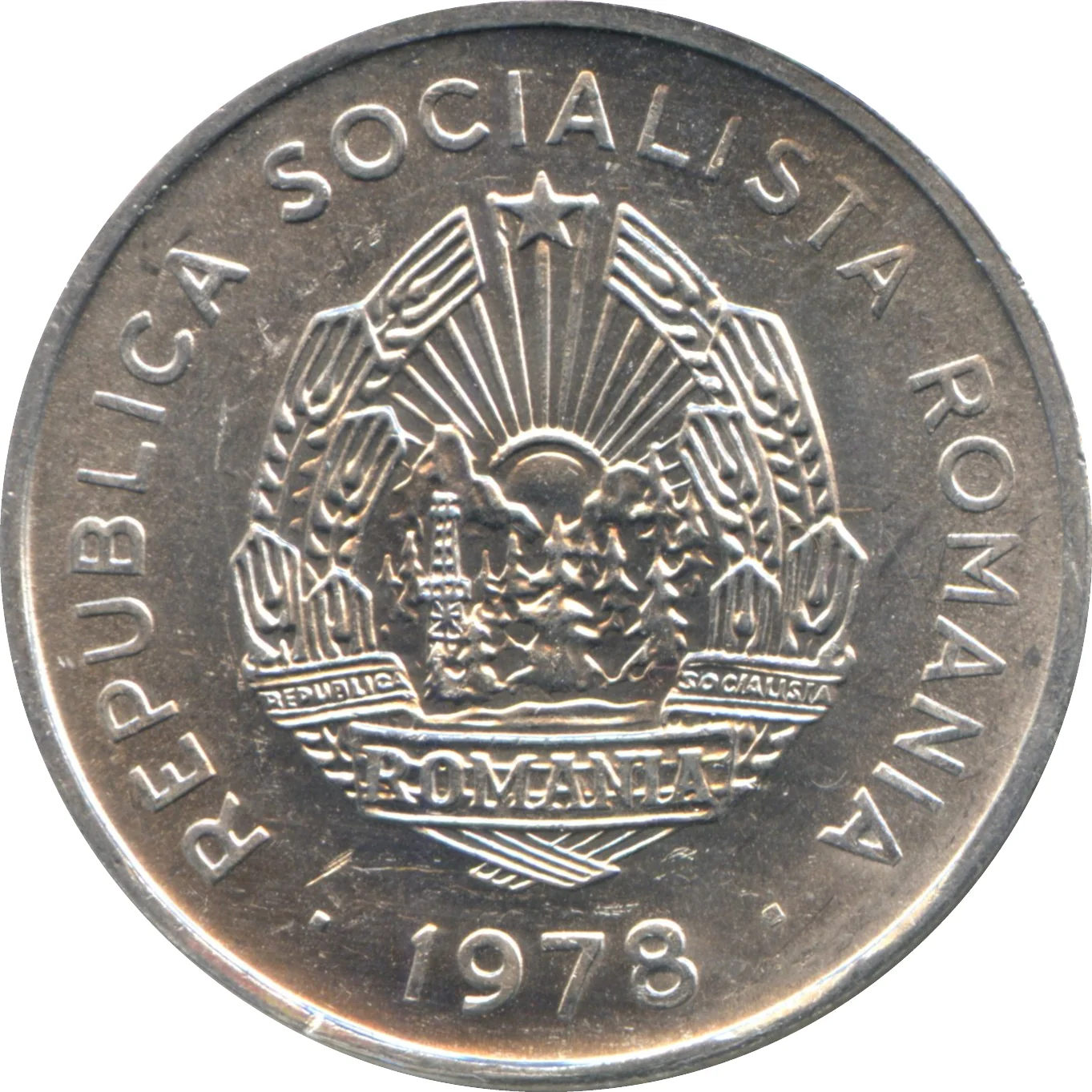
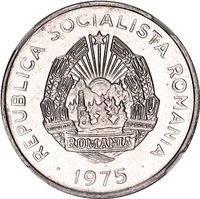
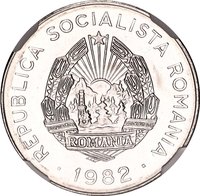
Obverse
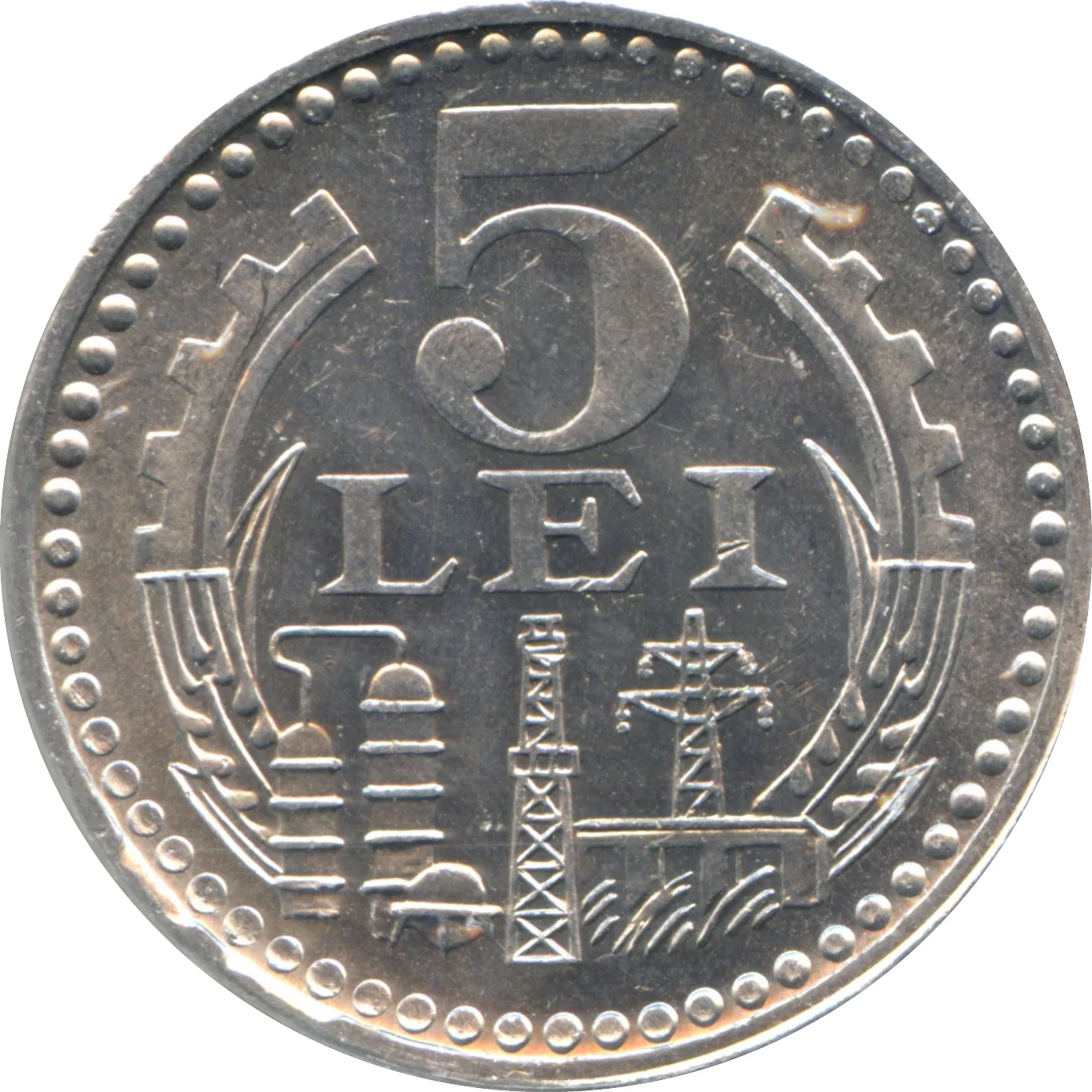
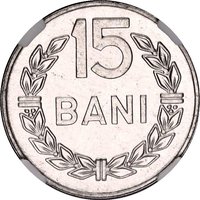
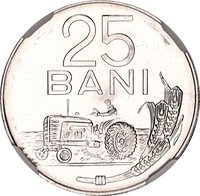
Reverse
Edge
Smooth with ornaments
Categories
| Symbols> Coat of Arms |
| Industry |
Mints
| Name | Mark |
|---|---|
| State Mint | — |
Mintings
| Year | Mint Mark | Mintage | Quality | Collection |
|---|---|---|---|---|
| 1978 | 1978-1990 | — | ||
| 1978 | — | — |
Historical background
In 1978, Romania's currency situation was defined by the rigidities of its centrally planned economy and its unique position within the Eastern Bloc. The national currency, the leu, was non-convertible, meaning it could not be freely exchanged for foreign currencies on international markets. Its value was set by administrative decree rather than market forces, with an official exchange rate artificially pegged against a basket of currencies. However, this official rate was largely symbolic for ordinary citizens and most domestic transactions, as access to hard currency (like US dollars or West German marks) was extremely restricted and controlled entirely by the state.
The regime of Nicolae Ceaușescu was pursuing a policy of rapid industrialization and aggressive repayment of foreign debt to achieve economic independence. This created a severe shortage of hard currency within the country. The government hoarded any earned or borrowed foreign exchange to service its debts and fund imports of critical industrial technology, while severely limiting imports of consumer goods. Consequently, a thriving black market for hard currency existed, where the leu traded at a value significantly worse than the official rate. For foreign visitors, the government operated a separate, more favorable "tourist rate" to attract limited foreign exchange.
For the average Romanian, the currency situation meant a life largely disconnected from the international economy. Salaries were paid in lei, which could only be used to purchase the limited domestic goods available in state stores. Access to Western products or travel abroad was nearly impossible without connections or access to foreign currency from abroad. The entire system was geared towards state control of all financial flows, prioritizing Ceaușescu's political and industrial goals over economic efficiency or consumer needs, creating a foundation for the severe shortages and austerity that would intensify throughout the 1980s.
The regime of Nicolae Ceaușescu was pursuing a policy of rapid industrialization and aggressive repayment of foreign debt to achieve economic independence. This created a severe shortage of hard currency within the country. The government hoarded any earned or borrowed foreign exchange to service its debts and fund imports of critical industrial technology, while severely limiting imports of consumer goods. Consequently, a thriving black market for hard currency existed, where the leu traded at a value significantly worse than the official rate. For foreign visitors, the government operated a separate, more favorable "tourist rate" to attract limited foreign exchange.
For the average Romanian, the currency situation meant a life largely disconnected from the international economy. Salaries were paid in lei, which could only be used to purchase the limited domestic goods available in state stores. Access to Western products or travel abroad was nearly impossible without connections or access to foreign currency from abroad. The entire system was geared towards state control of all financial flows, prioritizing Ceaușescu's political and industrial goals over economic efficiency or consumer needs, creating a foundation for the severe shortages and austerity that would intensify throughout the 1980s.
🌱 Very Common