

5 piastres – Egypt
Add to wishlist
Egypt
Context
Years: 1916–1917
Islamic (Hijri) Year:: 1335
Issuer: Egypt
Ruler: Hussein Kamel
Currency:
(since 1916)
Demonetized: Yes
Total mintage: 15,218,000
Material
References
KM: #
Numista: #15843
Value
Exchange value: 0.05 EGP
Bullion value: $14.64
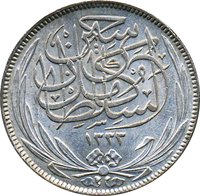
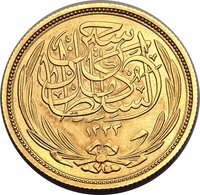
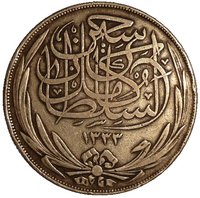
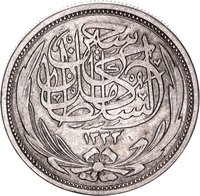
Obverse
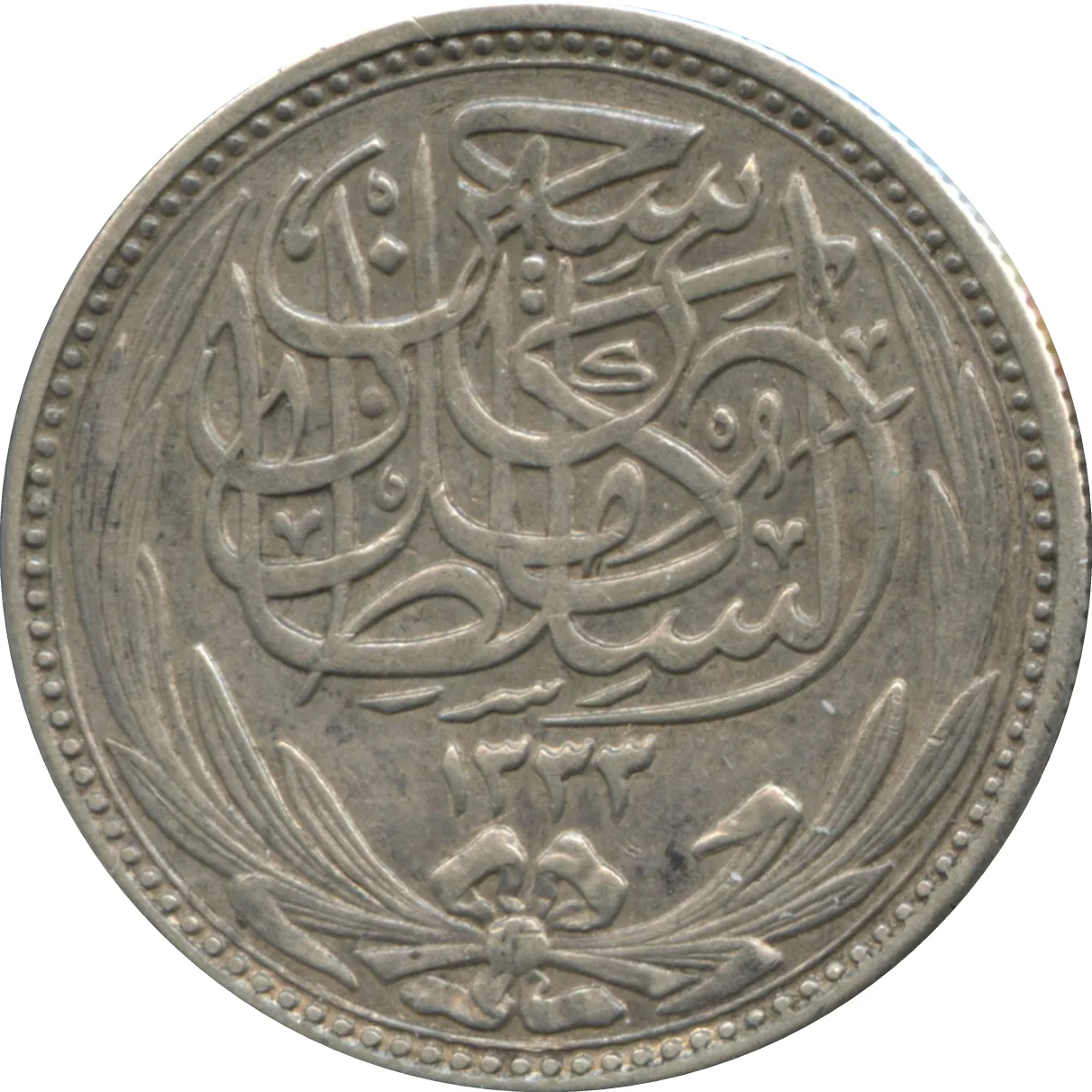
Description:
Sultan Hussein Kamil legend, accession date ١٣٣٥.
Inscription:
السلطان حسين كامل
١٣٣٣
١٣٣٣
Translation:
Sultan Hussein Kamel
1333
1333
Language: Arabic
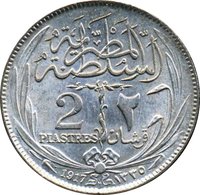
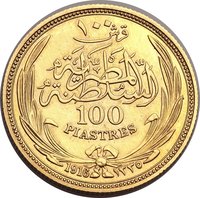
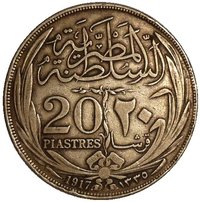
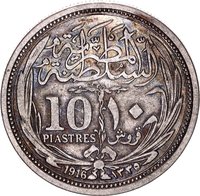
Reverse
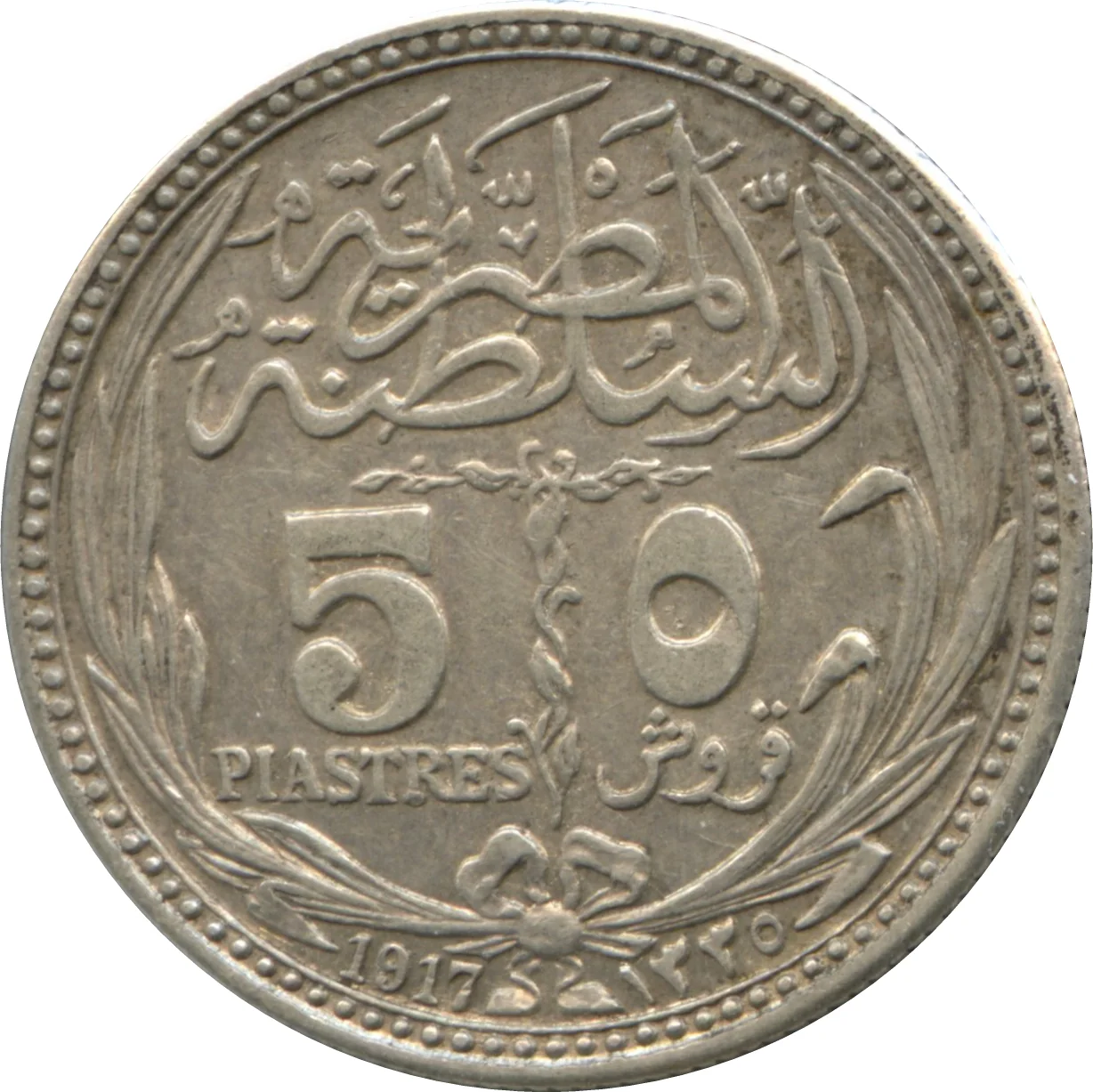
Description:
Value and date within wreath.
Inscription:
السلطانة المصرية
5 PIASTRES
٥ قروش
1917 ١٣٣٥
5 PIASTRES
٥ قروش
1917 ١٣٣٥
Translation:
The Egyptian Sultana
5 PIASTRES
5 Qirsh
1917 1335
5 PIASTRES
5 Qirsh
1917 1335
Language: Arabic
Edge
Milled
Mints
| Name | Mark |
|---|---|
| Mumbai / Bombay | — |
| Heaton and Sons / The Mint Birmingham | H |
Mintings
| Year | Mint Mark | Mintage | Quality | Collection |
|---|---|---|---|---|
| 1916 | — | 6,000,000 | ||
| 1917 | — | 9,218,000 | ||
| 1917 | — | — | Proof |
Historical background
In 1916, Egypt’s currency situation was defined by its status as a British protectorate, established at the outbreak of the First World War. The country operated under a de facto gold standard, but the system was under severe strain. The Egyptian pound (EE), introduced in 1885, was pegged to and equivalent to the British pound sterling, with both currencies circulating alongside Egyptian coinage. However, the war prompted Britain to issue vast quantities of paper currency to finance its military efforts, including the large British Empire garrison defending the Suez Canal, leading to inflationary pressures and a growing distrust of banknotes among the Egyptian public.
The core issue was a divergence between the official gold-based parity and the reality of a depreciating sterling. To prevent a run on gold and the draining of Egypt's reserves, the British authorities in Egypt took drastic measures. In 1916, they officially suspended the gold convertibility of the Egyptian pound, effectively breaking the link to gold and making the currency a fiduciary issue backed by British government securities. This move legally anchored the Egyptian pound to the fluctuating value of sterling, which itself was no longer fully convertible to gold due to Britain's own wartime financial policies.
Consequently, the currency became managed directly by the British-controlled National Bank of Egypt, acting as a currency board. While this ensured stability in terms of the sterling exchange rate and facilitated British military financing, it imported Britain's wartime inflation into Egypt. Prices for basic goods rose significantly, causing hardship for the local population. The 1916 measures thus entrenched Egypt's financial subordination, tethering its economy to British imperial needs and setting the stage for post-war monetary instability and political grievances.
The core issue was a divergence between the official gold-based parity and the reality of a depreciating sterling. To prevent a run on gold and the draining of Egypt's reserves, the British authorities in Egypt took drastic measures. In 1916, they officially suspended the gold convertibility of the Egyptian pound, effectively breaking the link to gold and making the currency a fiduciary issue backed by British government securities. This move legally anchored the Egyptian pound to the fluctuating value of sterling, which itself was no longer fully convertible to gold due to Britain's own wartime financial policies.
Consequently, the currency became managed directly by the British-controlled National Bank of Egypt, acting as a currency board. While this ensured stability in terms of the sterling exchange rate and facilitated British military financing, it imported Britain's wartime inflation into Egypt. Prices for basic goods rose significantly, causing hardship for the local population. The 1916 measures thus entrenched Egypt's financial subordination, tethering its economy to British imperial needs and setting the stage for post-war monetary instability and political grievances.
Series: Sultan Hussein Kamel
🌱 Common