

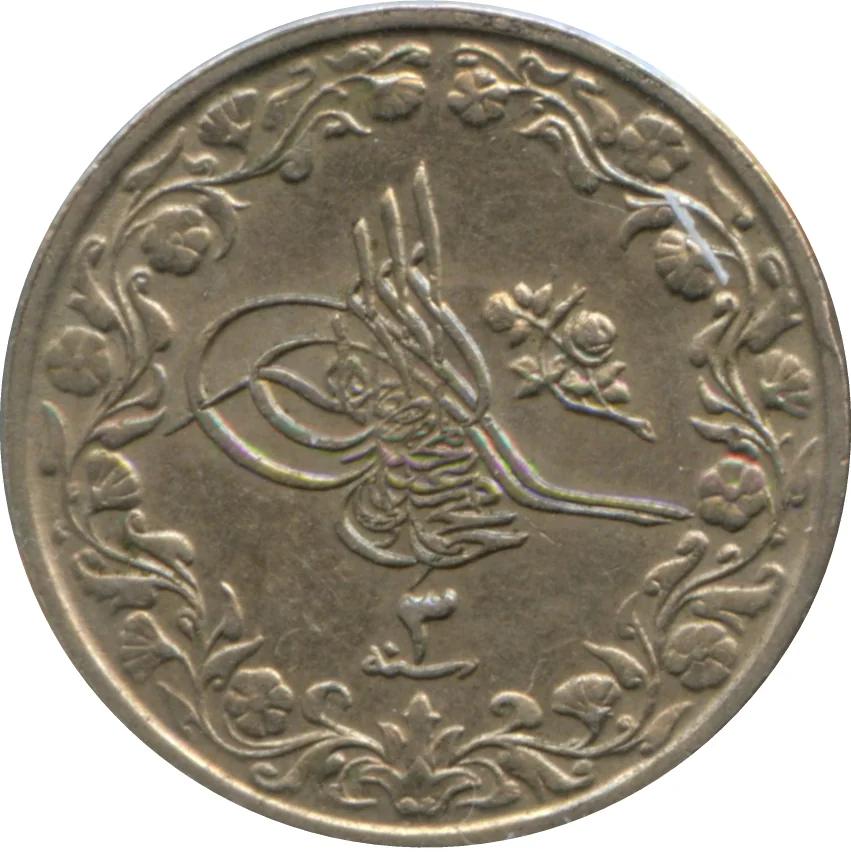
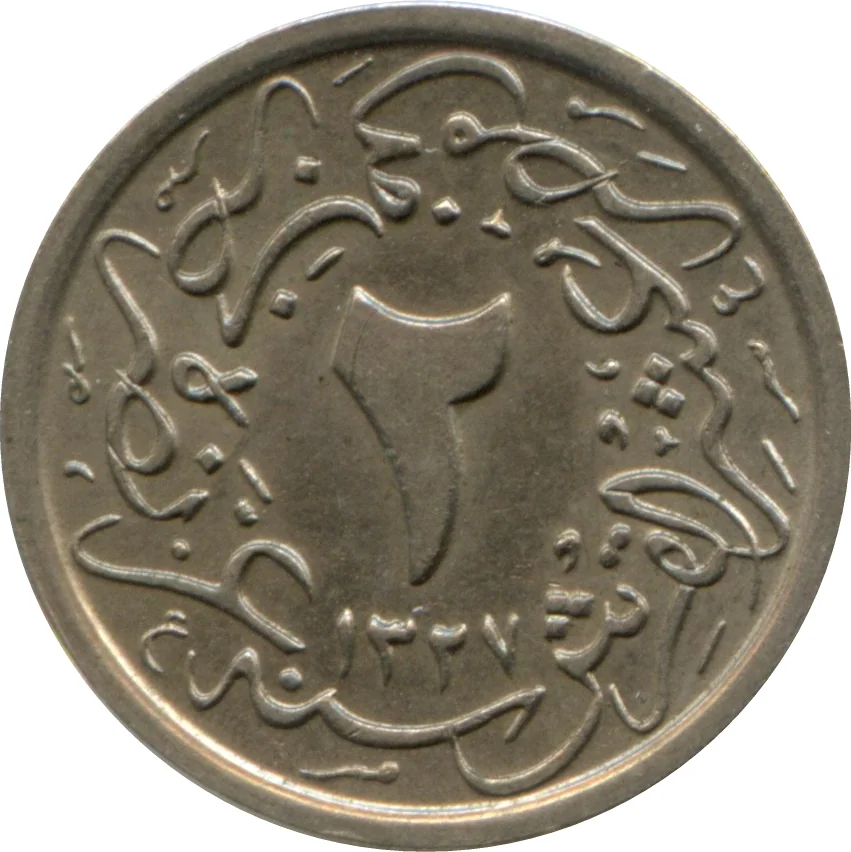
2⁄10 qirsh – Egypt
Add to wishlist
Egypt
Context
Years: 1910–1913
Islamic (Hijri) Year:: 1327
Issuer: Egypt
Ruler: Mehmed V Reşâd
Currency:
(1834—1916)
Demonetized: Yes
Total mintage: 3,000,000
Material
References
KM: #
Numista: #15241
Reverse
Description:
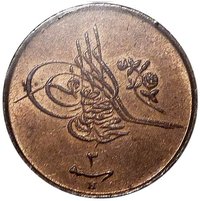
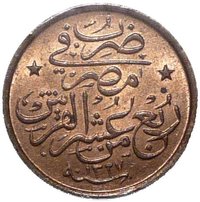
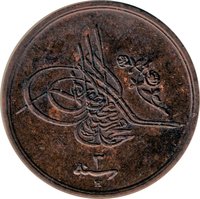
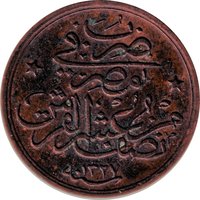
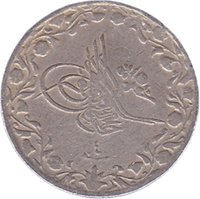
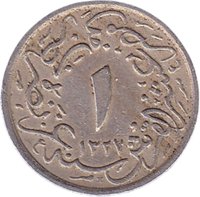
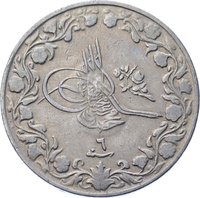
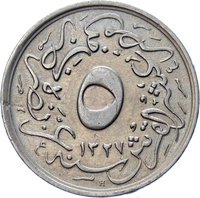
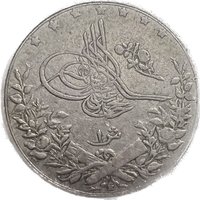
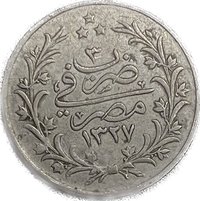
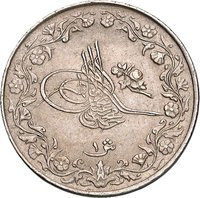
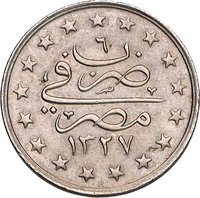
Denomination and accession date below. All reverses bear date ١٣٢٧.
Inscription:
١٣٢٧
Script: Arabic
Edge
Plain
Mints
| Name | Mark |
|---|---|
| Heaton and Sons / The Mint Birmingham | H |
Mintings
| Year | Mint Mark | Mintage | Quality | Collection |
|---|---|---|---|---|
| 1910 | — | 1,000,000 | ||
| 1911 | — | 1,000,000 | ||
| 1913 | — | 1,000,000 | ||
| 1913 | — | — | Proof | |
| 1914 | H | — |
Historical background
In 1910, Egypt's currency situation was a complex legacy of its integration into the British Empire's financial orbit, despite remaining nominally part of the Ottoman Empire. The official currency was the Egyptian pound (EGP), introduced in 1834, which was pegged to and at parity with the British gold sovereign. This bimetallic system, however, was effectively dominated by gold, as the government limited the legal tender status of silver coins to facilitate the gold standard. The National Bank of Egypt, a private institution with British leadership, acted as the quasi-central bank and was the sole issuer of banknotes, which circulated alongside gold and limited silver coinage.
This monetary framework was fundamentally shaped by the British occupation that began in 1882. A primary goal was to ensure Egypt's solvency to service its substantial foreign debt, largely held by European bondholders. Adherence to the gold standard provided stability for international trade and investment, crucial for a cotton-exporting economy, and symbolised fiscal discipline demanded by European creditors. The system successfully eliminated exchange rate volatility with Britain, Egypt's dominant trading and colonial partner, but it also tightly bound Egypt's economy to London's financial policies and priorities.
Consequently, the currency regime of 1910 reflected a state of colonial economic control. It provided modern monetary stability and facilitated the growth of export agriculture, yet it was designed to serve foreign interests and creditors first. The arrangement left little room for autonomous Egyptian monetary policy, prioritizing the smooth outflow of debt payments and commercial profits over domestic industrial development or insulation from global economic shocks, a dependency that would pose significant challenges in the decades to come.
This monetary framework was fundamentally shaped by the British occupation that began in 1882. A primary goal was to ensure Egypt's solvency to service its substantial foreign debt, largely held by European bondholders. Adherence to the gold standard provided stability for international trade and investment, crucial for a cotton-exporting economy, and symbolised fiscal discipline demanded by European creditors. The system successfully eliminated exchange rate volatility with Britain, Egypt's dominant trading and colonial partner, but it also tightly bound Egypt's economy to London's financial policies and priorities.
Consequently, the currency regime of 1910 reflected a state of colonial economic control. It provided modern monetary stability and facilitated the growth of export agriculture, yet it was designed to serve foreign interests and creditors first. The arrangement left little room for autonomous Egyptian monetary policy, prioritizing the smooth outflow of debt payments and commercial profits over domestic industrial development or insulation from global economic shocks, a dependency that would pose significant challenges in the decades to come.
Series: 1910 Egypt circulation coins
🌱 Fairly Common