

Obverse
Description:
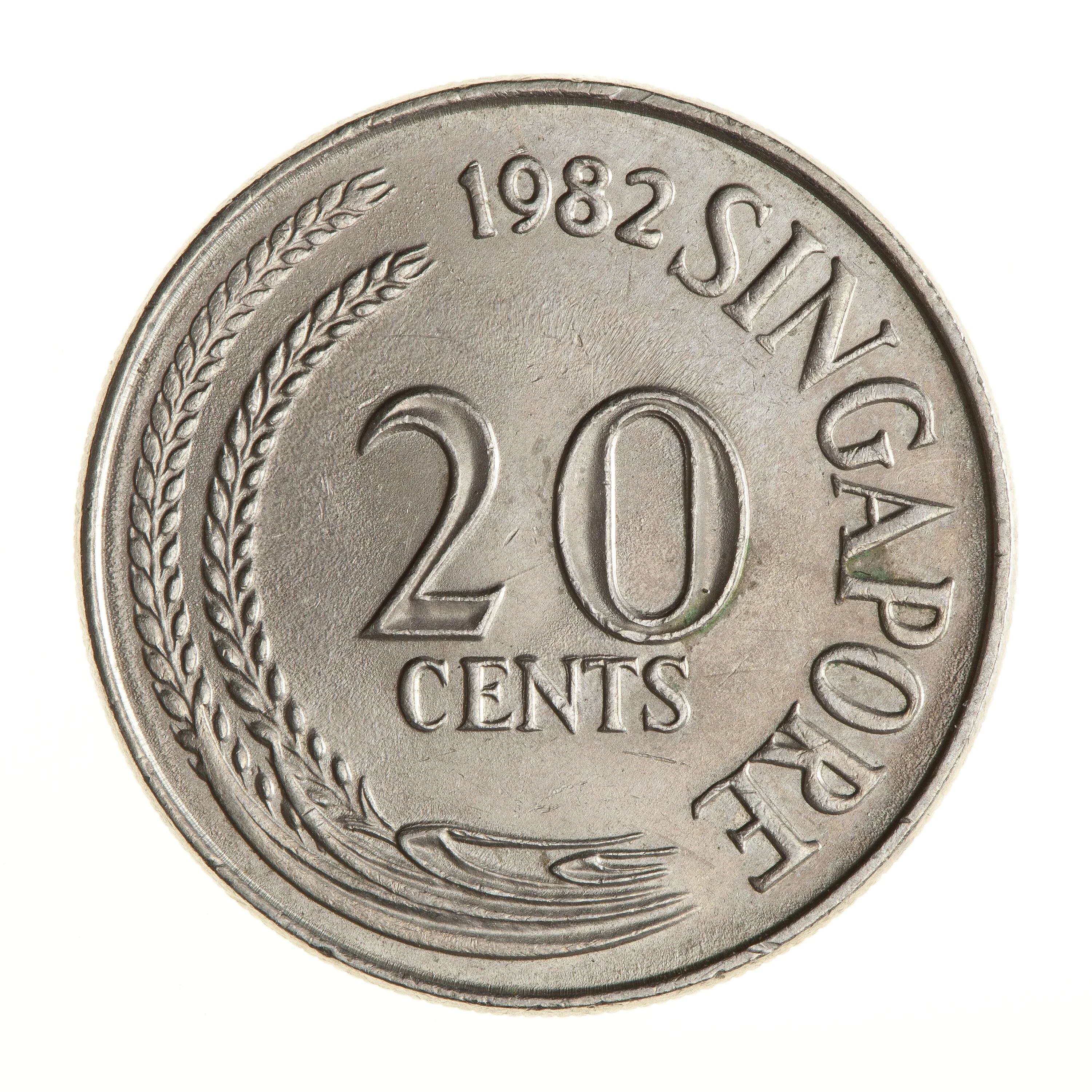
Denomination between paddy stalks, date above.
Inscription:
1968
SINGAPORE
20 CENTS
SINGAPORE
20 CENTS
Translation:
1968
SINGAPORE
20 CENTS
SINGAPORE
20 CENTS
Script: Latin
Language: English
Engraver: Stuart Devlin
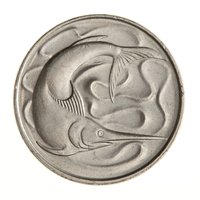
Reverse
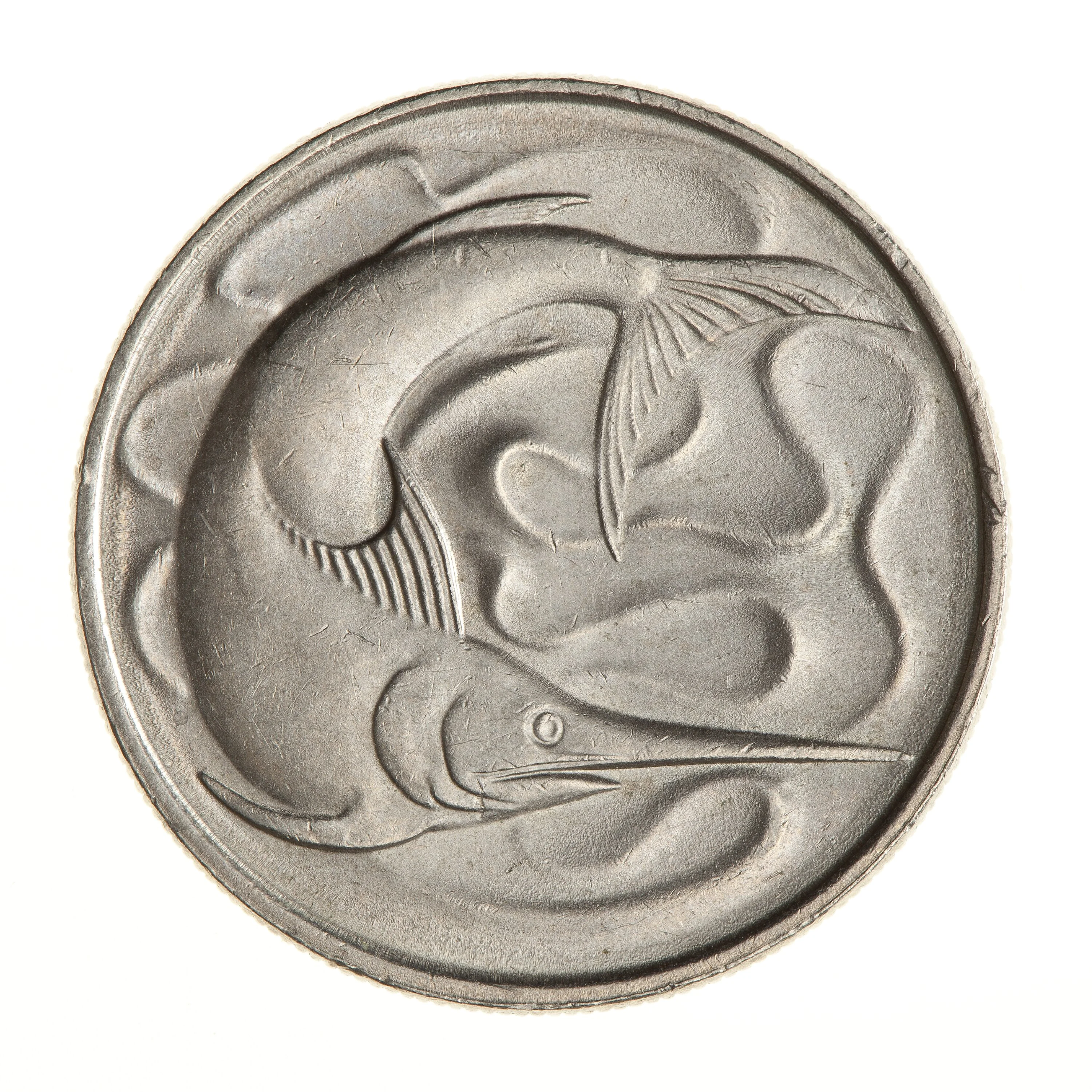
Description:
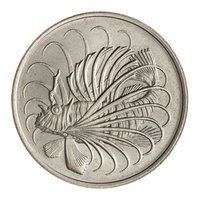
Swordfish facing right on a wavy water background.
Engraver: Stuart Devlin
Edge
Reeded
Mints
| Name | Mark |
|---|---|
| Royal Mint (Tower Hill) | — |
| Singapore Mint | (sm) |
Mintings
| Year | Mint Mark | Mintage | Quality | Collection |
|---|---|---|---|---|
| 1967 | Royal Mint | 36,500,000 | ||
| 1967 | Royal Mint | 2,000 | Proof | |
| 1967 | Royal Mint | 36,500,000 | ||
| 1967 | Royal Mint | 2,000 | Proof | |
| 1967 | Royal Mint | 36,500,000 | ||
| 1967 | Royal Mint | 2,000 | Proof | |
| 1967 | Royal Mint | 36,500,000 | ||
| 1967 | Royal Mint | 2,000 | Proof | |
| 1967 | Royal Mint | 36,500,000 | ||
| 1967 | Royal Mint | 2,000 | Proof | |
| 1967 | — | 36,500,000 | ||
| 1967 | — | 2,000 | Proof | |
| 1968 | — | 10,934,000 | ||
| 1968 | — | 5,000 | Proof | |
| 1969 | — | 3,000 | Proof | |
| 1969 | — | 8,460,000 | ||
| 1970 | — | 3,250,000 | ||
| 1971 | — | 1,732,000 | ||
| 1972 | — | 9,107,000 | ||
| 1972 | — | 749 | Proof | |
| 1973 | — | 8,838,000 | ||
| 1973 | — | 1,000 | Proof | |
| 1974 | — | 1,500 | Proof | |
| 1974 | — | 4,567,000 | ||
| 1975 | — | 1,546,000 | ||
| 1975 | — | 3,000 | Proof | |
| 1976 | sm | 3,500 | Proof | |
| 1976 | — | 19,760,000 | ||
| 1977 | — | 7,074,000 | ||
| 1977 | sm | 3,500 | Proof | |
| 1978 | — | 4,450,000 | ||
| 1978 | sm | 4,000 | Proof | |
| 1979 | — | 14,865,000 | ||
| 1979 | sm | 3,500 | Proof | |
| 1980 | — | 27,903,000 | ||
| 1980 | sm | 14,000 | Proof | |
| 1981 | — | 46,997,000 | ||
| 1982 | sm | 20,000 | Proof | |
| 1982 | — | 25,234,000 | ||
| 1983 | — | 6,424,000 | ||
| 1983 | sm | 15,000 | Proof | |
| 1984 | — | 9,290,000 | ||
| 1984 | sm | 15,000 | Proof | |
| 1985 | — | 148,424 | In sets |
Historical background
In 1967, Singapore faced the complex task of establishing its own monetary identity following its separation from Malaysia in 1965. Prior to this, the island was part of a currency union, using the Malayan dollar and later the Malaysian dollar issued by the Board of Commissioners of Currency, Malaya and British Borneo. The dissolution of the union required Singapore to swiftly create a distinct currency to assert its economic sovereignty and ensure financial stability, while managing the practical challenge of replacing the circulating notes and coins.
The solution was the Currency Interchangeability Agreement, a critical but temporary arrangement with Malaysia that allowed the currencies of both nations to remain legal tender and circulate at par until 1973. This provided essential stability during the transition. On June 12, 1967, the newly formed Board of Commissioners of Currency, Singapore, issued its first series of notes and coins, famously known as the "Orchid Series" for its floral designs. These notes bore the signature of then Minister for Finance, Dr. Goh Keng Swee, and were initially pegged to the British Pound Sterling.
This monetary independence was a cornerstone of Singapore's early nation-building, symbolizing its confidence and separate economic destiny. The establishment of the Singapore Dollar (SGD) provided the government with direct control over monetary policy, a vital tool for guiding the young nation's rapid industrialization and development. The 1967 currency issue laid the foundational framework for the strong and internationally respected currency that the SGD is today, marking a definitive step in Singapore's journey as a sovereign republic.
The solution was the Currency Interchangeability Agreement, a critical but temporary arrangement with Malaysia that allowed the currencies of both nations to remain legal tender and circulate at par until 1973. This provided essential stability during the transition. On June 12, 1967, the newly formed Board of Commissioners of Currency, Singapore, issued its first series of notes and coins, famously known as the "Orchid Series" for its floral designs. These notes bore the signature of then Minister for Finance, Dr. Goh Keng Swee, and were initially pegged to the British Pound Sterling.
This monetary independence was a cornerstone of Singapore's early nation-building, symbolizing its confidence and separate economic destiny. The establishment of the Singapore Dollar (SGD) provided the government with direct control over monetary policy, a vital tool for guiding the young nation's rapid industrialization and development. The 1967 currency issue laid the foundational framework for the strong and internationally respected currency that the SGD is today, marking a definitive step in Singapore's journey as a sovereign republic.
Series: 1967 Singapore circulation coins
🌱 Very Common