

10 dollars – Canada
Add to wishlist
Non-circulating coins
Series: Animal Portrait
Canada
Context
Material
Diameter: 20 mm
Weight: 7.8 g
Gold Weight:: 7.80 g
Thickness: 1.7 mm
Shape: Round
Composition: 99.99% Gold
Standard: Silver quarter ounce
Magnetic: No
Technique: Milled
Alignment: Medal alignment
flip
References
Numista: #97369
Value
Exchange value: 10 CAD
Bullion value: $1214.36
Inflation-adjusted value: 12.60 CAD
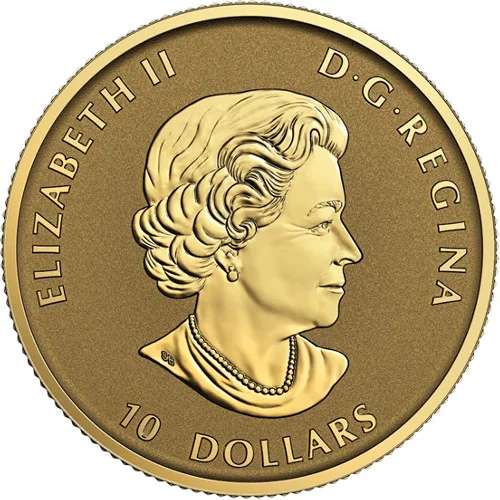
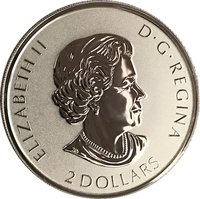
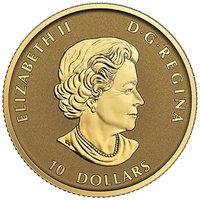
Obverse
Description:
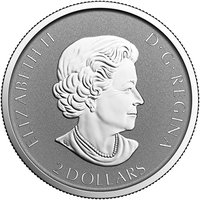
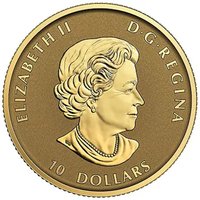
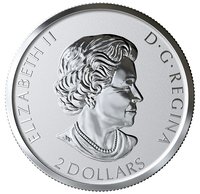
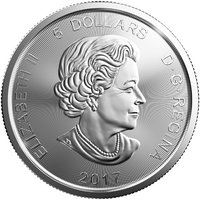
Queen Elizabeth II at 77, facing right, wearing a necklace and earrings.
Inscription:
ELIZABETH II D·G·REGINA
10 DOLLARS
10 DOLLARS
Translation:
Elizabeth II by the Grace of God Queen
10 Dollars
10 Dollars
Script: Latin
Engraver: Susan Taylor
Designer: Susanna Blunt
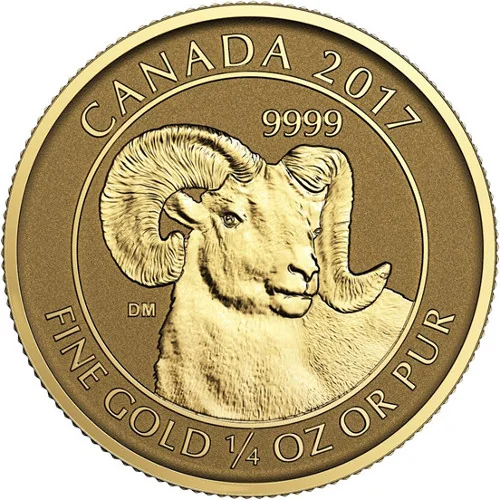
Reverse
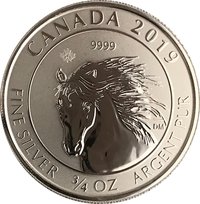
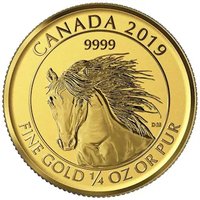
Description:
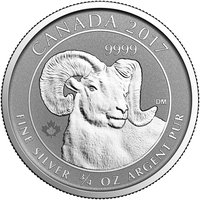
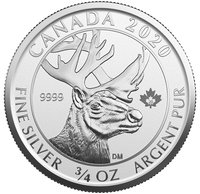
Ram head in circle, date above.
Inscription:
CANADA 2017
9999
DM
FINE GOLD
9999
DM
FINE GOLD
Script: Latin
Designer: Denis Mayer Jr.
Edge
Reeded
Mints
| Name | Mark |
|---|---|
| Royal Canadian Mint of Ottawa | — |
Mintings
| Year | Mint Mark | Mintage | Quality | Collection |
|---|---|---|---|---|
| 2017 | — | — | Proof |
Historical background
In 2017, Canada's currency situation was characterized by a strengthening Canadian dollar and a cautious economic outlook. The loonie, as it is colloquially known, began the year near a multi-year low of approximately US$0.74 but embarked on a significant rally, climbing over 10% to break above US$0.82 by September. This surge was driven by two primary factors: a sustained rise in global oil prices, which benefited the commodity-linked currency, and a shift in monetary policy expectations. The Bank of Canada, under Governor Stephen Poloz, raised its benchmark interest rate twice in the latter half of the year (in July and September), marking the first hikes in seven years and signaling confidence in the domestic economy's recovery from the 2014-2015 oil price shock.
This currency appreciation presented a complex challenge for policymakers and businesses. While a stronger dollar helped curb inflation by making imports cheaper and provided relief to consumers, it simultaneously threatened the competitiveness of Canada's vital non-energy exports, particularly in the manufacturing and forestry sectors. The situation created a delicate balancing act for the Bank of Canada, which had to weigh robust GDP growth and a tightening labor market against the potential headwinds of a high-flying loonie and ongoing uncertainty in NAFTA renegotiations, which began that year at the insistence of the United States.
By the close of 2017, the Canadian dollar had retreated somewhat from its September peak, settling around US$0.80, as the market digested the Bank of Canada's more cautious forward guidance and persistent trade tensions. The year concluded with a currency that was significantly stronger than where it started, reflecting an economy on firmer footing but facing new pressures. The overarching narrative was one of transition—from monetary stimulus to tightening, from oil price weakness to recovery, and navigating an increasingly protectionist trade environment under a volatile exchange rate.
This currency appreciation presented a complex challenge for policymakers and businesses. While a stronger dollar helped curb inflation by making imports cheaper and provided relief to consumers, it simultaneously threatened the competitiveness of Canada's vital non-energy exports, particularly in the manufacturing and forestry sectors. The situation created a delicate balancing act for the Bank of Canada, which had to weigh robust GDP growth and a tightening labor market against the potential headwinds of a high-flying loonie and ongoing uncertainty in NAFTA renegotiations, which began that year at the insistence of the United States.
By the close of 2017, the Canadian dollar had retreated somewhat from its September peak, settling around US$0.80, as the market digested the Bank of Canada's more cautious forward guidance and persistent trade tensions. The year concluded with a currency that was significantly stronger than where it started, reflecting an economy on firmer footing but facing new pressures. The overarching narrative was one of transition—from monetary stimulus to tightening, from oil price weakness to recovery, and navigating an increasingly protectionist trade environment under a volatile exchange rate.
Series: Animal Portrait




✨ Legendary