

5 shilingi (Tanganyikan independence) – Tanzania
Add to wishlist
Circulating commemorative coins
Commemoration: 10 years of independence of Tanganyika from the United Kingdom
Tanzania
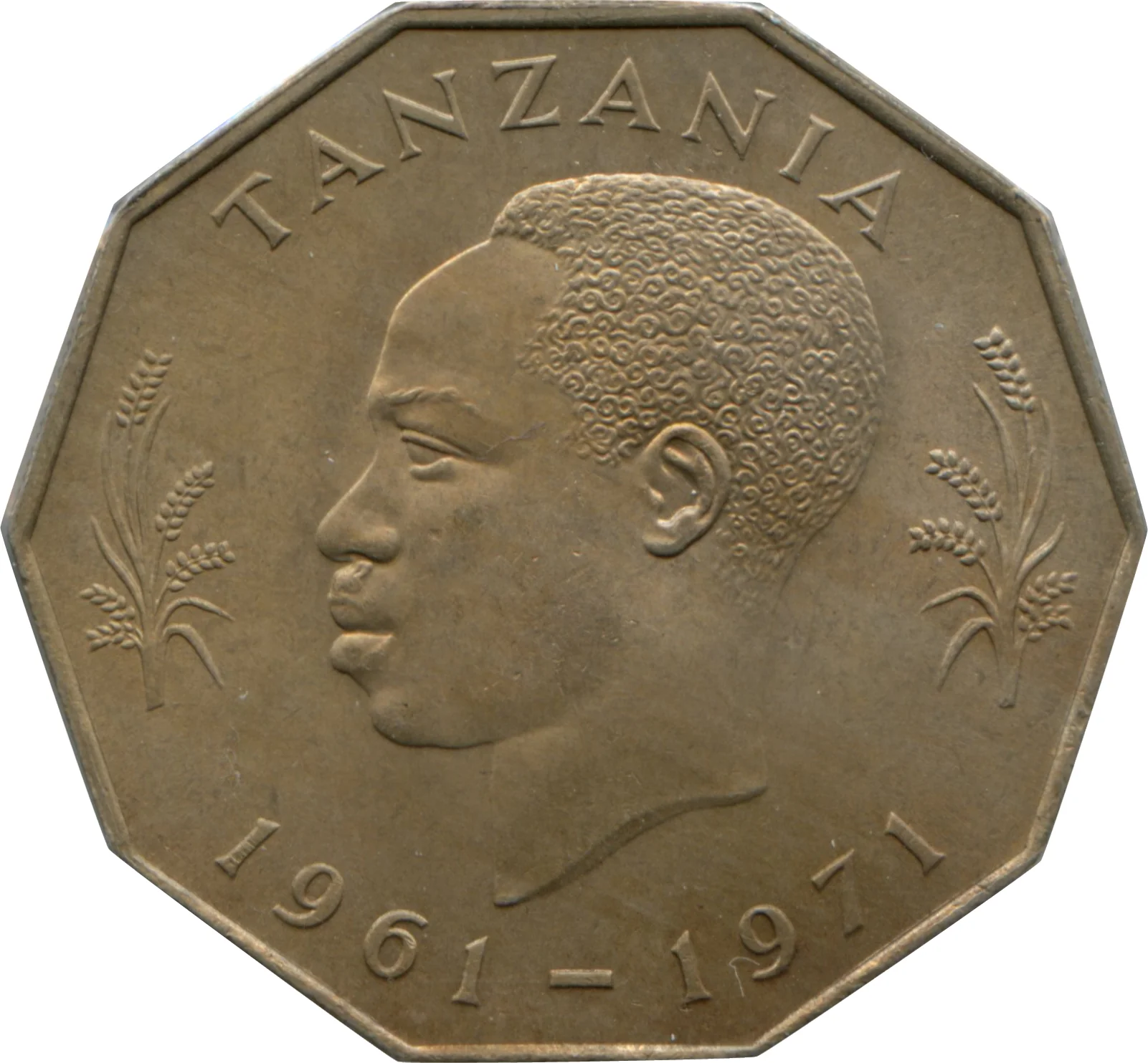
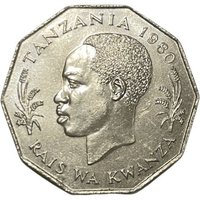
Obverse
Description:
President Nyerere's head.
Inscription:
TANZANIA
1961-1971
1961-1971
Script: Latin
Engraver: Christopher Ironside
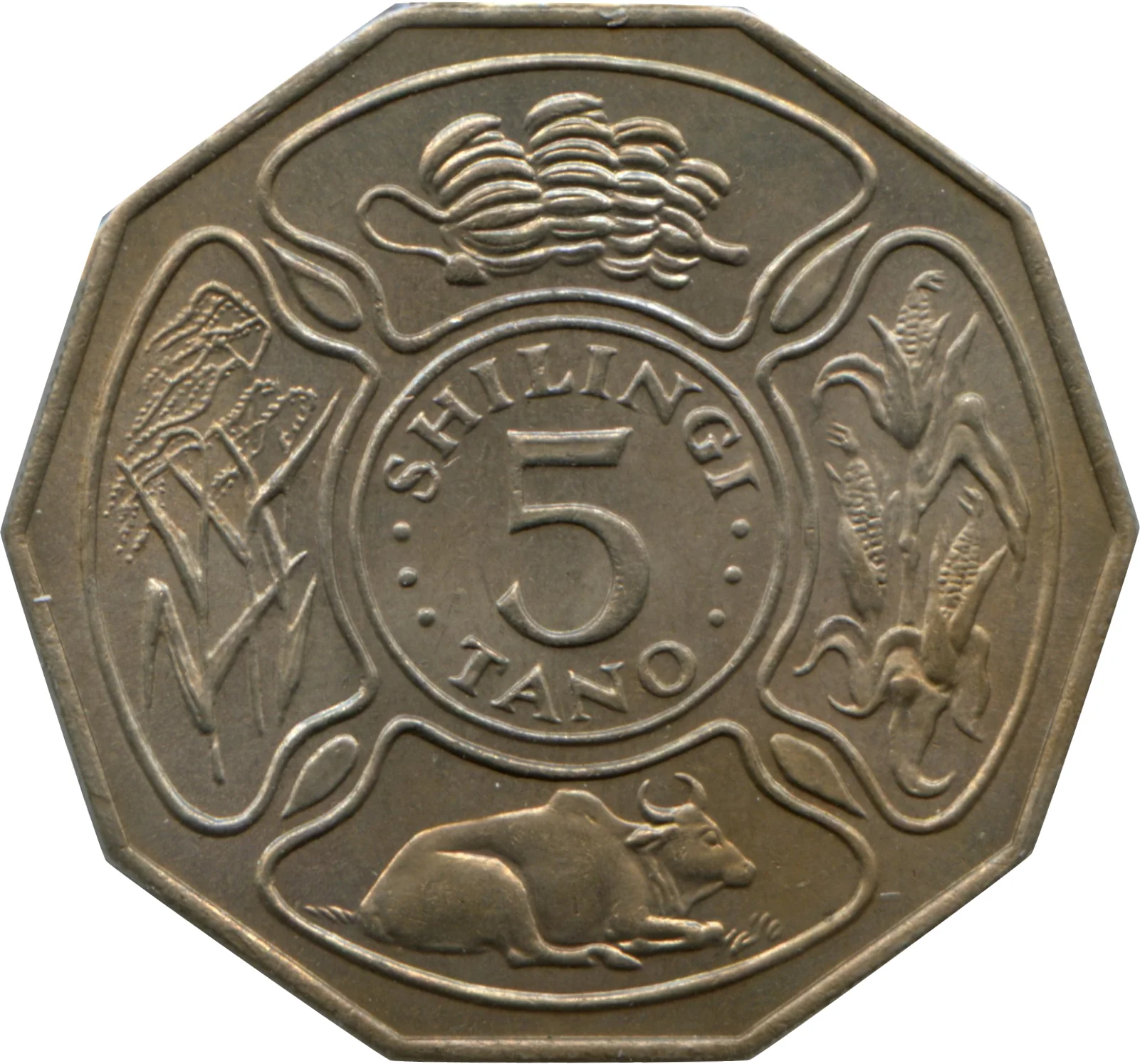
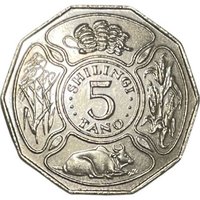
Reverse
Description:
Banana cereal milk.
Inscription:
SHILINGI
5
TANO
5
TANO
Translation:
SHILLING
5
FIVE
5
FIVE
Script: Latin
Language: Swahili
Engraver: Christopher Ironside
Edge
Segmented Reeding (per side; 5 each reeded & plain)
Categories
| Animal> Cow |
| Plant> Fruit |
| Event> Independence |
| Person> Politician |
| Organization> FAO |
Mints
| Name | Mark |
|---|---|
| Royal Mint (Tower Hill) | — |
| Royal Mint | — |
Mintings
| Year | Mint Mark | Mintage | Quality | Collection |
|---|---|---|---|---|
| 1971 | — | 1,000,000 |
Historical background
In 1971, Tanzania's currency situation was fundamentally shaped by the socialist policies of President Julius Nyerere's Ujamaa program and the broader geopolitical context of post-colonial Africa. The Tanzanian shilling, introduced in 1966 to replace the East African shilling, was managed within the East African Currency Board until the establishment of the Bank of Tanzania in 1966. However, by 1971, Tanzania was asserting greater monetary sovereignty, a move intensified by the political rift with its East African Community partners, Kenya and Uganda, following the 1971 Ugandan coup.
A pivotal event occurred that year with the government's demonetization of the 100-shilling note. This sudden move, announced in June, was officially framed as a measure to combat black-market currency trading and curb illicit wealth accumulation, aligning with Ujamaa's egalitarian principles. In practice, it functioned as a forced exchange where individuals had to declare the source of their large notes, effectively targeting hoarded cash and undermining unofficial forex markets. This action caused significant public disruption but underscored the state's willingness to use direct monetary controls to pursue its socio-economic goals.
Internationally, Tanzania's currency was insulated but not immune to global pressures. While maintaining a fixed exchange rate pegged to the US dollar (and later the SDR), the country operated strict foreign exchange controls to conserve scarce reserves and prioritize imports of essential goods and development projects. The 1971 global monetary crisis, including the US dollar's devaluation, further complicated this managed system. Thus, Tanzania's currency landscape in 1971 was defined by a tense balance between socialist-driven domestic interventions and the practical challenges of managing a vulnerable economy within a shifting international financial order.
A pivotal event occurred that year with the government's demonetization of the 100-shilling note. This sudden move, announced in June, was officially framed as a measure to combat black-market currency trading and curb illicit wealth accumulation, aligning with Ujamaa's egalitarian principles. In practice, it functioned as a forced exchange where individuals had to declare the source of their large notes, effectively targeting hoarded cash and undermining unofficial forex markets. This action caused significant public disruption but underscored the state's willingness to use direct monetary controls to pursue its socio-economic goals.
Internationally, Tanzania's currency was insulated but not immune to global pressures. While maintaining a fixed exchange rate pegged to the US dollar (and later the SDR), the country operated strict foreign exchange controls to conserve scarce reserves and prioritize imports of essential goods and development projects. The 1971 global monetary crisis, including the US dollar's devaluation, further complicated this managed system. Thus, Tanzania's currency landscape in 1971 was defined by a tense balance between socialist-driven domestic interventions and the practical challenges of managing a vulnerable economy within a shifting international financial order.
🌱 Common