

½ Reul – Ireland
Ireland
Context

Material
Diameter: 17.7 mm
Weight: 3.24 g
Thickness: 1.81 mm
Shape: Round
Composition: Copper-nickel
Technique: Milled
Alignment: Medal alignment
flip
References
KM: #Click to copy to clipboard12a
Numista: #968
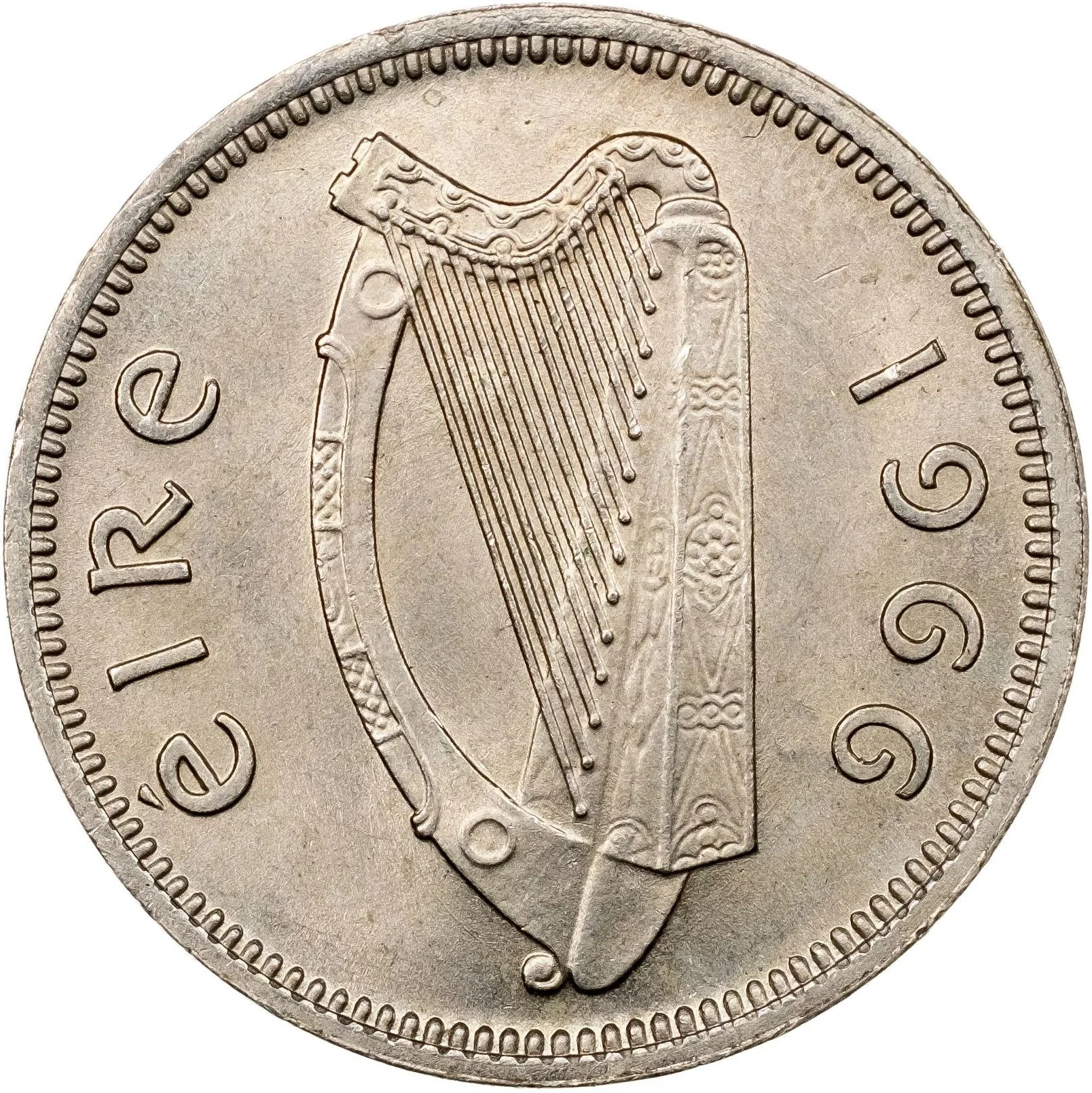
Obverse
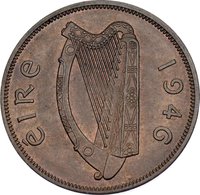
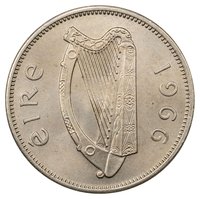
Description:
Cláirseach (Gaelic harp) | Country | Year
Inscription:
éire 1966
Translation:
Ireland 1966
Script: Latin (Gaelic)
Language: Irish
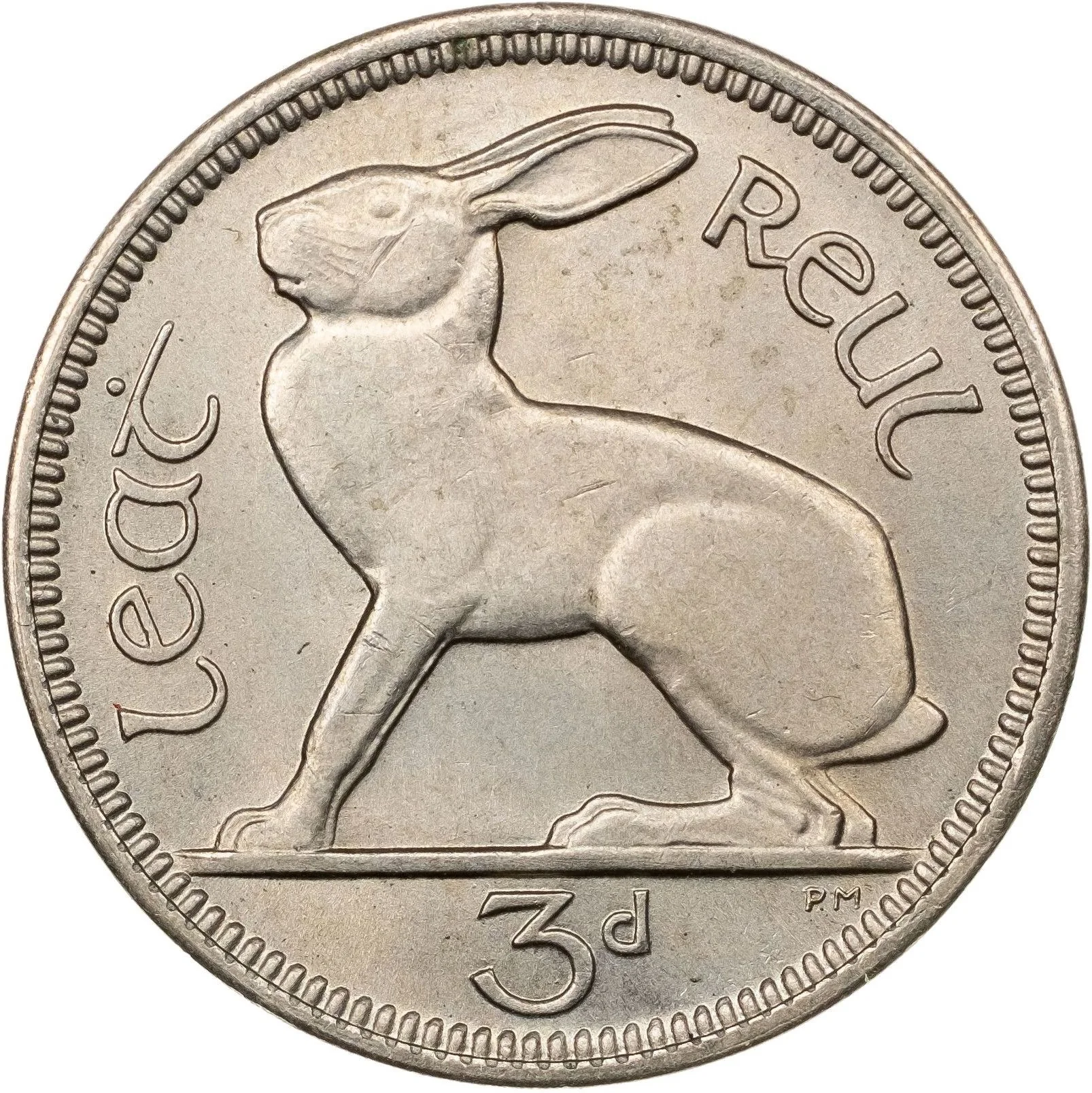
Reverse
Description:
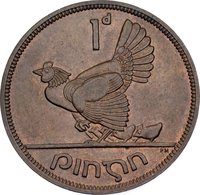
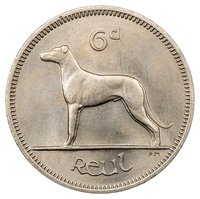
Hare seated, facing left.
Inscription:
leat reul
3d
PM
3d
PM
Translation:
Let us rule.
Script: Latin (Gaelic)
Language: Scots Gaelic
Engraver: Percy Metcalfe
Edge
Plain
Mints
| Name | Mark |
|---|---|
| Royal Mint (Tower Hill) | — |
Mintings
| Year | Mint Mark | Mintage | Quality | Collection |
|---|---|---|---|---|
| 1942 | — | 4,000,000 | ||
| 1942 | — | — | Proof | |
| 1943 | — | 1,360,000 | ||
| 1943 | — | — | Proof | |
| 1946 | — | — | Proof | |
| 1946 | — | 800,000 | ||
| 1948 | — | 1,600,000 | ||
| 1948 | — | — | Proof | |
| 1949 | — | — | Proof | |
| 1949 | — | 1,200,000 | ||
| 1950 | — | 1,600,000 | ||
| 1950 | — | — | Proof | |
| 1953 | — | 1,600,000 | ||
| 1953 | — | — | Proof | |
| 1956 | — | — | Proof | |
| 1956 | — | 1,200,000 | ||
| 1961 | — | 2,400,000 | ||
| 1961 | — | — | Proof | |
| 1962 | — | 3,200,000 | ||
| 1962 | — | — | Proof | |
| 1963 | — | 4,000,000 | ||
| 1963 | — | — | Proof | |
| 1964 | — | 4,000,000 | ||
| 1965 | — | 3,600,000 | ||
| 1966 | — | 4,000,000 | ||
| 1967 | — | 2,400,000 | ||
| 1968 | — | 4,000,000 | ||
| 1968 | — | — | Proof |
Historical background
In 1942, Ireland's currency situation was defined by its complex relationship with the United Kingdom and the global context of the Second World War. Although the Irish Free State had introduced the distinct Irish pound (or punt) in 1928, it remained pegged at par with the British pound sterling under the Sterling Area Link. This meant the currencies were fully convertible, and British notes and coinage continued to circulate freely alongside Irish issues. This monetary union provided stability but was a constant reminder of the enduring economic integration with Britain, a sensitive point for a nation asserting its sovereignty.
The outbreak of the Emergency (Ireland's term for WWII) critically shaped the currency environment. Strict exchange controls were implemented to conserve foreign reserves, particularly the vital US dollars needed to pay for essential imports from non-sterling areas. While the link to sterling was maintained, the flow of funds was tightly regulated by the Central Bank of Ireland, established in 1943 to take greater control of monetary policy. The war also caused significant inflationary pressures due to severe shortages of consumer goods, which the fixed currency link could not mitigate.
Consequently, the physical currency in public hands in 1942 was a practical symbol of this duality. People used a mixture of Bank of England notes and notes issued by Irish commercial banks, all valued equally. However, the scarcity of metal led to the introduction of distinctive Irish coins (like the "Emergency" issues minted from 1940 in poorer-quality metals) and even to the creation of local token currency by some towns and businesses. Thus, the currency situation reflected a nation navigating economic dependency, wartime survival, and slow steps toward greater financial autonomy.
The outbreak of the Emergency (Ireland's term for WWII) critically shaped the currency environment. Strict exchange controls were implemented to conserve foreign reserves, particularly the vital US dollars needed to pay for essential imports from non-sterling areas. While the link to sterling was maintained, the flow of funds was tightly regulated by the Central Bank of Ireland, established in 1943 to take greater control of monetary policy. The war also caused significant inflationary pressures due to severe shortages of consumer goods, which the fixed currency link could not mitigate.
Consequently, the physical currency in public hands in 1942 was a practical symbol of this duality. People used a mixture of Bank of England notes and notes issued by Irish commercial banks, all valued equally. However, the scarcity of metal led to the introduction of distinctive Irish coins (like the "Emergency" issues minted from 1940 in poorer-quality metals) and even to the creation of local token currency by some towns and businesses. Thus, the currency situation reflected a nation navigating economic dependency, wartime survival, and slow steps toward greater financial autonomy.
🌱 Very Common