

Obverse
Description:
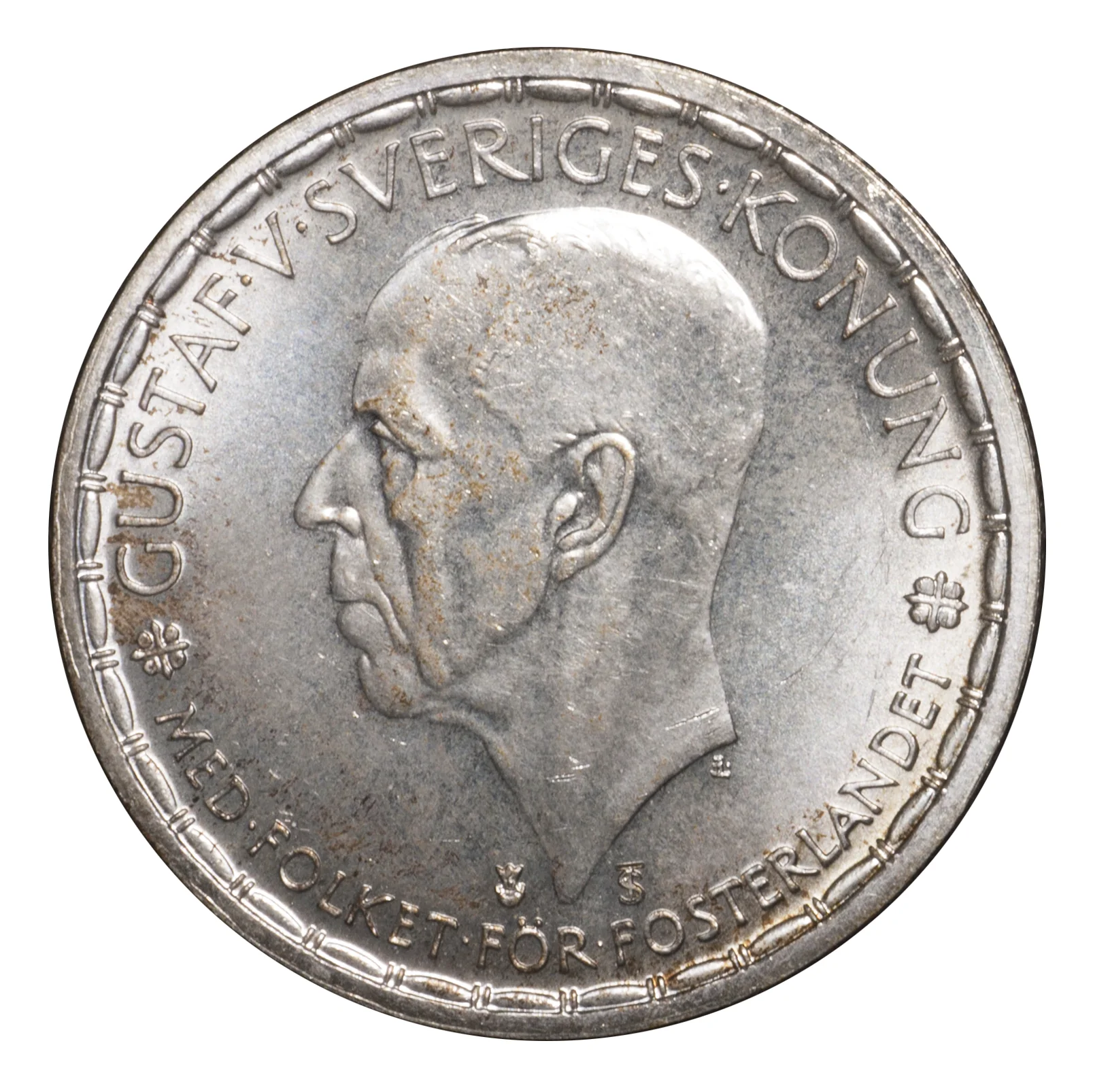
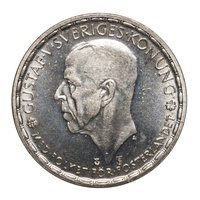
Head of King Gustaf V left. Neck-cut divides mintmarks. Legend and motto around rim.
Inscription:
GUSTAF·V·SVERIGES·KONUNG
EL.
TS
MED·FOLKET·FÖR·FOSTERLANDET
EL.
TS
MED·FOLKET·FÖR·FOSTERLANDET
Translation:
GUSTAF V SWEDEN'S KING
WITH THE PEOPLE FOR THE FATHERLAND
WITH THE PEOPLE FOR THE FATHERLAND
Script: Latin
Language: Swedish
Engraver: Erik Lindberg
Reverse
Description:
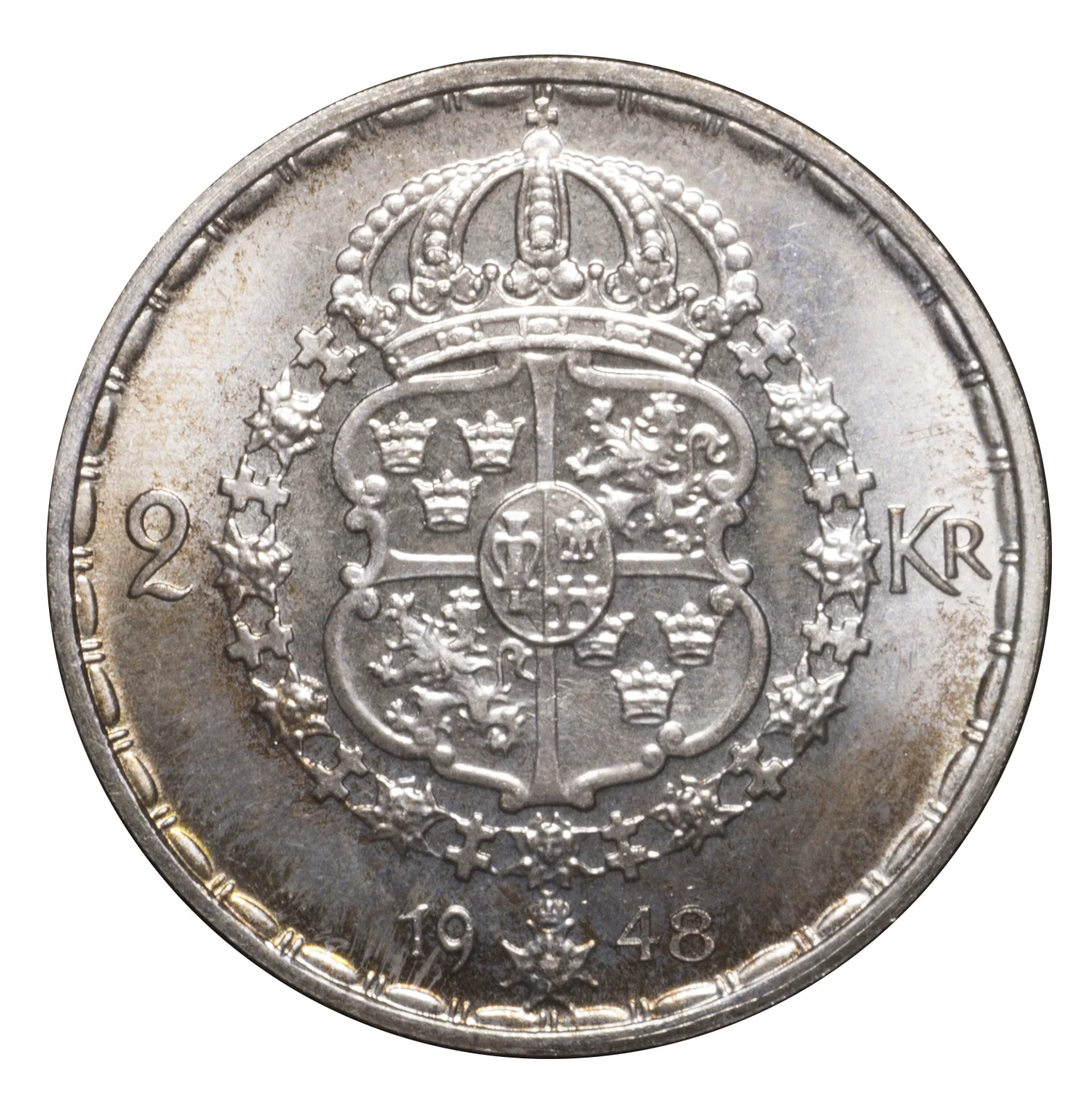
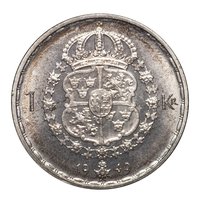
Swedish arms with Seraphim Chain divides value and date.
Inscription:
2 KR
19 47
19 47
Script: Latin
Engraver: Erik Lindberg
Edge
Reeded
Mints
| Name | Mark |
|---|---|
| Kungliga Myntet | — |
Mintings
| Year | Mint Mark | Mintage | Quality | Collection |
|---|---|---|---|---|
| 1942 | — | 200,000 | ||
| 1943 | — | 271,824 | ||
| 1944 | — | 627,200 | ||
| 1945 | — | — | ||
| 1946 | — | 978,000 | ||
| 1947 | — | 1,465,975 | ||
| 1948 | — | 281,660 | ||
| 1949 | — | 331,715 | ||
| 1950 | — | 3,727,465 |
Historical background
In 1942, Sweden's currency situation was defined by the pressures of World War II and a strict policy of neutrality. Although not a combatant, the Swedish economy was deeply affected by the conflict, operating under a comprehensive system of exchange controls, rationing, and trade regulations. The Riksbank maintained a fixed exchange rate for the Swedish krona, but its convertibility was severely restricted. International trade and currency flows were tightly managed by the government to preserve foreign exchange reserves, ensure essential imports (like fuel and food), and prevent economic destabilization from the surrounding war.
The primary challenge was balancing trade with both the Allied and Axis blocs, each demanding payment in scarce hard currencies or through complex clearing agreements. Trade with Nazi Germany, crucial for obtaining coal and other vital goods, was conducted through bilateral clearing accounts to avoid using gold or convertible currencies. Meanwhile, trade with the West was constrained by the British naval blockade and the need to use precious dollar and sterling reserves. This dual-track system created a segmented currency environment where the krona's effective value differed depending on the trading partner and the specific agreement in place.
Domestically, these external constraints led to inflationary pressures, which were partially suppressed by extensive price controls and rationing. The money supply increased due to wartime government spending, but direct controls on goods and prices, rather than interest rate policy, were the main tools for maintaining economic stability. Thus, the currency situation in 1942 was one of managed stability on the surface, underpinned by a complex web of controls designed to insulate the Swedish economy and its currency from the extreme volatility of the world at war.
The primary challenge was balancing trade with both the Allied and Axis blocs, each demanding payment in scarce hard currencies or through complex clearing agreements. Trade with Nazi Germany, crucial for obtaining coal and other vital goods, was conducted through bilateral clearing accounts to avoid using gold or convertible currencies. Meanwhile, trade with the West was constrained by the British naval blockade and the need to use precious dollar and sterling reserves. This dual-track system created a segmented currency environment where the krona's effective value differed depending on the trading partner and the specific agreement in place.
Domestically, these external constraints led to inflationary pressures, which were partially suppressed by extensive price controls and rationing. The money supply increased due to wartime government spending, but direct controls on goods and prices, rather than interest rate policy, were the main tools for maintaining economic stability. Thus, the currency situation in 1942 was one of managed stability on the surface, underpinned by a complex web of controls designed to insulate the Swedish economy and its currency from the extreme volatility of the world at war.
Series: 1942 Sweden circulation coins
🌱 Common