

25 Piastres – Lebanon
Lebanon
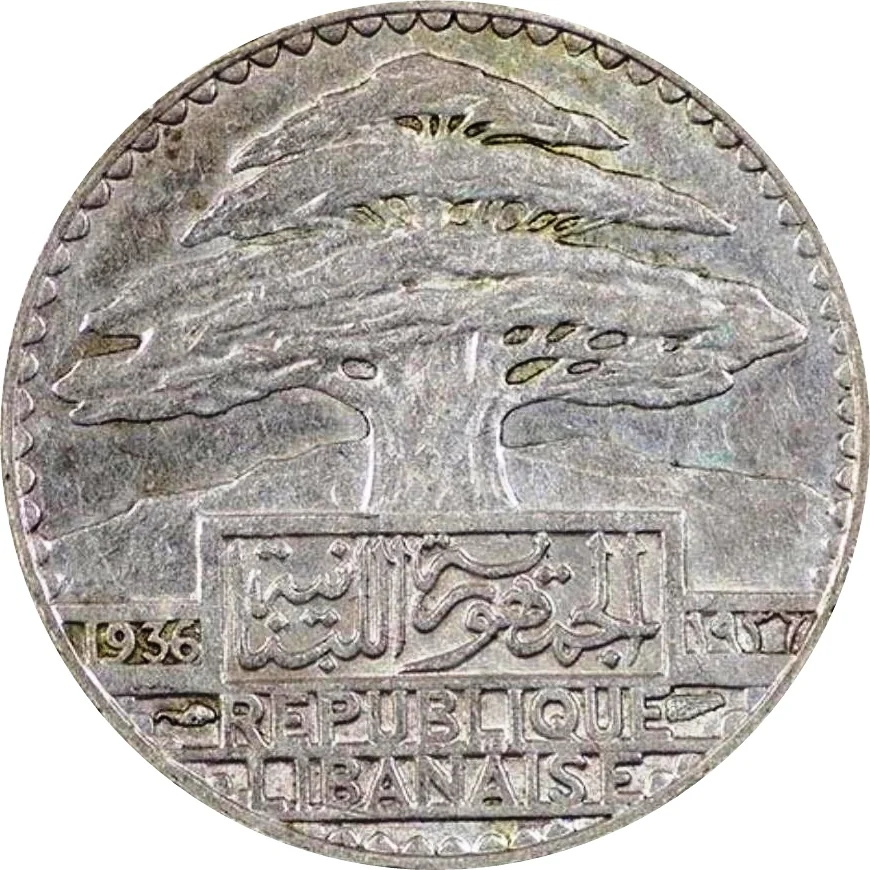
Obverse
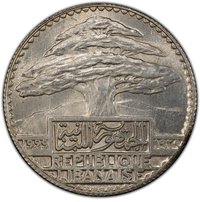
Description:
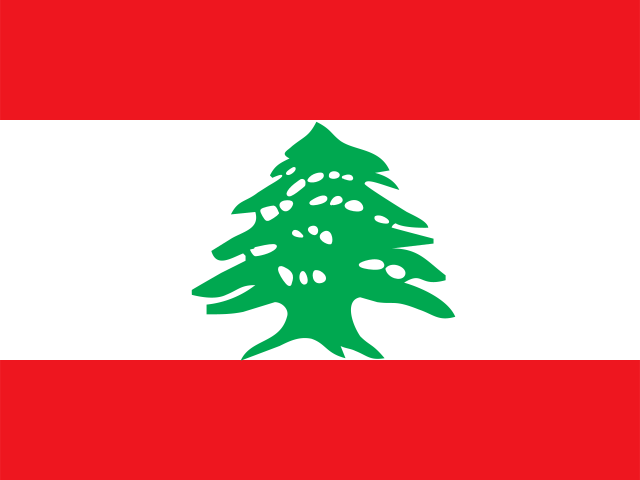
Cedar: symbol of Lebanon.
Inscription:
الجمهورية اللبنانية
RÉPUBLIQUE
LIBANAISE
1933 ١٩٣٣
RÉPUBLIQUE
LIBANAISE
1933 ١٩٣٣
Translation:
Lebanese Republic
Lebanese Republic
1933 1933
Lebanese Republic
1933 1933
Engraver: Lucien Georges Bazor
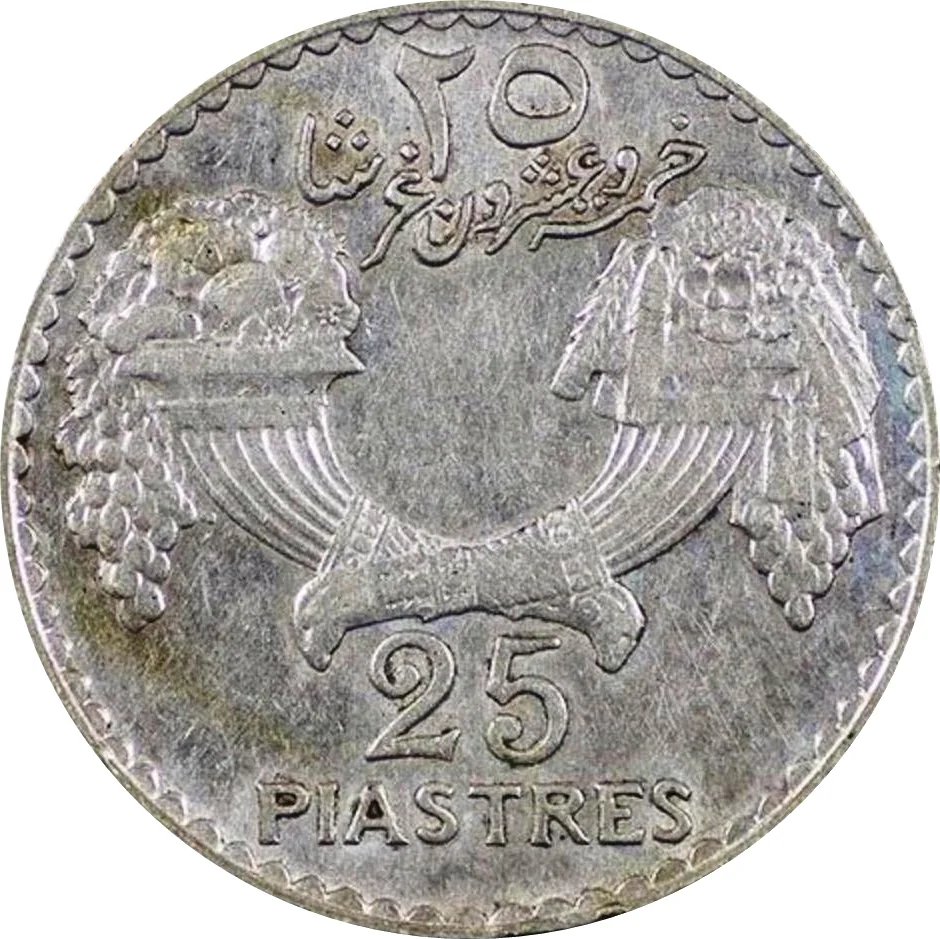
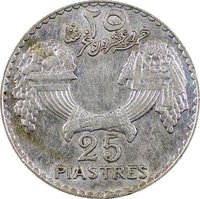
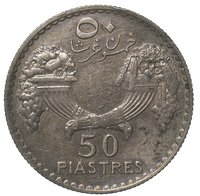
Reverse
Description:
Crossed cornucopias with value in Arabic and French.
Inscription:
٢٥
خمسة وعشرون غرشا
25
PIASTRES
خمسة وعشرون غرشا
25
PIASTRES
Translation:
Twenty-Five Ghirsh
Twenty-Five
Piastres
Twenty-Five
Piastres
Language: Arabic
Engraver: Lucien Georges Bazor
Edge
Reeded
Categories
| Plant> Tree |
| Symbol> Cornucopia |
Mints
| Name | Mark |
|---|---|
| Monnaie de Paris | — |
Mintings
| Year | Mint Mark | Mintage | Quality | Collection |
|---|---|---|---|---|
| 1929 | — | 600,064 | ||
| 1933 | — | 200,000 | ||
| 1936 | — | 400,000 |
Historical background
In 1929, Lebanon's currency situation was intrinsically tied to its status as a French mandate under the League of Nations, established after the fall of the Ottoman Empire. The monetary system was governed by the Banque de Syrie et du Grand-Liban (BSGL), a private French institution granted the exclusive privilege of note issue for both Syria and Lebanon. The currency in circulation was the Syrian-Lebanese pound (or livre), which was not an independent currency but a note issue firmly pegged to the French franc at a fixed rate of 20 francs = 1 Syrian-Lebanese pound. This arrangement integrated the mandate's economy into the French monetary zone, ensuring stability but subordinating its financial policy to French interests and the health of the franc itself.
This peg faced a significant test in the late 1920s due to the instability of the French franc, which had undergone severe devaluation earlier in the decade. While the franc stabilized somewhat by 1926-1928 under the Poincaré government, the global context of 1929 brought new pressures. The onset of the Great Depression began to disrupt international trade and capital flows, threatening the economic foundations of the mandate. Furthermore, rising political tensions and nascent nationalist movements in both Syria and Lebanon began to question the colonial economic structures, including the currency monopoly held by the French-owned BSGL.
Consequently, the currency situation in 1929 was one of superficial stability underpinned by growing vulnerabilities. The fixed peg to the French franc provided a clear exchange standard, but the system was highly dependent on continued French political control and economic management. The looming global depression would soon expose the structural weaknesses of this dependent economy, setting the stage for the monetary challenges of the 1930s, including debates over a currency split between Syria and Lebanon and the strain of maintaining the franc peg during a period of global economic turmoil.
This peg faced a significant test in the late 1920s due to the instability of the French franc, which had undergone severe devaluation earlier in the decade. While the franc stabilized somewhat by 1926-1928 under the Poincaré government, the global context of 1929 brought new pressures. The onset of the Great Depression began to disrupt international trade and capital flows, threatening the economic foundations of the mandate. Furthermore, rising political tensions and nascent nationalist movements in both Syria and Lebanon began to question the colonial economic structures, including the currency monopoly held by the French-owned BSGL.
Consequently, the currency situation in 1929 was one of superficial stability underpinned by growing vulnerabilities. The fixed peg to the French franc provided a clear exchange standard, but the system was highly dependent on continued French political control and economic management. The looming global depression would soon expose the structural weaknesses of this dependent economy, setting the stage for the monetary challenges of the 1930s, including debates over a currency split between Syria and Lebanon and the strain of maintaining the franc peg during a period of global economic turmoil.
🌱 Fairly Common