

10 Pence – Isle of Man
Context
Years: 1992–1995
Country: British Crown dependencies
Issuer: Isle of Man 
Ruler: Elizabeth II
Currency:
(since 1971)
Material
Diameter: 24.5 mm
Weight: 6.5 g
Thickness: 1.74 mm
Shape: Round
Composition: Copper-nickel
Technique: Milled
Alignment: Medal alignment
flip
References
KM: #Click to copy to clipboard337
Numista: #9618
Value
Exchange value: 0.10 IMP
Obverse
Description:
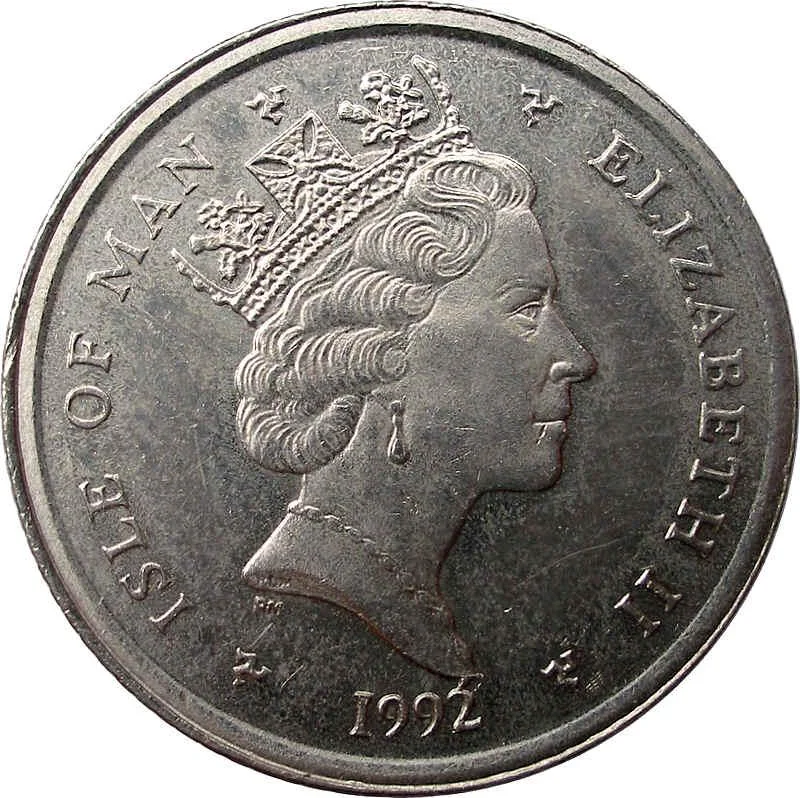
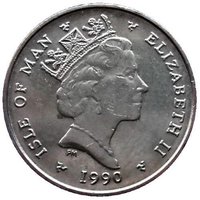
Queen Elizabeth II right-facing bust in George IV State Diadem, legend around, date below.
Inscription:
ISLE OF MAN ELIZABETH II
RDM PM
1992
RDM PM
1992
Translation:
ISLE OF MAN ELIZABETH II
RDM PM
1992
RDM PM
1992
Script: Latin
Language: English
Designer: Raphael David Maklouf
Reverse
Edge
Reeded
Categories
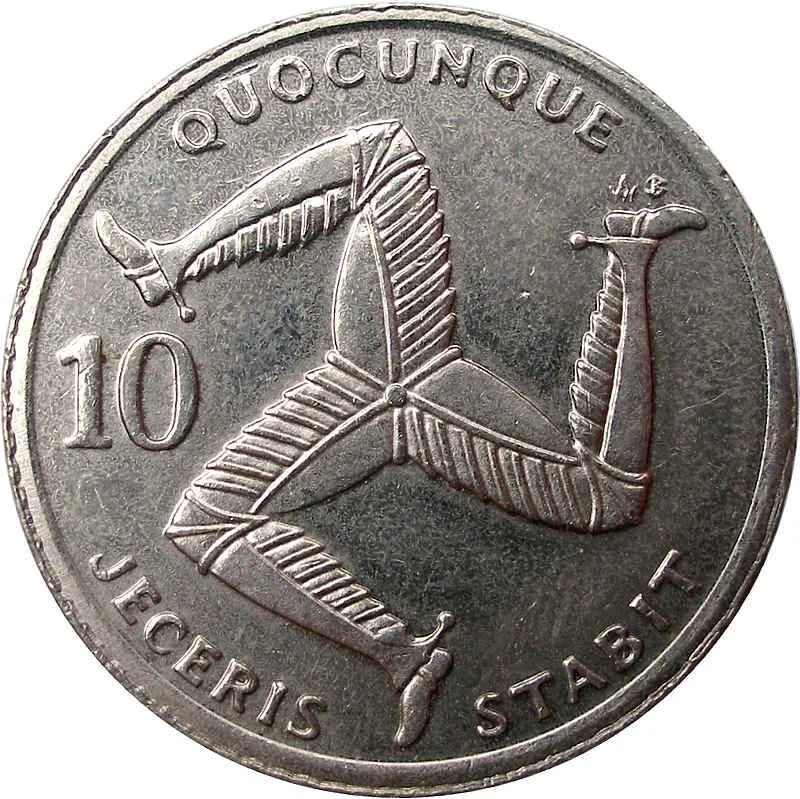
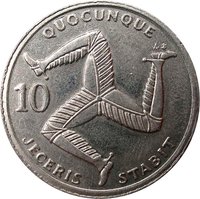
| Symbol> Triskelion |
Mints
| Name | Mark |
|---|---|
| Pobjoy Mint | PM |
Historical background
In 1992, the Isle of Man's currency situation was characterised by its long-standing and stable link to Sterling, but within a context of significant monetary change in the United Kingdom. The Manx government issued its own distinct banknotes and coins (Manx pounds), which were on a one-to-one parity with Pound Sterling (£). These notes, issued by the Isle of Man Government Treasury and later by the Isle of Man Bank, were legal tender only on the Island, though they were generally accepted in parts of the UK, often requiring manual exchange at banks. Crucially, the Island had no independent monetary policy; its currency was effectively Sterling by another name, with the UK government responsible for broader economic and exchange rate policy.
This period followed a major shift in the UK's monetary framework. In October 1990, the UK had entered the European Exchange Rate Mechanism (ERM), a system designed to reduce exchange rate variability ahead of a potential single currency. While the Isle of Man was not itself an ERM member, its peg to Sterling meant its currency shadowed the Pound's fortunes within this system. By 1992, this link was under severe strain, as high German interest rates and economic pressures made the Pound's ERM parity unsustainable.
The currency background for the Isle of Man in 1992 was therefore dominated by the events of Black Wednesday (16 September 1992), when the UK was forced to withdraw from the ERM after failing to defend the Pound's value. The immediate result was a sharp devaluation of Sterling. For the Isle of Man, this meant its Manx pound automatically devalued in tandem against other European currencies, demonstrating the absolute nature of its Sterling peg. This external crisis underscored the Island's monetary dependency while also, in the longer term, paving the way for the lower interest rates and economic stability in the UK that would benefit the Manx economy in subsequent years.
This period followed a major shift in the UK's monetary framework. In October 1990, the UK had entered the European Exchange Rate Mechanism (ERM), a system designed to reduce exchange rate variability ahead of a potential single currency. While the Isle of Man was not itself an ERM member, its peg to Sterling meant its currency shadowed the Pound's fortunes within this system. By 1992, this link was under severe strain, as high German interest rates and economic pressures made the Pound's ERM parity unsustainable.
The currency background for the Isle of Man in 1992 was therefore dominated by the events of Black Wednesday (16 September 1992), when the UK was forced to withdraw from the ERM after failing to defend the Pound's value. The immediate result was a sharp devaluation of Sterling. For the Isle of Man, this meant its Manx pound automatically devalued in tandem against other European currencies, demonstrating the absolute nature of its Sterling peg. This external crisis underscored the Island's monetary dependency while also, in the longer term, paving the way for the lower interest rates and economic stability in the UK that would benefit the Manx economy in subsequent years.
🌱 Very Common