

100 Pesos – Mexico
Mexico
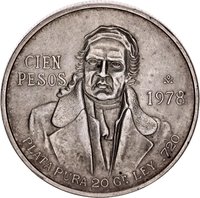
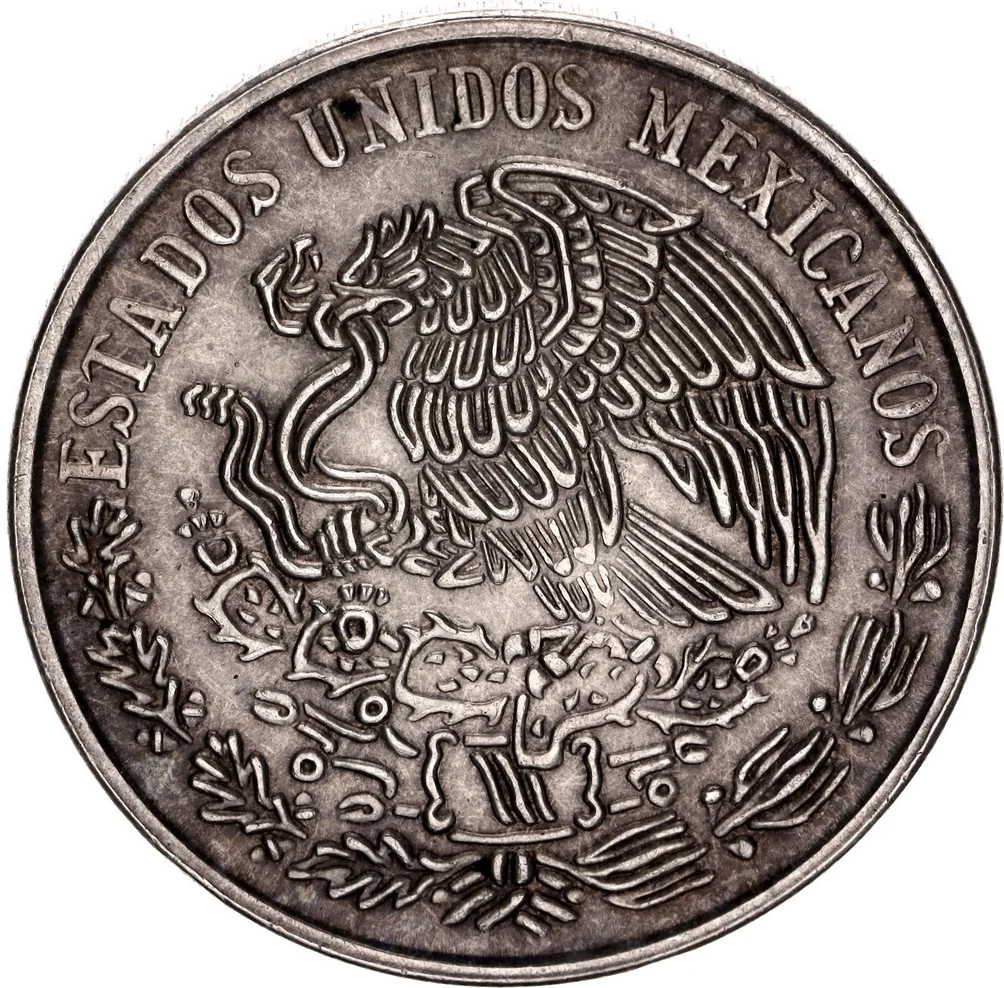
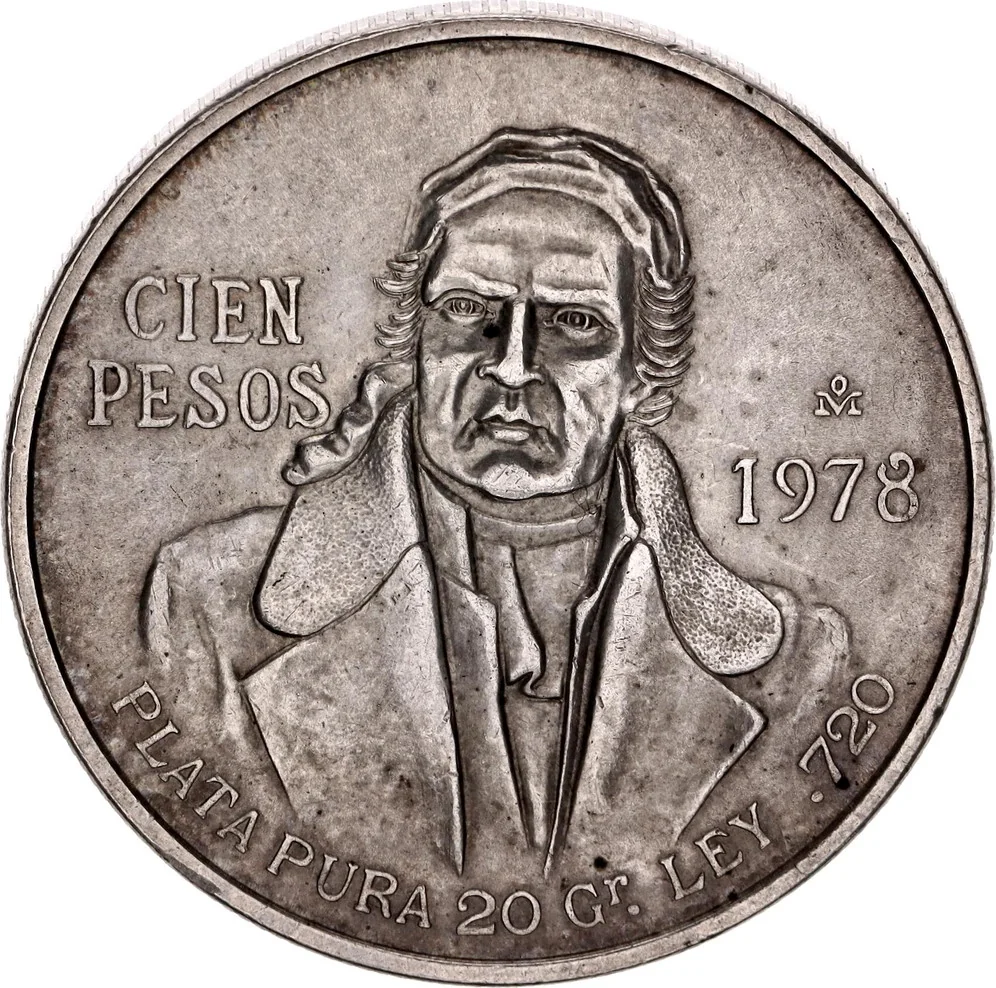
Obverse
Reverse
Description:
Morelos facing forward, denomination left, date right, purity and weight below.
Inscription:
CIEN
PESOS
Mo
1977
PLATA PURA 20 Gr. LEY .720
PESOS
Mo
1977
PLATA PURA 20 Gr. LEY .720
Script: Latin
Edge
Reeded
Mints
| Name | Mark |
|---|---|
| Mexican Mint | (Mo) |
Mintings
| Year | Mint Mark | Mintage | Quality | Collection |
|---|---|---|---|---|
| 1977 | Mo | — | ||
| 1978 | Mo | 9,879,000 | ||
| 1979 | Mo | 784,000 | ||
| 1979 | Mo | — | Proof |
Historical background
By 1977, Mexico was in the early stages of a profound economic crisis that would define the decade. The country was grappling with the severe aftermath of the 1976 peso devaluation, the first major devaluation in over two decades, which had shattered the long-held policy of a fixed exchange rate. This devaluation, from 12.50 to approximately 20 pesos per US dollar, was a desperate response to massive capital flight, a chronic trade deficit, and the exhaustion of foreign reserves, triggered by a loss of investor confidence in the government of President Luis Echeverría. The event marked a traumatic end to the era of "stabilizing development" and forced Mexico to seek a major financial rescue package from the International Monetary Fund.
The administration of newly inaugurated President José López Portillo (1976-1982) initially pursued a policy of austerity and stabilization under the IMF agreement, aiming to restore balance. However, this cautious approach was dramatically reversed with the discovery of massive oil reserves in the Gulf of Campeche. As global oil prices soared, Mexico embarked on an ambitious, debt-fueled spending spree, leveraging its new oil wealth as collateral for massive foreign loans. The peso entered a managed float, but the influx of petrodollars created an illusion of prosperity, masking underlying structural weaknesses and fostering a dangerous over-reliance on a single commodity.
Consequently, the currency situation in 1977 was one of fragile and artificial stability. The peso, while no longer fixed, was heavily managed by the central bank, which used oil revenues to support its value. This created an overvalued exchange rate that hurt non-oil exports and encouraged imports, worsening the trade balance in the long term. The stage was being set for a far more catastrophic crisis, as the massive external debt taken on during this period of oil optimism would become unsustainable, leading to the debt default and the "Lost Decade" of the 1980s.
The administration of newly inaugurated President José López Portillo (1976-1982) initially pursued a policy of austerity and stabilization under the IMF agreement, aiming to restore balance. However, this cautious approach was dramatically reversed with the discovery of massive oil reserves in the Gulf of Campeche. As global oil prices soared, Mexico embarked on an ambitious, debt-fueled spending spree, leveraging its new oil wealth as collateral for massive foreign loans. The peso entered a managed float, but the influx of petrodollars created an illusion of prosperity, masking underlying structural weaknesses and fostering a dangerous over-reliance on a single commodity.
Consequently, the currency situation in 1977 was one of fragile and artificial stability. The peso, while no longer fixed, was heavily managed by the central bank, which used oil revenues to support its value. This created an overvalued exchange rate that hurt non-oil exports and encouraged imports, worsening the trade balance in the long term. The stage was being set for a far more catastrophic crisis, as the massive external debt taken on during this period of oil optimism would become unsustainable, leading to the debt default and the "Lost Decade" of the 1980s.
🌱 Common