

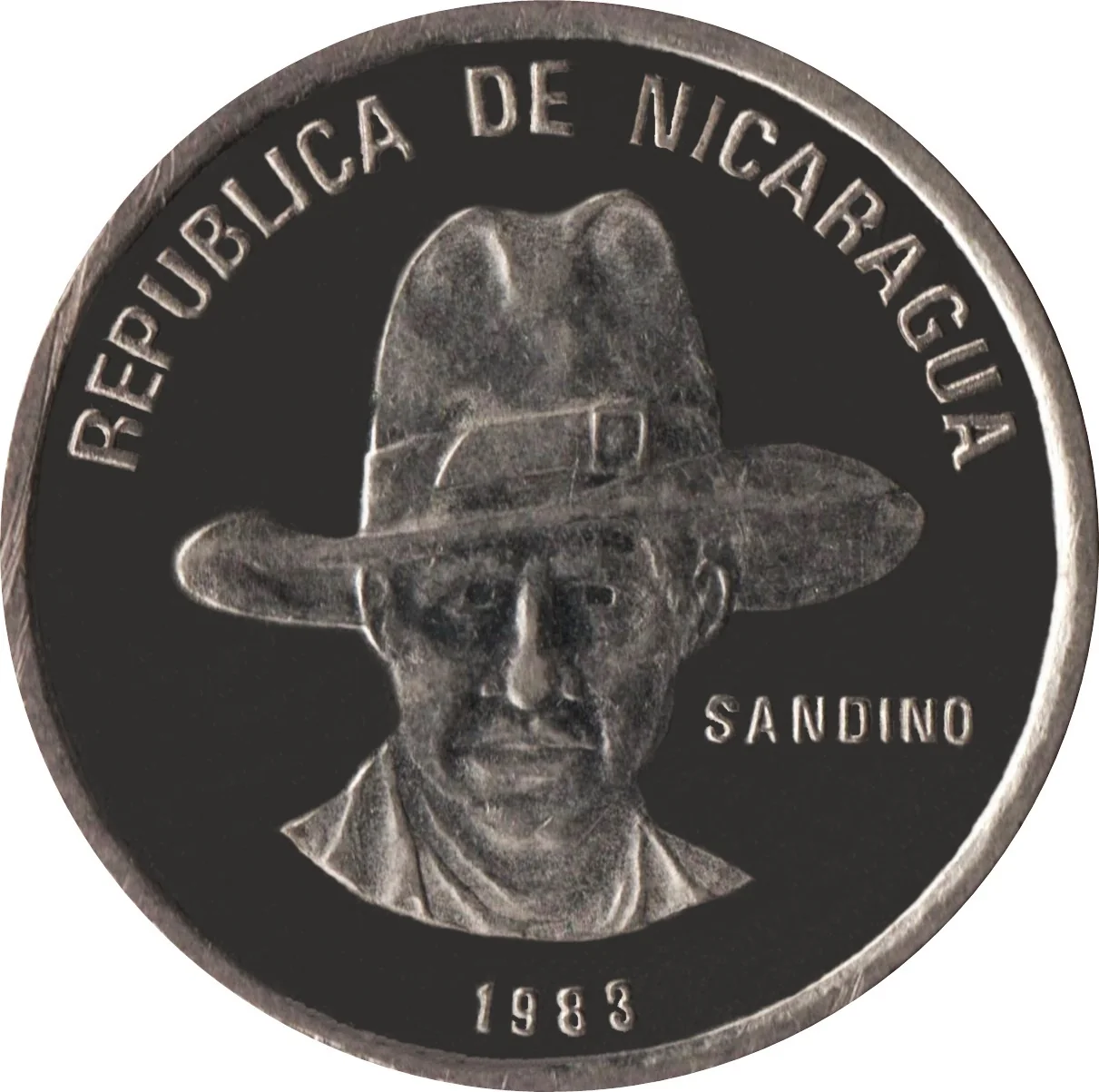
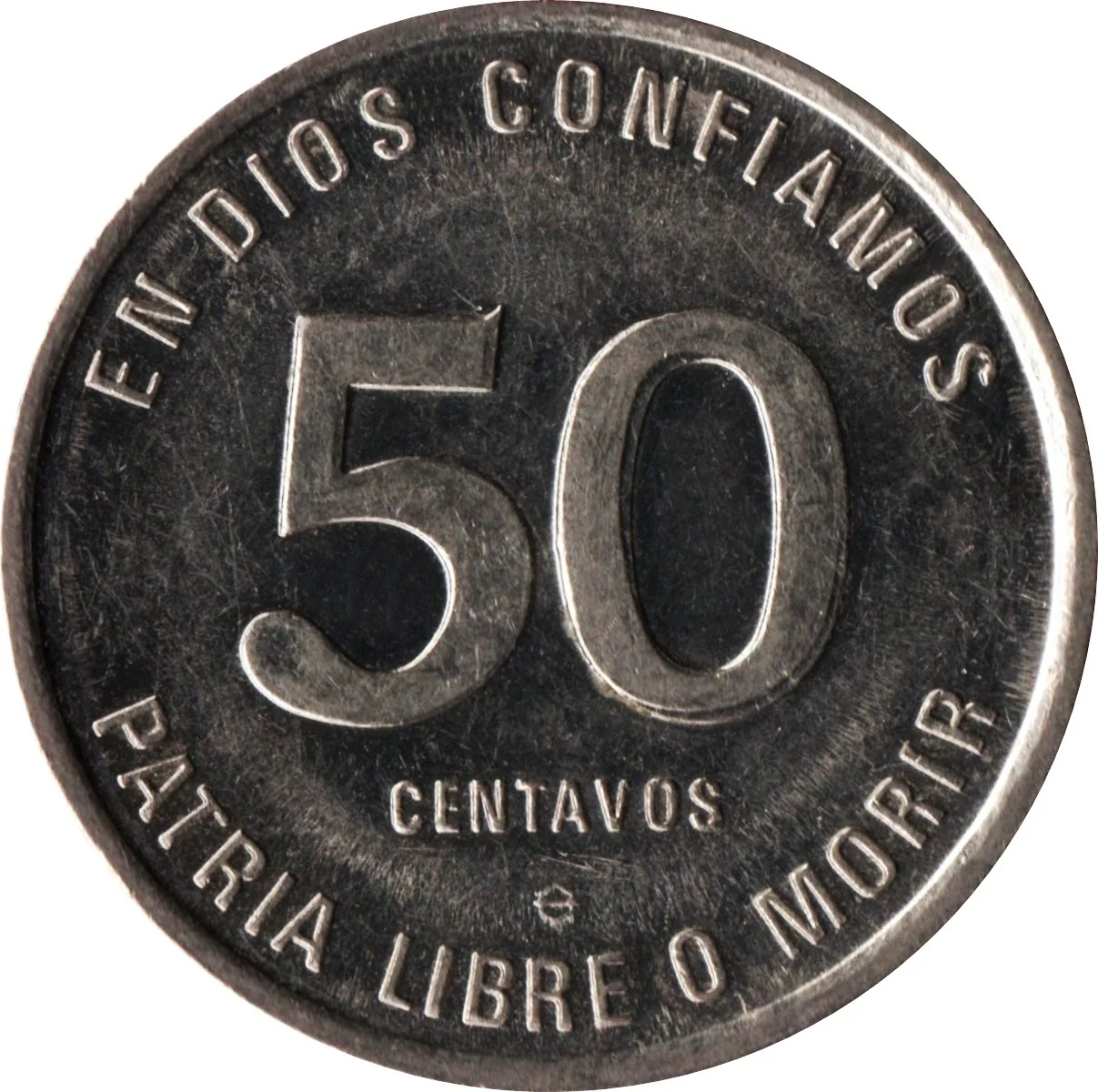
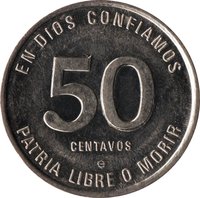
50 Centavos – Nicaragua
Nicaragua
Context
Years: 1983–1985
Issuer: Nicaragua 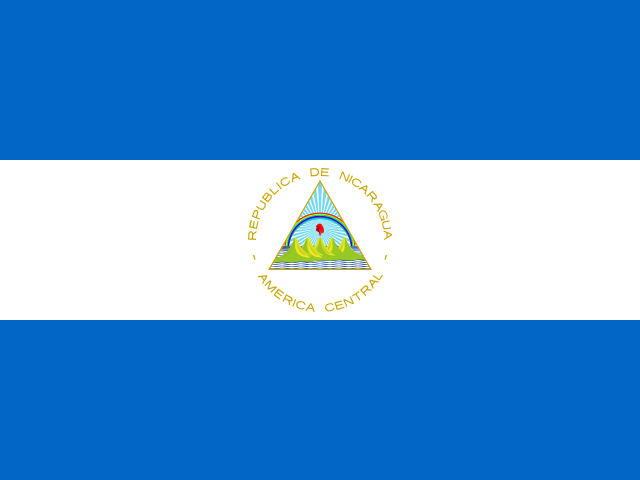
Issuing organization: Central Bank of Nicaragua
Period:
(since 1854)
Currency:
(1912—1987)
Demonetization: 15 February 1988
Total mintage: 20,000,000
Material
References
KM: #Click to copy to clipboard42a
Numista: #9599
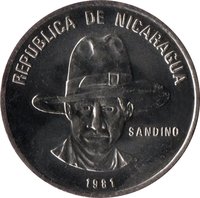
Obverse
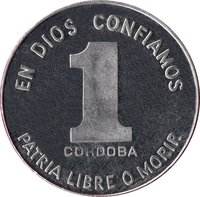
Reverse
Edge
Reeded
Categories
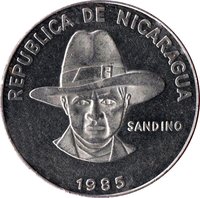
| Person> Military leader |
| Object> Hat |
Mints
| Name | Mark |
|---|---|
| Sherritt Mint | — |
Mintings
| Year | Mint Mark | Mintage | Quality | Collection |
|---|---|---|---|---|
| 1983 | — | 10,000,000 | ||
| 1985 | — | 10,000,000 |
Historical background
In 1983, Nicaragua's currency situation was deeply strained by the escalating Contra War and the economic policies of the Sandinista government. The revolutionary government, which had taken power in 1979, faced a devastating U.S. embargo and was financing a massive military mobilization to counter U.S.-backed rebel forces. This dire combination led to severe macroeconomic imbalances: rampant government spending fueled a growing budget deficit, which was largely monetized by the Central Bank, leading to a rapid increase in the money supply. The result was intense inflationary pressure, which began to erode the value of the córdoba.
The government's response was a system of rigid exchange rate controls and a multi-tiered currency regime. Instead of a single market rate, multiple official exchange rates were established, favoring state imports of essential goods and penalizing the private sector. This created a vast disparity between the official rate and the black-market rate, where U.S. dollars traded at a significant premium. This distortion crippled legitimate export agriculture (like coffee and cotton), encouraged capital flight, and created widespread shortages of consumer goods, as the artificial exchange rate made imports prohibitively expensive for anyone without government allocation.
Ultimately, the 1983 currency environment was characterized by a growing disconnect between the official economy and reality. While the official exchange rate was set by decree, the black market became the true indicator of the córdoba's plummeting value. This dual system fostered corruption, inefficiency, and a severe contraction in formal economic activity, laying the groundwork for the hyperinflation that would cripple the country later in the decade. The currency crisis was a direct reflection of the broader economic collapse driven by war, embargo, and centralized economic management.
The government's response was a system of rigid exchange rate controls and a multi-tiered currency regime. Instead of a single market rate, multiple official exchange rates were established, favoring state imports of essential goods and penalizing the private sector. This created a vast disparity between the official rate and the black-market rate, where U.S. dollars traded at a significant premium. This distortion crippled legitimate export agriculture (like coffee and cotton), encouraged capital flight, and created widespread shortages of consumer goods, as the artificial exchange rate made imports prohibitively expensive for anyone without government allocation.
Ultimately, the 1983 currency environment was characterized by a growing disconnect between the official economy and reality. While the official exchange rate was set by decree, the black market became the true indicator of the córdoba's plummeting value. This dual system fostered corruption, inefficiency, and a severe contraction in formal economic activity, laying the groundwork for the hyperinflation that would cripple the country later in the decade. The currency crisis was a direct reflection of the broader economic collapse driven by war, embargo, and centralized economic management.
🌱 Common