

1 Baiza – Kuwait
Kuwait
Context
Year: 1886
Islamic (Hijri) Year: 1304
Issuer: Kuwait 
Ruler: Abdullah II Al-Sabah
Currency:
(1886—1887)
Demonetized: Yes
Material
Diameter: 22.5 mm
Weight: 6.18 g
Shape: Irregular round
Composition: Copper
Magnetic: No
Technique: Hammered
References
KM: #Click to copy to clipboard1
Numista: #95988
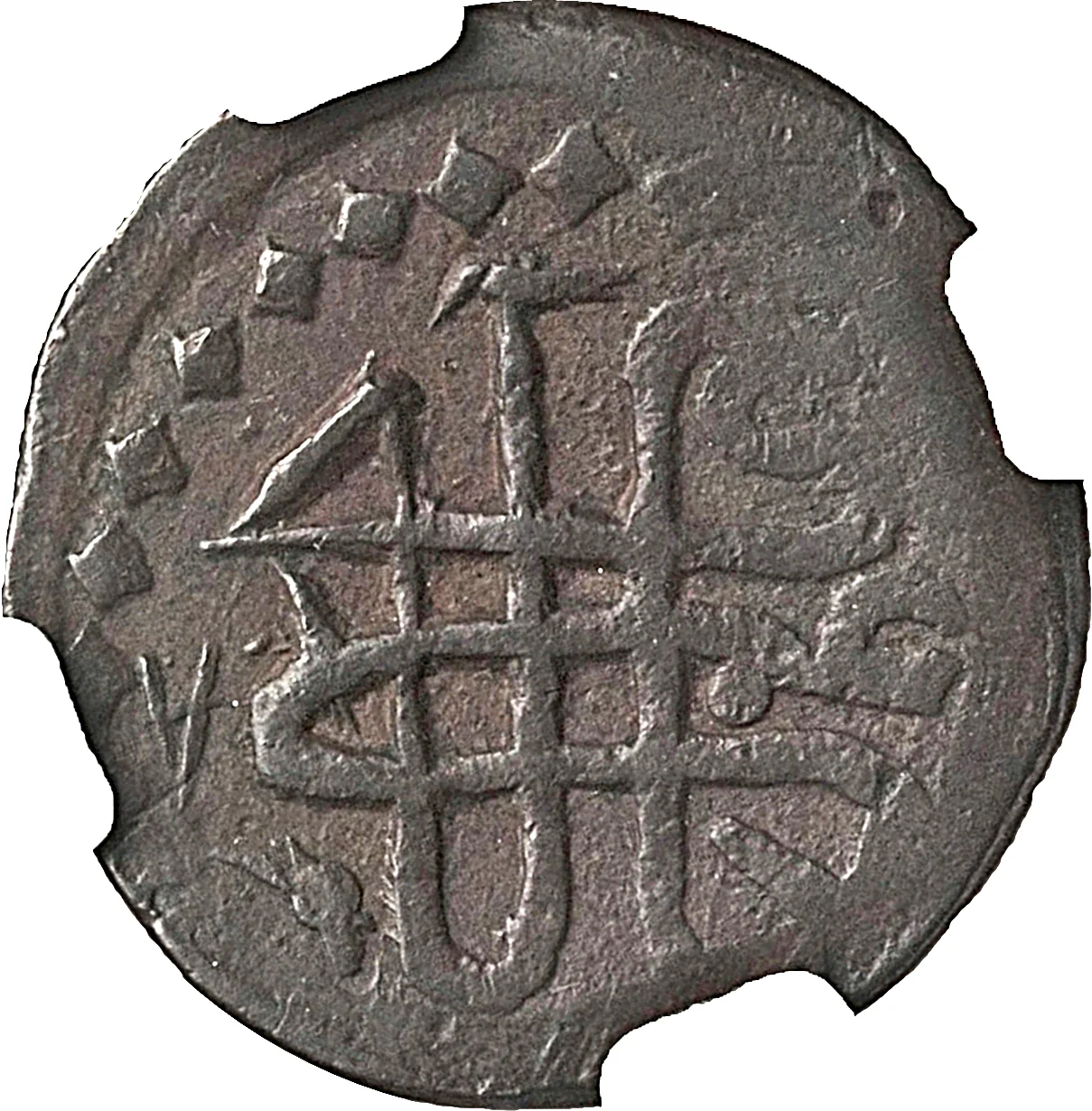
Obverse
Description:
Tughra seal of Sheikh Abdullah II Al-Sabah, possibly reading "Abdullah" in Arabic with a mirrored "A" to the left.
Inscription:
عبد الله
A
A
Translation:
Servant of God
Language: Arabic
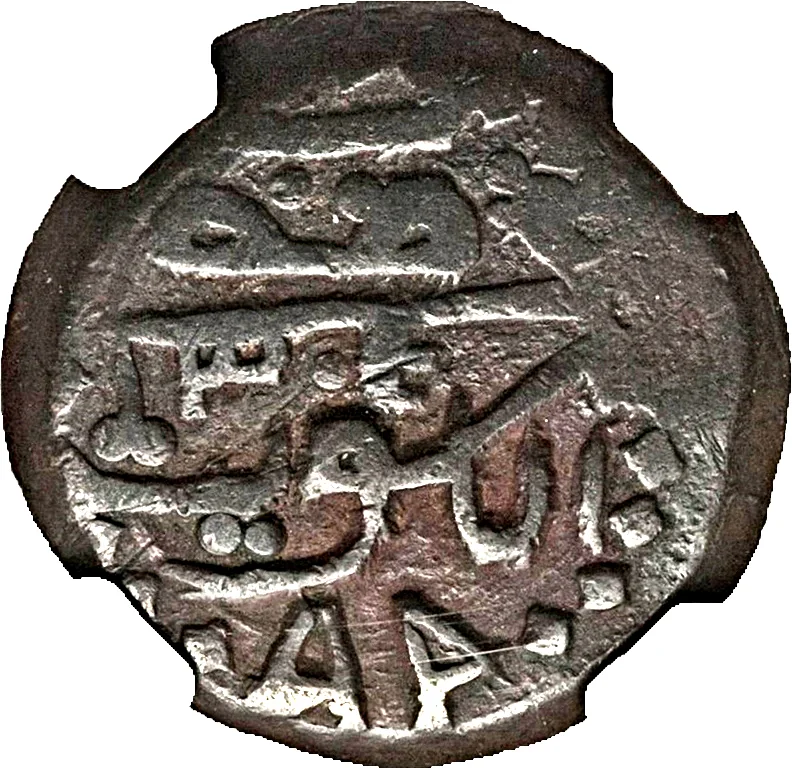
Reverse
Description:
Mint and date, likely "Struck in Kuwait 1304" in Arabic with "AA" below. Date is centered, unlike KM#A2.
Inscription:
ضرب
في
١٣٠٤
الكويت
AA
في
١٣٠٤
الكويت
AA
Translation:
Struck
in
1304
Kuwait
in
1304
Kuwait
Language: Arabic
Edge
Mintings
| Year | Mint Mark | Mintage | Quality | Collection |
|---|---|---|---|---|
| 1886 | — | — |
Historical background
In 1886, the currency situation in Kuwait was a complex tapestry of foreign and regional coins, reflecting its position as a thriving trade hub in the Gulf. There was no single, unified Kuwaiti currency. Instead, the economy operated on a multi-currency system dominated by the Indian Rupee, due to Kuwait's strong commercial ties with British India. Alongside rupees, a variety of silver coins circulated, most notably the Maria Theresa Thaler (known locally as the "riyal fransī" or "French riyal"), the Ottoman qirsh, and Persian krans. The value of these coins was not fixed by a central authority but fluctuated based on their silver content and prevailing trade rates in the souq.
This system presented practical challenges for merchants and everyday transactions. The primary unit of account was the rupee annas, but calculations often required converting between different coinages of varying weight and purity. To facilitate trade, money changers (sarrāf) played a crucial role, establishing daily exchange rates and verifying the authenticity of coins, many of which were worn or clipped. The Ottoman Empire, which claimed nominal suzerainty over Kuwait, exerted little monetary control, leaving the market to self-regulate based on the flow of commerce and the supply of precious metals.
The year 1886 falls within a period of monetary stability under Sheikh Abdullah II Al-Sabah, whose reign saw Kuwait's pearling and trading economy flourish. However, the reliance on external currencies made the economy vulnerable to regional shifts. The period set the stage for future monetary developments, including the later adoption of the Gulf Rupee and, ultimately, the creation of the Kuwaiti Dinar in 1961. Thus, the currency scene in 1886 was one of pragmatic adaptation, mirroring Kuwait's outward-looking mercantile identity while lacking a sovereign monetary symbol.
This system presented practical challenges for merchants and everyday transactions. The primary unit of account was the rupee annas, but calculations often required converting between different coinages of varying weight and purity. To facilitate trade, money changers (sarrāf) played a crucial role, establishing daily exchange rates and verifying the authenticity of coins, many of which were worn or clipped. The Ottoman Empire, which claimed nominal suzerainty over Kuwait, exerted little monetary control, leaving the market to self-regulate based on the flow of commerce and the supply of precious metals.
The year 1886 falls within a period of monetary stability under Sheikh Abdullah II Al-Sabah, whose reign saw Kuwait's pearling and trading economy flourish. However, the reliance on external currencies made the economy vulnerable to regional shifts. The period set the stage for future monetary developments, including the later adoption of the Gulf Rupee and, ultimately, the creation of the Kuwaiti Dinar in 1961. Thus, the currency scene in 1886 was one of pragmatic adaptation, mirroring Kuwait's outward-looking mercantile identity while lacking a sovereign monetary symbol.
💎 Extremely Rare