

10 dollars – United States
Add to wishlist
Non-circulating coins
Commemoration: First Spouse series - Lou Hoover
United States
Context
Material
Diameter: 26.5 mm
Weight: 15.55 g
Gold Weight:: 15.55 g
Thickness: 1.88 mm
Shape: Round
Composition: 99.99% Gold
Standard: Silver half ounce
Magnetic: No
Technique: Milled
Alignment: Coin alignment
flip
References
KM: #
Numista: #95330
Value
Exchange value: 10 USD = $10.00
Bullion value: $2382.39
Inflation-adjusted value: 13.78 USD
Obverse
Description:
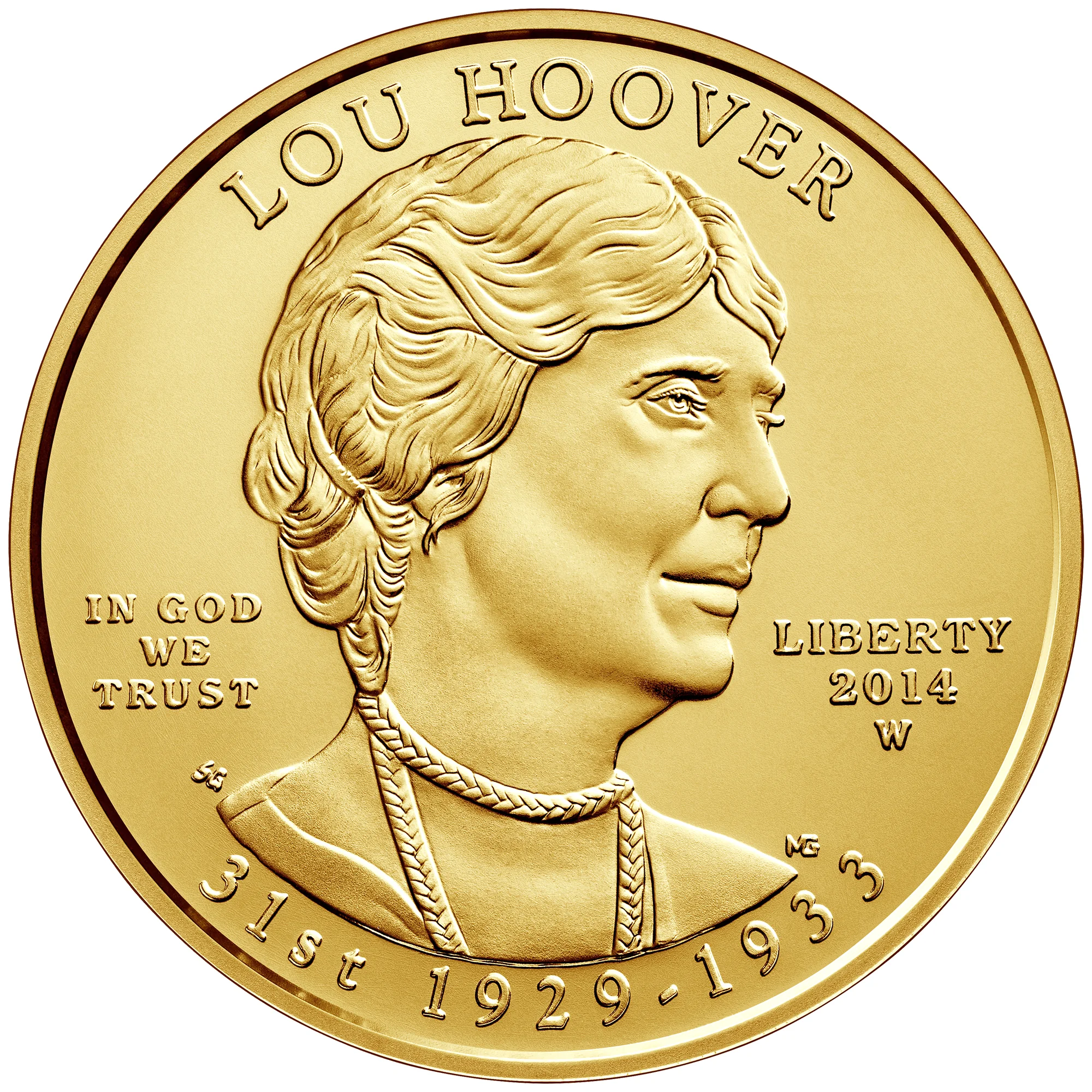
Portrait of Lou Hoover
Inscription:
LOU HOOVER
IN GOD WE TRUST
LIBERTY
2014
W
31ST 1929-1933
IN GOD WE TRUST
LIBERTY
2014
W
31ST 1929-1933
Script: Latin
Engravers: Susan Gamble, Michael Gaudioso
Reverse
Description:
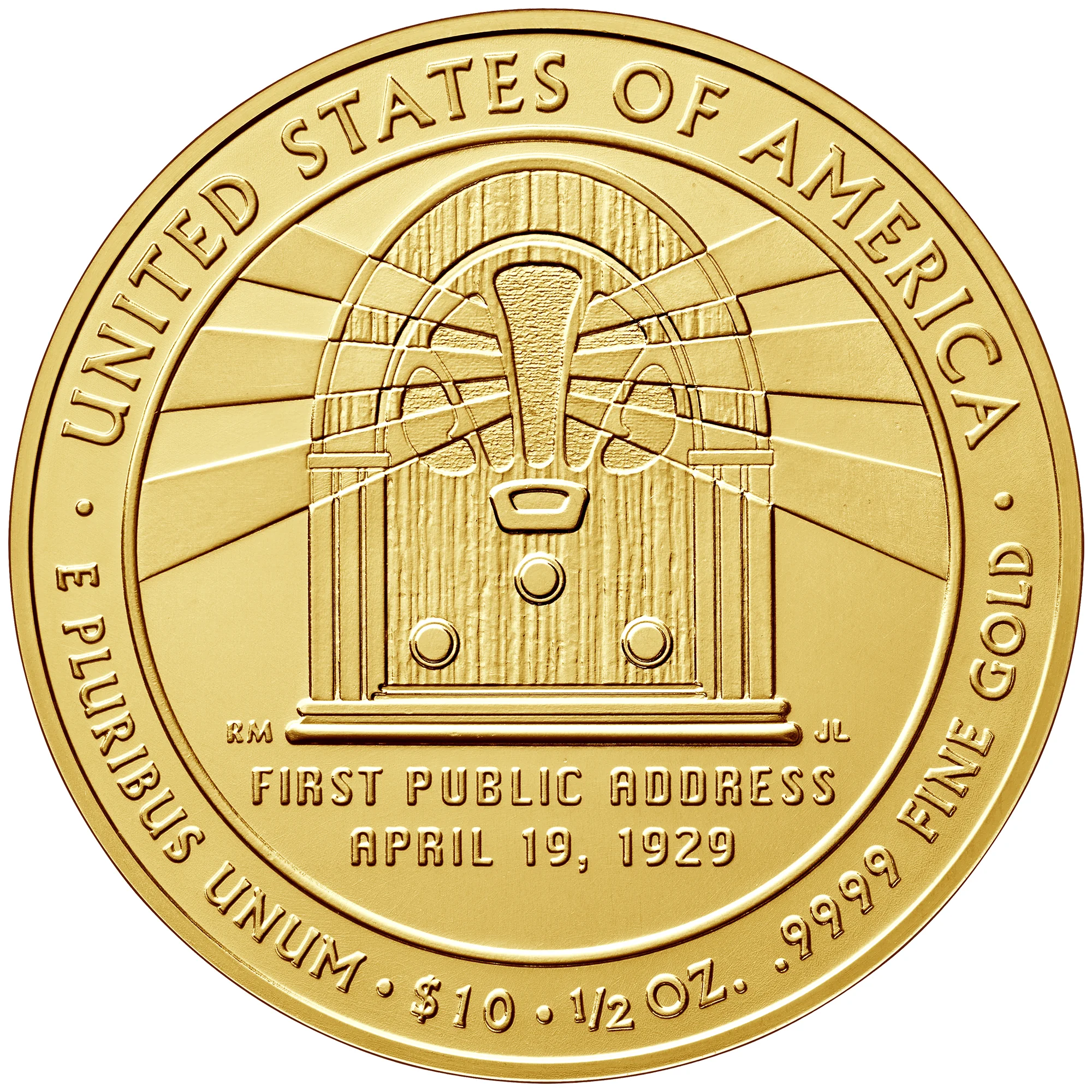
A 1920s-style radio commemorating First Lady Lou Henry Hoover’s first public radio address on April 19, 1929.
Inscription:
· UNITED STATES OF AMERICA ·
·E PLURIBUS UNUM ·
$10 · 1/2 Oz. .9999 FINE GOLD
·E PLURIBUS UNUM ·
$10 · 1/2 Oz. .9999 FINE GOLD
Script: Latin
Engravers: Richard Masters, Jim Licaretz
Edge
Reeded
Mints
| Name | Mark |
|---|---|
| United States Mint of West Point | W |
Historical background
In 2014, the United States currency situation was characterized by a period of cautious normalization following the extraordinary measures of the Great Recession. The Federal Reserve, under Chair Janet Yellen, was in the process of winding down its quantitative easing (QE) program—a massive bond-buying initiative designed to suppress long-term interest rates and stimulate the economy. The "taper" of these purchases, announced in late 2013 and continued throughout 2014, signaled growing confidence in the economic recovery, with unemployment falling steadily. However, inflation remained persistently below the Fed's 2% target, creating a complex policy environment where strengthening growth coexisted with subdued price pressures.
The U.S. dollar itself embarked on a significant appreciation trend in the latter half of the year. This strength was driven by the diverging monetary policy paths between the Fed and other major central banks, like the European Central Bank and the Bank of Japan, which were moving toward further easing. As investors anticipated the first U.S. interest rate hikes since 2006, capital flowed into dollar-denominated assets, boosting the currency's value. A stronger dollar had mixed implications: it helped hold down inflation by making imports cheaper but also posed a headwind for U.S. exporters by making their goods more expensive abroad.
Overall, 2014 was a transitional year where the foundational concerns shifted from crisis-era stimulus to the timing and pace of policy normalization. The currency dynamics reflected a U.S. economy outperforming its developed-world peers, yet policymakers remained attentive to global risks and stubbornly low inflation. The stage was being set for the pivotal debates of 2015, which would ultimately lead to the first post-crisis rate hike in December of that year.
The U.S. dollar itself embarked on a significant appreciation trend in the latter half of the year. This strength was driven by the diverging monetary policy paths between the Fed and other major central banks, like the European Central Bank and the Bank of Japan, which were moving toward further easing. As investors anticipated the first U.S. interest rate hikes since 2006, capital flowed into dollar-denominated assets, boosting the currency's value. A stronger dollar had mixed implications: it helped hold down inflation by making imports cheaper but also posed a headwind for U.S. exporters by making their goods more expensive abroad.
Overall, 2014 was a transitional year where the foundational concerns shifted from crisis-era stimulus to the timing and pace of policy normalization. The currency dynamics reflected a U.S. economy outperforming its developed-world peers, yet policymakers remained attentive to global risks and stubbornly low inflation. The stage was being set for the pivotal debates of 2015, which would ultimately lead to the first post-crisis rate hike in December of that year.
✨ Legendary