

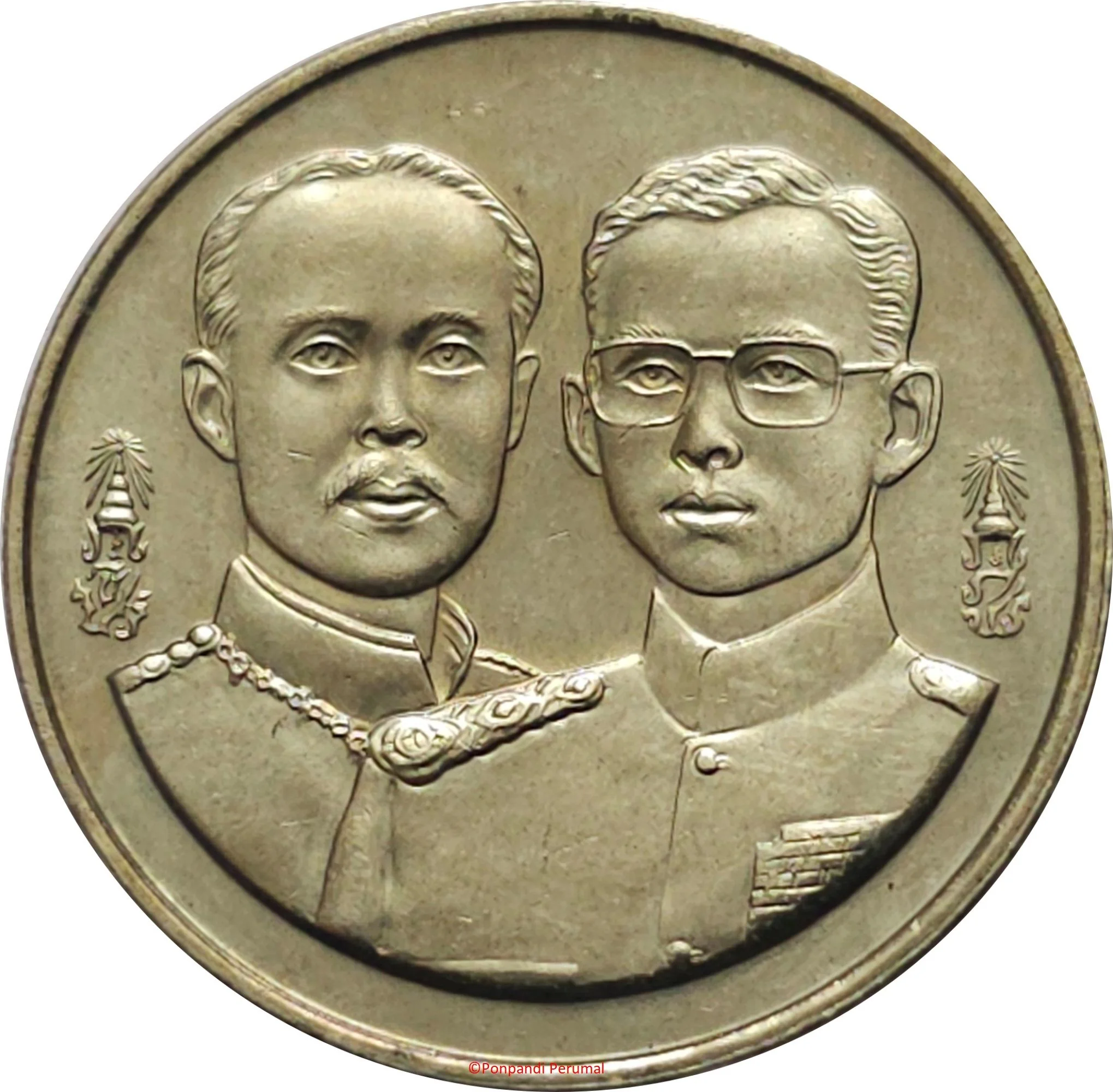
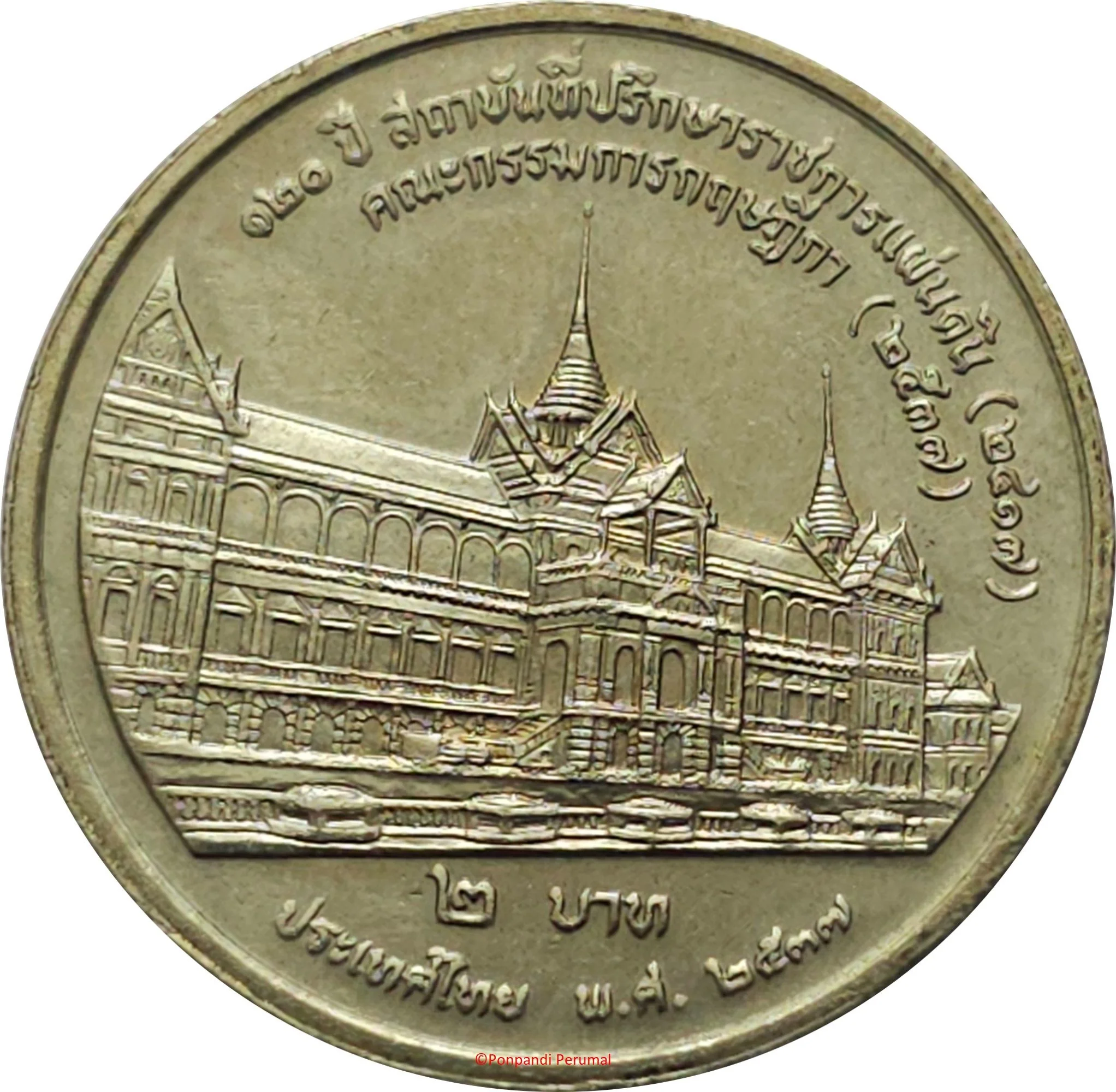
2 bahts (Privy Council and Council of State) – Thailand
Add to wishlist
Circulating commemorative coins
Commemoration: 120th Anniversary of the Privy Council and the Council of State
Thailand
Context
Year: 1994
Thai Year:: 2537
Issuer: Thailand
Ruler: Bhumibol Adulyadej
Currency:
(since 1897)
Demonetized: Yes
Total mintage: 1,200,000
Material
References
Y: #
Numista: #9517
Value
Exchange value: 2 THB
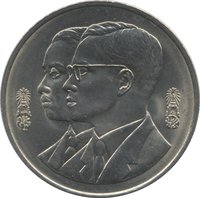
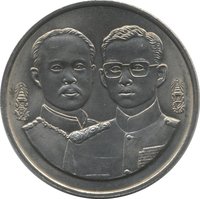
Obverse
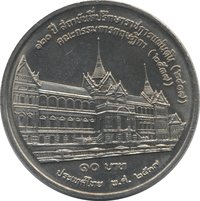
Reverse
Inscription:
๑๒๐ ปี สถาบันที่ปรึกษาราชการแผ่นดิน (๒๔๑๗)
คณะกรรมการกฤษฎีกา (๒๕๓๗)
๒ บาท
ประเทศไทย พ.ศ. ๒๕๓๗
คณะกรรมการกฤษฎีกา (๒๕๓๗)
๒ บาท
ประเทศไทย พ.ศ. ๒๕๓๗
Translation:
120th Anniversary of the Council of State (2417)
Secretariat of the Council of State (2537)
2 Baht
Thailand 2537 B.E.
Secretariat of the Council of State (2537)
2 Baht
Thailand 2537 B.E.
Language: Thai
Edge
Mintings
| Year | Mint Mark | Mintage | Quality | Collection |
|---|---|---|---|---|
| 1994 | — | 1,200,000 |
Historical background
In 1994, Thailand's currency, the baht, was operating under a tightly managed exchange rate regime, pegged to a basket of currencies heavily weighted toward the US dollar. This system, maintained by the Bank of Thailand, had provided a crucial anchor for stability and confidence throughout the country's period of rapid export-led growth and heavy foreign investment inflows in the late 1980s and early 1990s. The fixed exchange rate was seen as a cornerstone of economic policy, fostering a predictable environment for international trade and finance.
However, by 1994, underlying pressures were mounting. Thailand's current account deficit was widening significantly, fueled by strong domestic demand for imports and a slowdown in export growth, partly due to a rising dollar to which the baht was effectively tied. Furthermore, large-scale short-term foreign capital was flowing into the country to finance the deficit and speculative investments, particularly in a booming property market. This created a vulnerability: the peg required the central bank to hold substantial foreign reserves to defend the baht's value, while the economy was becoming increasingly exposed to a sudden reversal of these "hot money" flows.
While not yet in crisis, 1994 represented a critical juncture where the contradictions of the fixed exchange rate regime were becoming apparent to some analysts. The policy environment was one of growing tension between maintaining the cherished stability of the peg and addressing the macroeconomic imbalances it was exacerbating. The authorities remained publicly committed to the peg, but the seeds of the 1997 Asian Financial Crisis—which would begin with the catastrophic collapse of the baht—were visibly taking root in the economic landscape of mid-1990s Thailand.
However, by 1994, underlying pressures were mounting. Thailand's current account deficit was widening significantly, fueled by strong domestic demand for imports and a slowdown in export growth, partly due to a rising dollar to which the baht was effectively tied. Furthermore, large-scale short-term foreign capital was flowing into the country to finance the deficit and speculative investments, particularly in a booming property market. This created a vulnerability: the peg required the central bank to hold substantial foreign reserves to defend the baht's value, while the economy was becoming increasingly exposed to a sudden reversal of these "hot money" flows.
While not yet in crisis, 1994 represented a critical juncture where the contradictions of the fixed exchange rate regime were becoming apparent to some analysts. The policy environment was one of growing tension between maintaining the cherished stability of the peg and addressing the macroeconomic imbalances it was exacerbating. The authorities remained publicly committed to the peg, but the seeds of the 1997 Asian Financial Crisis—which would begin with the catastrophic collapse of the baht—were visibly taking root in the economic landscape of mid-1990s Thailand.
🌱 Fairly Common