

5 Scudi – San Marino
Non-circulating coins
Commemoration: Peace
San Marino
Context

Material
References
KM: #Click to copy to clipboard101
Numista: #95113
Value
Bullion value: $2293.38
Obverse
Description:
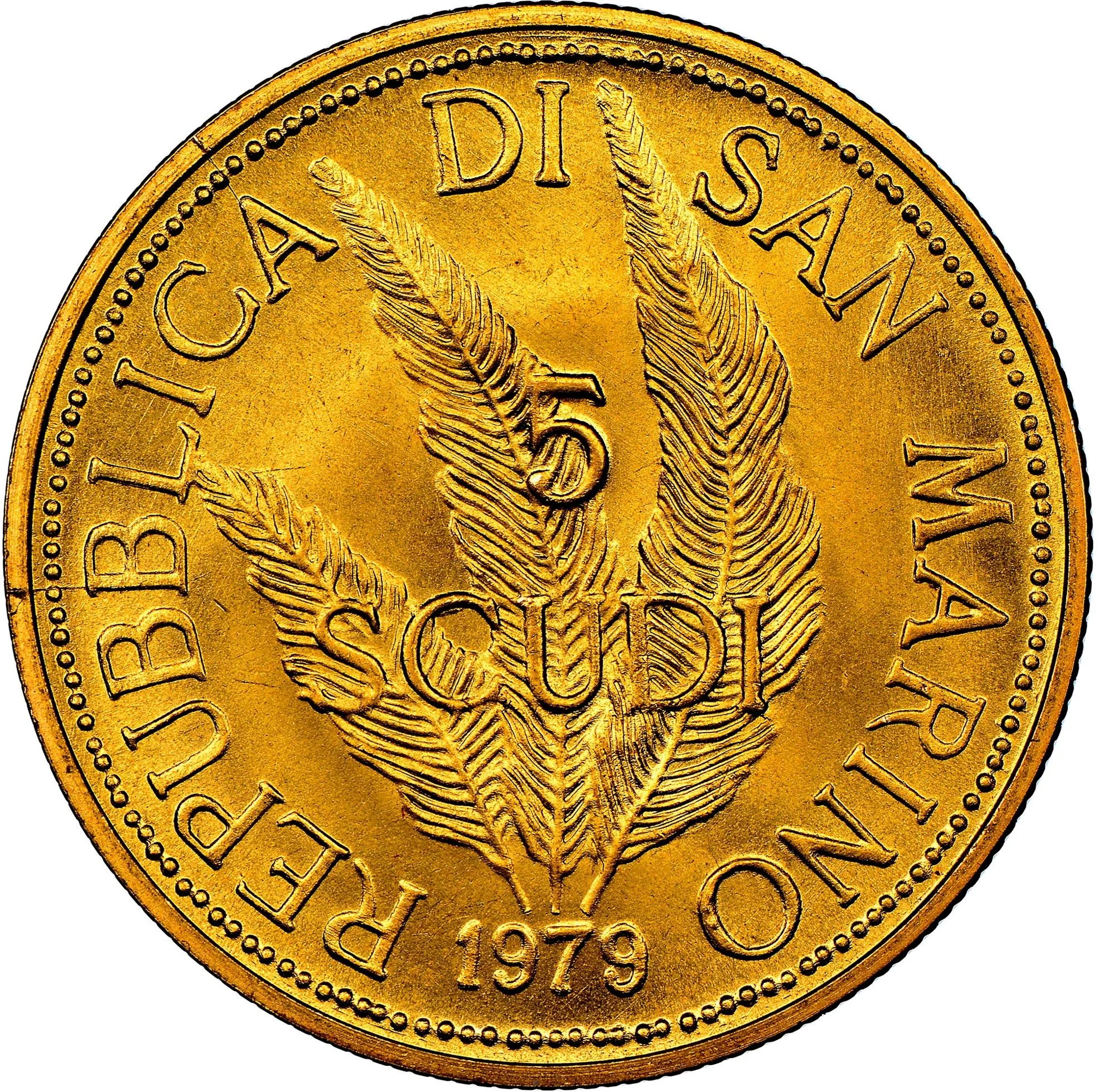
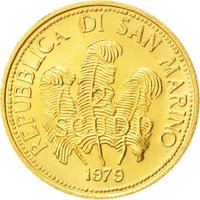
5 Scudi coin featuring San Marino's three feathers.
Inscription:
REPUBBLICA DI SAN MARINO
5 SCUDI
1979
5 SCUDI
1979
Translation:
REPUBLIC OF SAN MARINO
5 SCUDI
1979
5 SCUDI
1979
Script: Latin
Language: Italian
Engraver: Luciano Minguzzi
Reverse
Description:
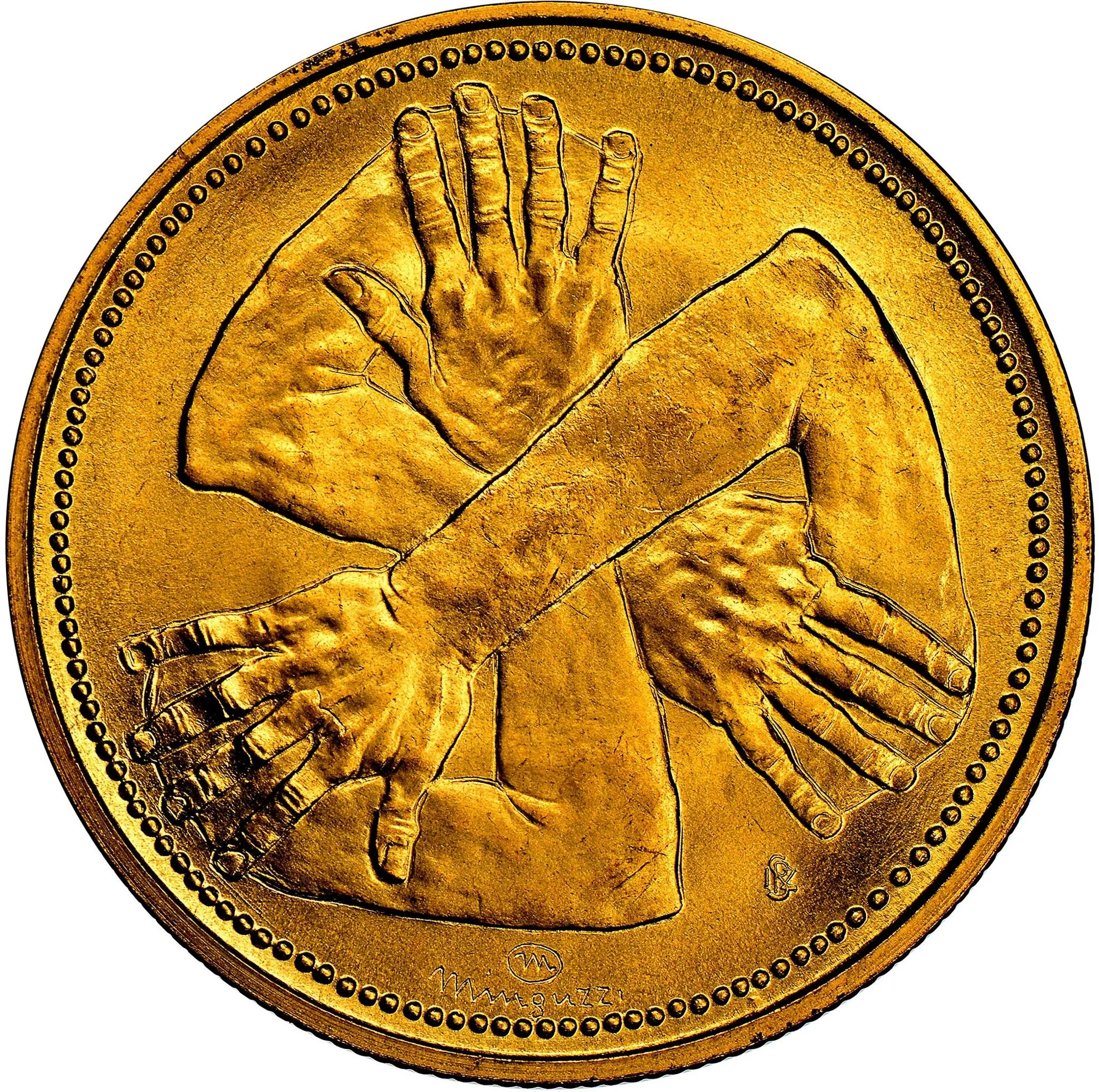
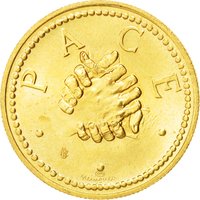
Three crossed arms, fingers extended.
Inscription:
Luciano Minguzzi
Script: Latin
Engraver: Luciano Minguzzi
Edge
Reeded
Mints
| Name | Mark |
|---|---|
| Rome | (IPZS) |
Mintings
| Year | Mint Mark | Mintage | Quality | Collection |
|---|---|---|---|---|
| 1979 | IPZS | 24,000 |
Historical background
In 1979, San Marino's currency situation was defined by its intricate and dependent relationship with Italy, formalized by a series of post-war conventions. The Republic did not issue an independent, circulating currency but instead operated under a monetary agreement that made the Italian Lira legal tender within its borders. This arrangement granted San Marino the right to mint limited quantities of its own commemorative and collectible coinage, denominated in Lire, but these were primarily for numismatic purposes and not for general circulation. Economically, the country was effectively within the Italian monetary sphere, with its banking and financial systems deeply integrated with those of its much larger neighbor.
This dependency meant that San Marino had no autonomous monetary policy and was directly subject to the economic conditions and inflationary pressures affecting Italy throughout the 1970s. The period was marked by significant economic turmoil in Italy, known as the "Years of Lead," characterized by high inflation, social unrest, and political instability. Consequently, San Marino experienced these same financial headwinds, including inflation and lira depreciation, without the policy tools to independently address them. The republic's economic stability was therefore intrinsically tied to the success or failure of Italy's own economic management.
Despite this lack of monetary sovereignty, the 1979 currency situation also reflected San Marino's efforts to assert a degree of financial identity. The issuance of its own decorative and precious metal coins, though not circulating, was an important source of revenue and a symbol of national prestige. Furthermore, discussions about expanding fiscal and economic autonomy were ongoing, setting the stage for future negotiations that would eventually lead to new agreements with Italy in the 1980s, allowing for increased coinage quotas and paving the way for the later introduction of the Sammarinese euro. Thus, 1979 represents a point of constrained dependency, yet within a trajectory toward slightly greater monetary distinction.
This dependency meant that San Marino had no autonomous monetary policy and was directly subject to the economic conditions and inflationary pressures affecting Italy throughout the 1970s. The period was marked by significant economic turmoil in Italy, known as the "Years of Lead," characterized by high inflation, social unrest, and political instability. Consequently, San Marino experienced these same financial headwinds, including inflation and lira depreciation, without the policy tools to independently address them. The republic's economic stability was therefore intrinsically tied to the success or failure of Italy's own economic management.
Despite this lack of monetary sovereignty, the 1979 currency situation also reflected San Marino's efforts to assert a degree of financial identity. The issuance of its own decorative and precious metal coins, though not circulating, was an important source of revenue and a symbol of national prestige. Furthermore, discussions about expanding fiscal and economic autonomy were ongoing, setting the stage for future negotiations that would eventually lead to new agreements with Italy in the 1980s, allowing for increased coinage quotas and paving the way for the later introduction of the Sammarinese euro. Thus, 1979 represents a point of constrained dependency, yet within a trajectory toward slightly greater monetary distinction.
✨ Legendary