

2 Scudi – San Marino
Non-circulating coins
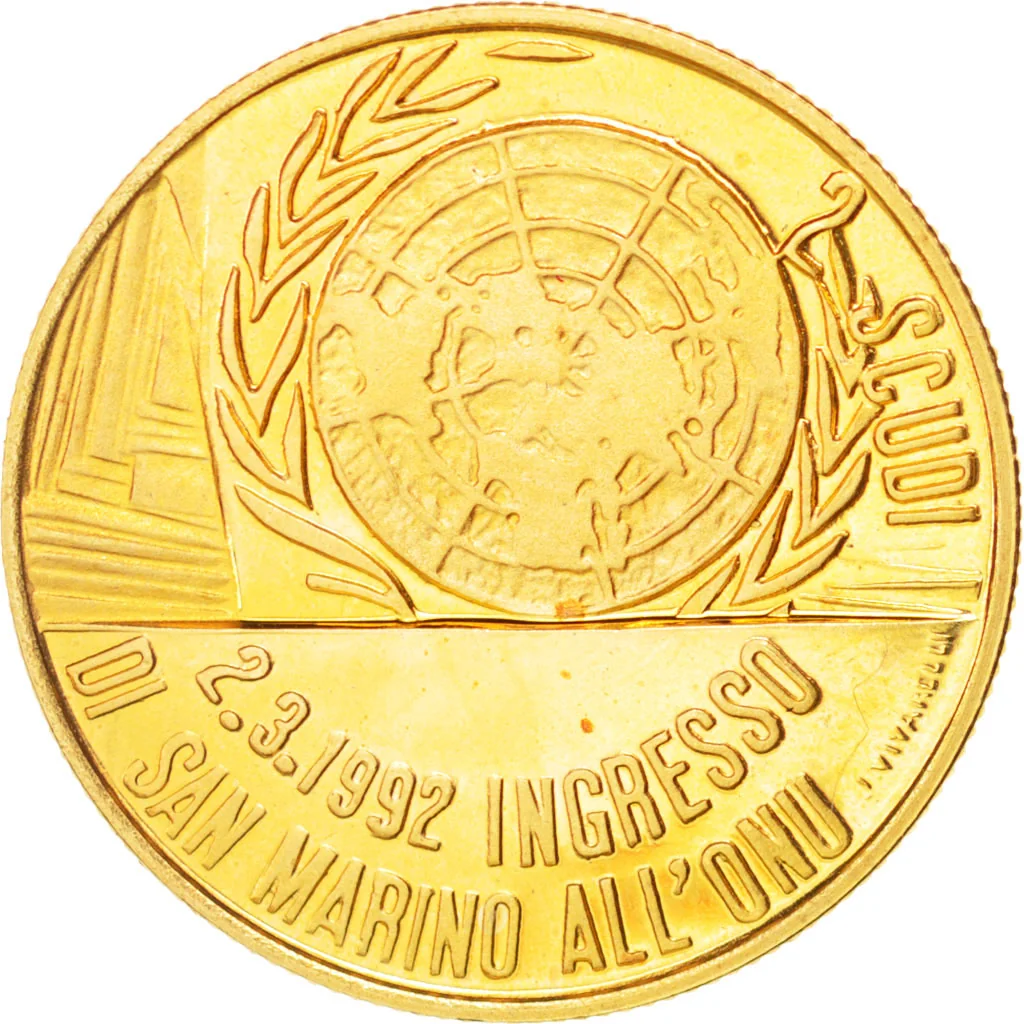
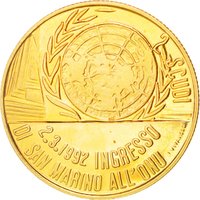
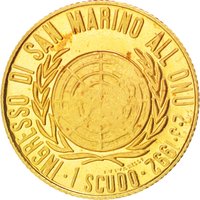
Commemoration: Entry to UN
San Marino
Context
Material
References
KM: #Click to copy to clipboard289
Numista: #95062
Value
Bullion value: $967.03
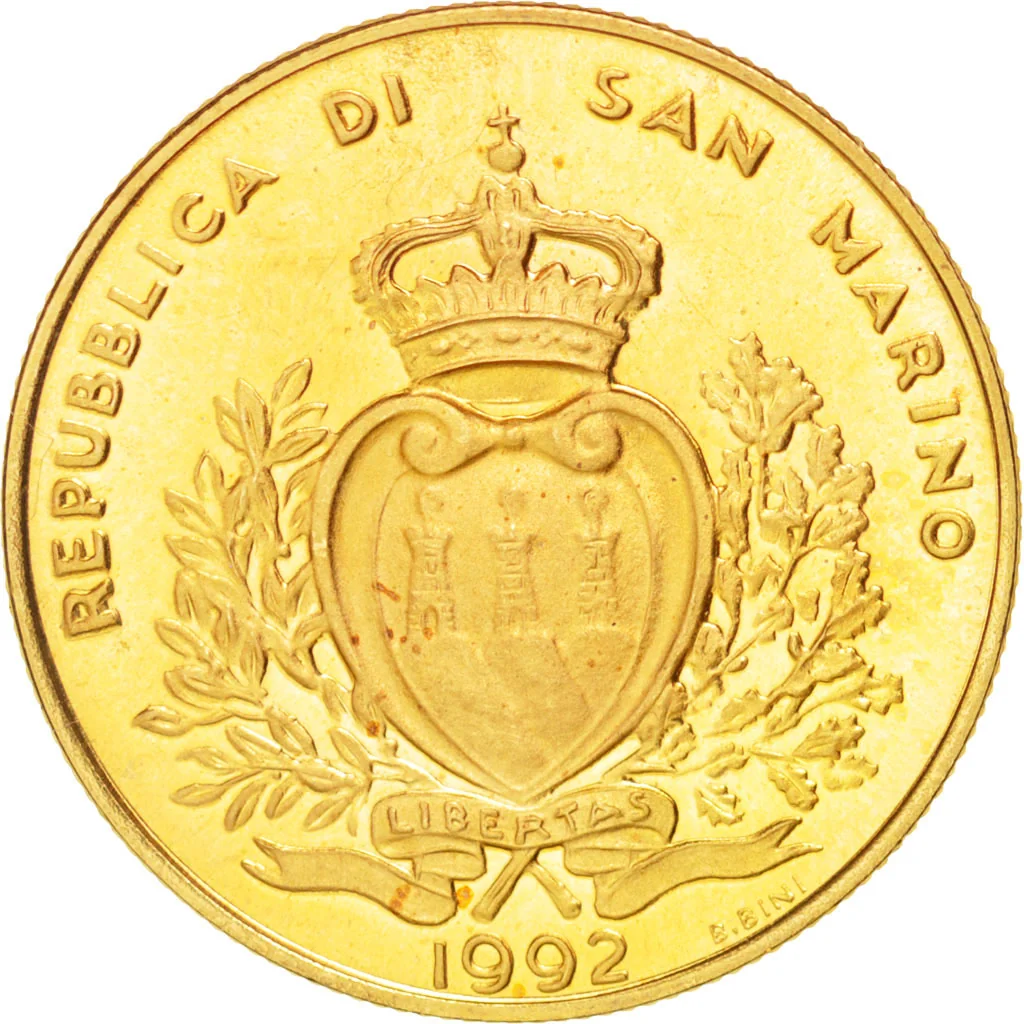
Obverse
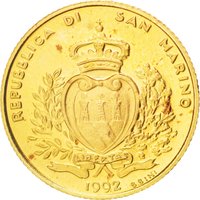
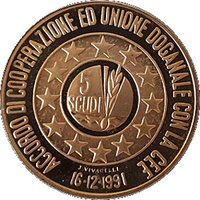
Reverse
Edge
Reeded
Categories
| Symbol> Globe |
| Organization> United Nations |
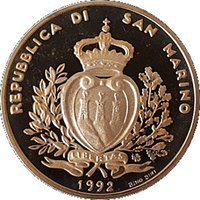
| Symbols> Coat of Arms |
Mints
| Name | Mark |
|---|---|
| Rome | — |
Mintings
| Year | Mint Mark | Mintage | Quality | Collection |
|---|---|---|---|---|
| 1992 | — | 7,500 | Proof |
Historical background
In 1992, the currency situation in San Marino was intrinsically linked to its unique status as an independent republic completely surrounded by Italy. The nation operated under a formal monetary convention with Italy, first established in 1939 and later revised, which made the Italian Lira the official legal tender. This agreement granted San Marino the limited right to issue its own coinage, the Sammarinese Lira, which was minted in limited quantities, had the same size and metallic composition as its Italian counterpart, and circulated at par (1:1) alongside it. However, these coins were primarily intended for collectors and ceremonial purposes, while the Italian Lira dominated daily commercial transactions and financial operations.
The year 1992 was a period of significant economic and monetary tension for Italy, which directly impacted San Marino. Italy was embroiled in a severe currency crisis within the European Exchange Rate Mechanism (ERM), facing intense speculative pressure, soaring interest rates, and a massive depletion of foreign reserves. This culminated in the Italian Lira being forced to devalue and temporarily withdraw from the ERM in September 1992. For San Marino, which had no independent monetary policy, this crisis meant its economy was passively subjected to the same volatility, inflation concerns, and loss of credibility affecting the Lira, without any sovereign tools to mitigate the effects.
Consequently, the events of 1992 starkly highlighted the vulnerabilities and constraints of San Marino's dependent currency arrangement. While the existing convention provided stability and facilitated seamless trade with its only neighbor, it also meant the republic was wholly exposed to Italian monetary instability. This experience would later inform San Marino's strategic negotiations following Italy's adoption of the Euro, leading to a new agreement with the European Union that allowed it to use the Euro as its official currency and issue limited, distinctive euro coins, thereby securing a more stable monetary framework while preserving a symbol of its numismatic sovereignty.
The year 1992 was a period of significant economic and monetary tension for Italy, which directly impacted San Marino. Italy was embroiled in a severe currency crisis within the European Exchange Rate Mechanism (ERM), facing intense speculative pressure, soaring interest rates, and a massive depletion of foreign reserves. This culminated in the Italian Lira being forced to devalue and temporarily withdraw from the ERM in September 1992. For San Marino, which had no independent monetary policy, this crisis meant its economy was passively subjected to the same volatility, inflation concerns, and loss of credibility affecting the Lira, without any sovereign tools to mitigate the effects.
Consequently, the events of 1992 starkly highlighted the vulnerabilities and constraints of San Marino's dependent currency arrangement. While the existing convention provided stability and facilitated seamless trade with its only neighbor, it also meant the republic was wholly exposed to Italian monetary instability. This experience would later inform San Marino's strategic negotiations following Italy's adoption of the Euro, leading to a new agreement with the European Union that allowed it to use the Euro as its official currency and issue limited, distinctive euro coins, thereby securing a more stable monetary framework while preserving a symbol of its numismatic sovereignty.
✨ Legendary