

1 Sovereign – Australia
Australia
Context

Material
References
KM: #Click to copy to clipboard32
Numista: #115428
Value
Bullion value: $1220.10
Obverse
Description:
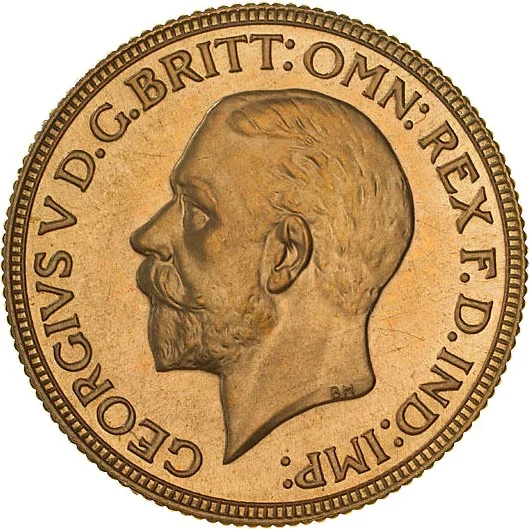
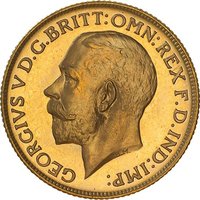
Portrait of King George V, left-facing.
Inscription:
GEORGIVS V D.G.BRITT:OMN:REX F.D.IND:IMP:
B.M.
B.M.
Translation:
George V, by the Grace of God, King of all the Britains, Defender of the Faith, Emperor of India.
Script: Latin
Language: Latin
Designer: Edgar Bertram MacKennal
Reverse
Description:
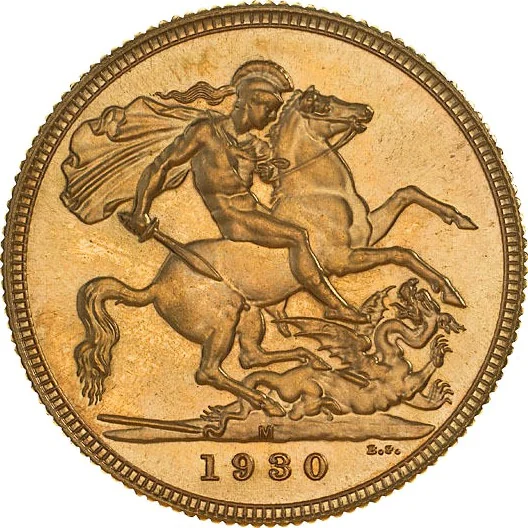
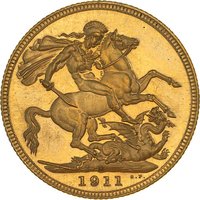
Saint George defeating a dragon
Inscription:
M
1930 B.P.
1930 B.P.
Script: Latin
Designer: Benedetto Pistrucci
Edge
Reeded
Categories
| Animal> Horse |
| Mythology> Fantastic animal |
Mints
| Name | Mark |
|---|---|
| Royal Mint | M |
| Perth Mint | P |
Mintings
Historical background
In 1929, Australia’s currency situation was fundamentally defined by its adherence to the Gold Standard, a system linking the Australian pound (£A) to a fixed quantity of gold and, by extension, to the British pound sterling. This provided stability and facilitated trade with Britain, Australia’s dominant economic partner. However, the system was rigid, requiring the nation to maintain substantial gold reserves to back its currency. When the economy faced pressure, this rigidity became a severe constraint, as the money supply could not be easily expanded to stimulate growth or counter deflation.
The situation deteriorated sharply with the onset of the Great Depression, which hit Australia hard due to collapsing export prices for wool and wheat. As foreign income plummeted, Australia’s ability to service its substantial overseas debt and maintain gold reserves was jeopardised. This triggered a balance of payments crisis and a dangerous outflow of gold. To protect its dwindling reserves, the Commonwealth Bank (then Australia’s central bank) was forced to raise interest rates and restrict credit precisely when the economy needed the opposite, exacerbating deflation and unemployment.
Consequently, by the end of 1929, the currency system was under unsustainable strain. The Scullin Labor government, elected in October, faced intense pressure to abandon the Gold Standard to free monetary policy. While the formal break would not occur until 1931, the debates of 1929 set the stage for this pivotal move. The prevailing orthodoxy of the Gold Standard was increasingly seen as incompatible with economic survival, setting up a profound political and financial conflict between the government, the independent Commonwealth Bank, and British creditors over Australia’s monetary sovereignty.
The situation deteriorated sharply with the onset of the Great Depression, which hit Australia hard due to collapsing export prices for wool and wheat. As foreign income plummeted, Australia’s ability to service its substantial overseas debt and maintain gold reserves was jeopardised. This triggered a balance of payments crisis and a dangerous outflow of gold. To protect its dwindling reserves, the Commonwealth Bank (then Australia’s central bank) was forced to raise interest rates and restrict credit precisely when the economy needed the opposite, exacerbating deflation and unemployment.
Consequently, by the end of 1929, the currency system was under unsustainable strain. The Scullin Labor government, elected in October, faced intense pressure to abandon the Gold Standard to free monetary policy. While the formal break would not occur until 1931, the debates of 1929 set the stage for this pivotal move. The prevailing orthodoxy of the Gold Standard was increasingly seen as incompatible with economic survival, setting up a profound political and financial conflict between the government, the independent Commonwealth Bank, and British creditors over Australia’s monetary sovereignty.
⭐ Somewhat Rare