

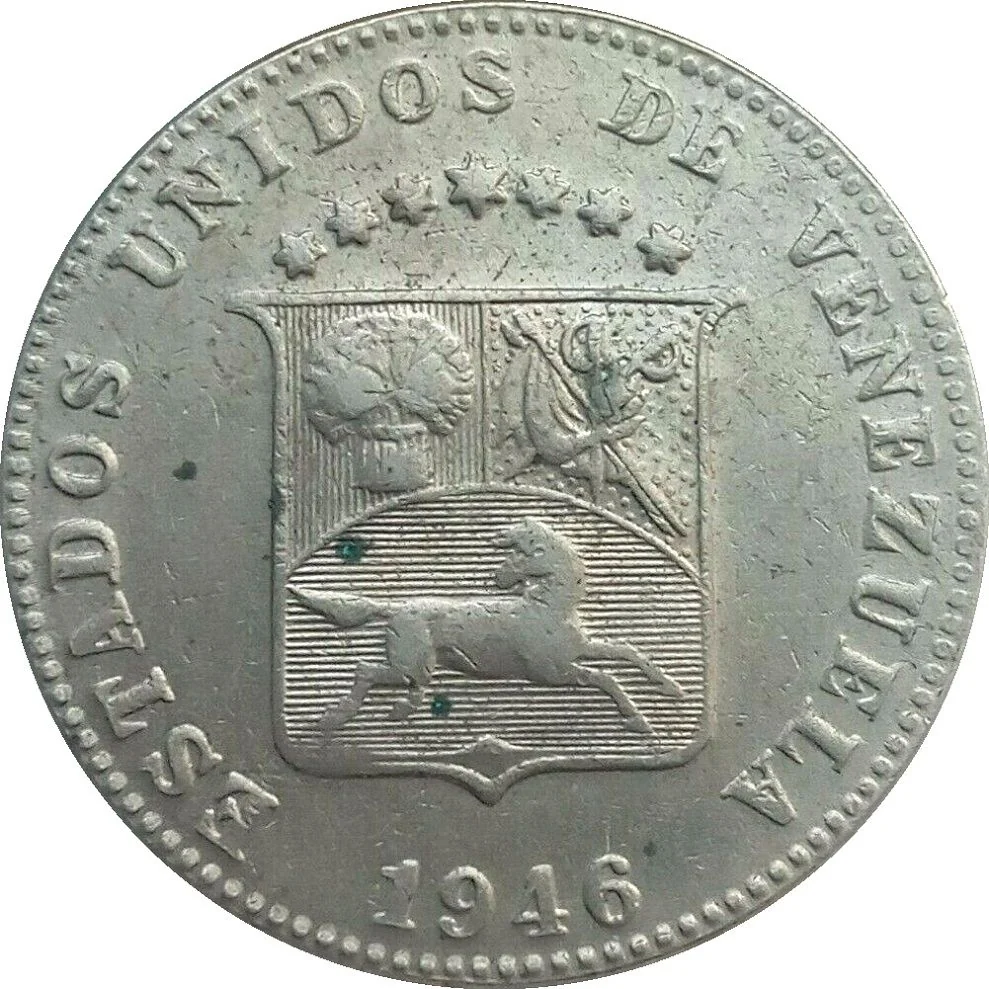
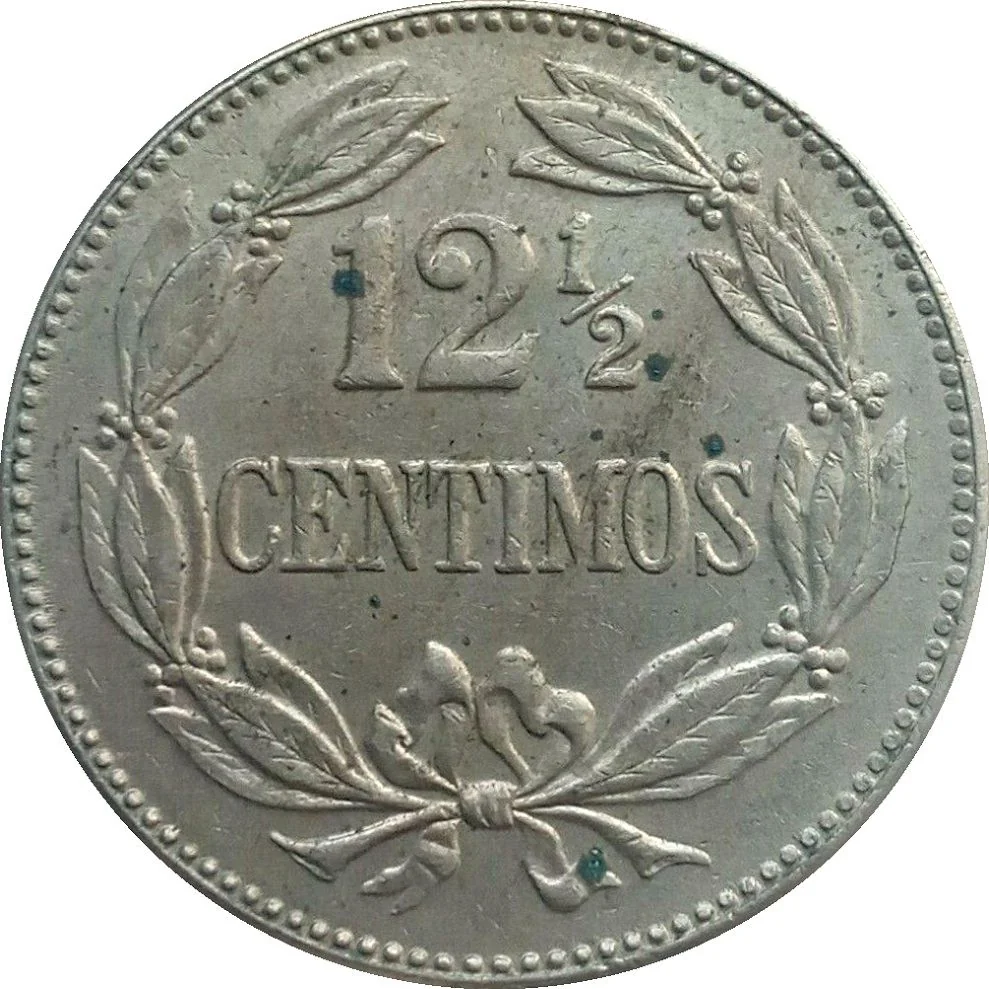
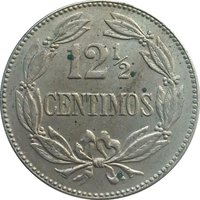
12½ Centimos – Venezuela
Venezuela
Context
Years: 1945–1948
Issuer: Venezuela 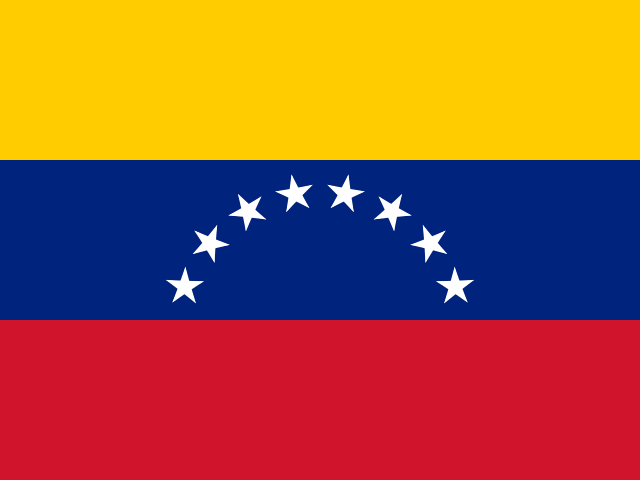
Period:
(1864—1953)
Currency:
(1879—2007)
Demonetization: 31 December 2011
Total mintage: 26,400,000
Material
References
Y: #Click to copy to clipboard30a
Numista: #9471
Value
Exchange value: 0.125 VEB
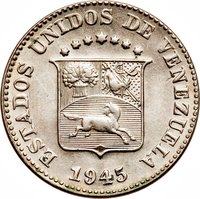
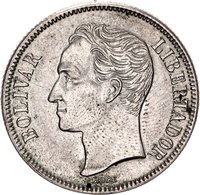
Obverse
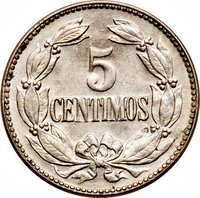
Reverse
Edge
Plain
Mints
| Name | Mark |
|---|---|
| United States Mint of Denver | — |
| United States Mint of Philadelphia | — |
| United States Mint of San Francisco | — |
Mintings
| Year | Mint Mark | Mintage | Quality | Collection |
|---|---|---|---|---|
| 1945 | — | 11,200,000 | ||
| 1946 | — | 9,200,000 | ||
| 1948 | — | 6,000,000 |
Historical background
In 1945, Venezuela's currency situation was one of relative stability and strength, underpinned by a booming oil-export economy. The national currency, the bolívar, was firmly pegged to the US dollar at a fixed rate of 3.09 bolívares to the dollar, a parity established in 1934 and maintained through conservative fiscal management. This peg provided predictability for international trade and investment, which was crucial as oil revenues transformed the nation. The government, led by President Isaías Medina Angarita, accumulated substantial foreign reserves, primarily in US dollars and gold, which backed the currency and instilled confidence both domestically and abroad.
This monetary stability was directly fueled by the rapid expansion of the petroleum sector during World War II. As a major supplier to the Allied forces, Venezuela's oil production and exports surged, creating immense inflows of foreign exchange. The state's share of these profits grew significantly due to the 1943 Hydrocarbons Law, which ensured a more equitable distribution of oil income. Consequently, the Central Bank of Venezuela (founded in 1940) managed a healthy reserve position, allowing it to defend the bolívar's fixed exchange rate with ease and avoid the inflationary pressures affecting many other global economies at the time.
However, this stable facade existed alongside a nascent economy that was becoming dangerously dependent on a single commodity. While the currency itself was strong, the nation's underlying economic structure was dualistic, with a modern, capital-intensive oil sector operating largely independently from a still-underdeveloped agricultural and manufacturing base. The year 1945 was a pivotal one, ending with the October Revolution that overthrew Medina Angarita. This political upheaval set the stage for future profound changes in economic policy, though the immediate currency regime and its oil-backed stability would remain intact for several more decades before the vulnerabilities of this model would later be fully exposed.
This monetary stability was directly fueled by the rapid expansion of the petroleum sector during World War II. As a major supplier to the Allied forces, Venezuela's oil production and exports surged, creating immense inflows of foreign exchange. The state's share of these profits grew significantly due to the 1943 Hydrocarbons Law, which ensured a more equitable distribution of oil income. Consequently, the Central Bank of Venezuela (founded in 1940) managed a healthy reserve position, allowing it to defend the bolívar's fixed exchange rate with ease and avoid the inflationary pressures affecting many other global economies at the time.
However, this stable facade existed alongside a nascent economy that was becoming dangerously dependent on a single commodity. While the currency itself was strong, the nation's underlying economic structure was dualistic, with a modern, capital-intensive oil sector operating largely independently from a still-underdeveloped agricultural and manufacturing base. The year 1945 was a pivotal one, ending with the October Revolution that overthrew Medina Angarita. This political upheaval set the stage for future profound changes in economic policy, though the immediate currency regime and its oil-backed stability would remain intact for several more decades before the vulnerabilities of this model would later be fully exposed.
🌱 Very Common