

10 dollars – United States
Add to wishlist
Non-circulating coins
Commemoration: First Spouse series - Caroline Harrison
United States
Context
Material
Diameter: 26.5 mm
Weight: 15.55 g
Gold Weight:: 15.55 g
Thickness: 1.88 mm
Shape: Round
Composition: 99.99% Gold
Standard: Silver half ounce
Magnetic: No
Technique: Milled
Alignment: Coin alignment
flip
References
KM: #
Numista: #93744
Value
Exchange value: 10 USD = $10.00
Bullion value: $2393.49
Inflation-adjusted value: 14.27 USD
Obverse
Description:
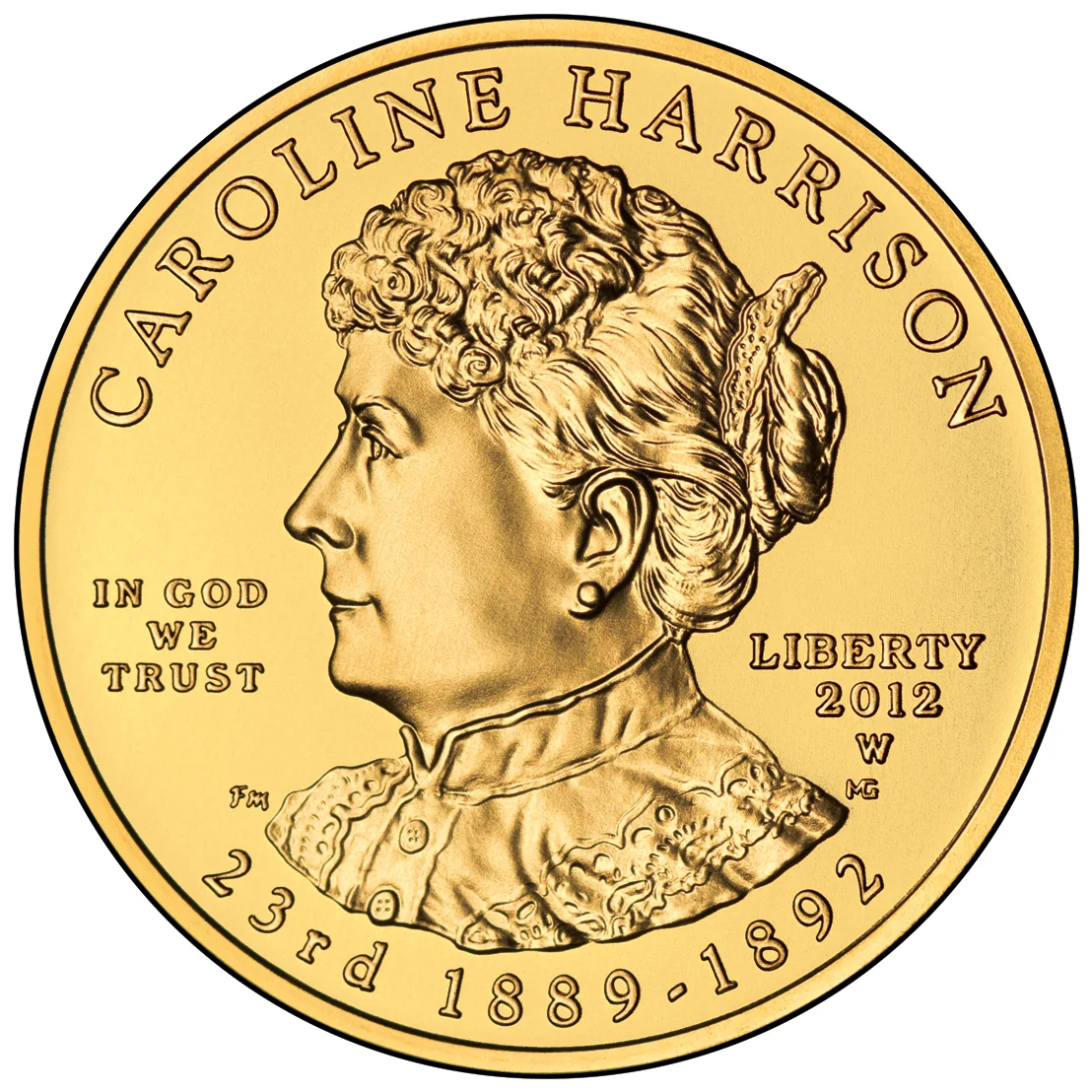
Caroline Harrison portrait
Inscription:
CAROLINE HARRISON
IN GOD WE TRUST
LIBERTY
2011
W
23rd 1889-1892
IN GOD WE TRUST
LIBERTY
2011
W
23rd 1889-1892
Script: Latin
Engravers: Frank Morris, Michael Gaudioso
Reverse
Description:
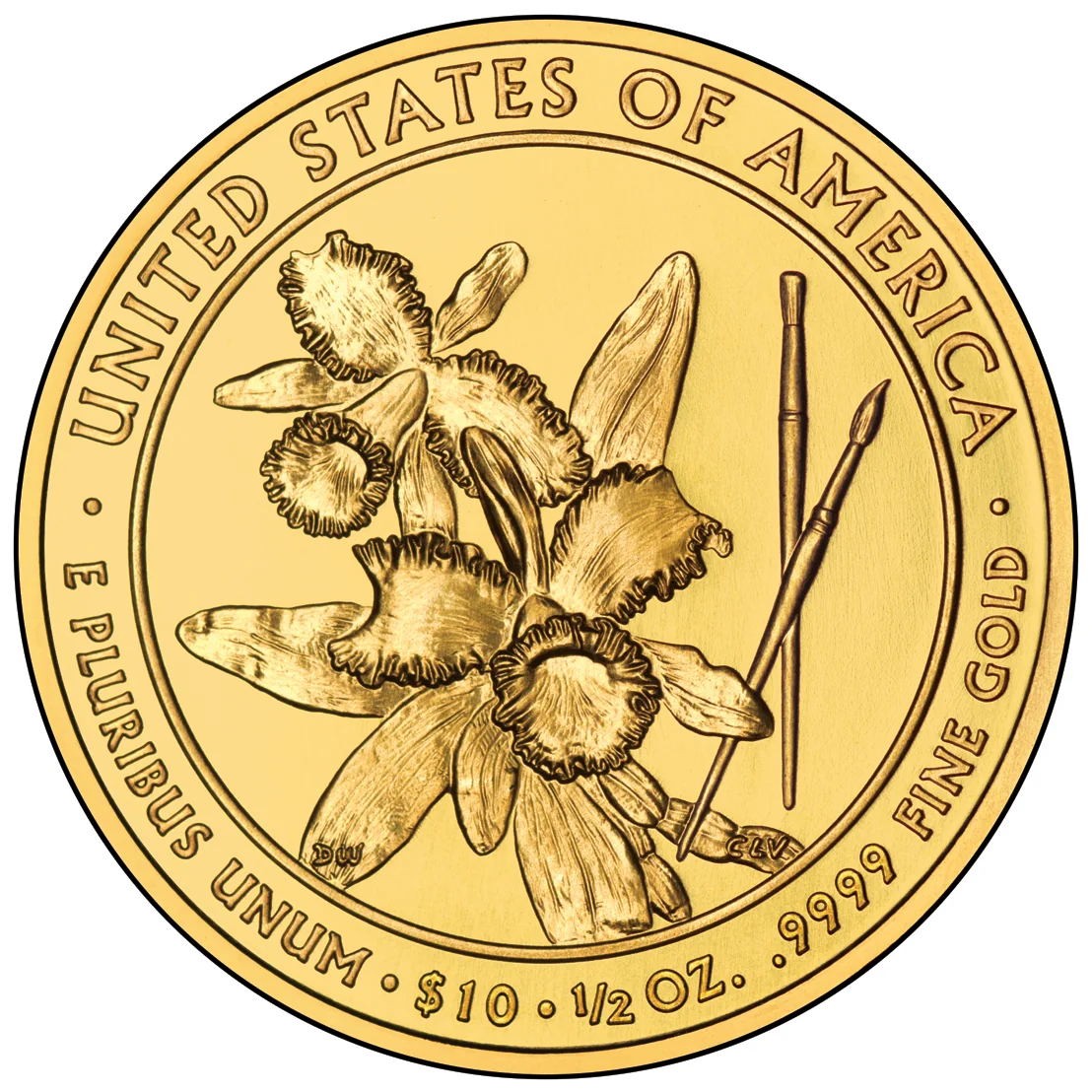
An orchid and brushes for the First Lady's china-painting.
Inscription:
· UNITED STATES OF AMERICA ·
·E PLURIBUS UNUM ·
$10 · 1/2 Oz. .9999 FINE GOLD
·E PLURIBUS UNUM ·
$10 · 1/2 Oz. .9999 FINE GOLD
Script: Latin
Engravers: Donna Weaver, Charles Lessie Vickers
Edge
Reeded
Mints
| Name | Mark |
|---|---|
| United States Mint of West Point | W |
Historical background
In 2012, the United States was navigating the complex aftermath of the 2007-2008 financial crisis, with monetary policy dominated by the Federal Reserve's unprecedented efforts to stimulate the economy. The benchmark federal funds rate had been near zero since late 2008, and the Fed, under Chairman Ben Bernanke, was engaged in a third round of quantitative easing (QE3), committing to purchase $85 billion in Treasury and mortgage-backed securities each month. This policy aimed to lower long-term interest rates, encourage borrowing and investment, and combat persistently high unemployment, which remained above 8% for much of the year. The Fed also made a historic shift in its forward guidance, pledging to keep rates exceptionally low at least through mid-2015, a move intended to bolster public and market confidence.
Despite these aggressive actions, concerns about long-term consequences were significant. Critics warned of potential future inflation, asset bubbles, and a weakening dollar, though core inflation remained subdued below the Fed's 2% target. The political landscape was highly charged, with the "currency situation" often intersecting with debates over the national debt, which surpassed $16 trillion. The year featured a contentious presidential election where the Fed's policies were scrutinized, and the looming "fiscal cliff"—a combination of expiring tax cuts and automatic spending reductions scheduled for year-end—created uncertainty, threatening to undermine the Fed's supportive monetary stance with abrupt fiscal contraction.
Internationally, the U.S. dollar maintained its role as the world's primary reserve currency, but its value experienced volatility driven by the European sovereign debt crisis, which spurred periodic flights to safety. Domestically, the environment of ultra-low yields pushed investors toward riskier assets, supporting a steady stock market recovery. Overall, 2012 was a period of sustained emergency monetary policy, defined by the Fed's determined, yet controversial, campaign to foster recovery through continued liquidity, while navigating significant fiscal headwinds and ongoing debates about the limits and risks of its expanding balance sheet.
Despite these aggressive actions, concerns about long-term consequences were significant. Critics warned of potential future inflation, asset bubbles, and a weakening dollar, though core inflation remained subdued below the Fed's 2% target. The political landscape was highly charged, with the "currency situation" often intersecting with debates over the national debt, which surpassed $16 trillion. The year featured a contentious presidential election where the Fed's policies were scrutinized, and the looming "fiscal cliff"—a combination of expiring tax cuts and automatic spending reductions scheduled for year-end—created uncertainty, threatening to undermine the Fed's supportive monetary stance with abrupt fiscal contraction.
Internationally, the U.S. dollar maintained its role as the world's primary reserve currency, but its value experienced volatility driven by the European sovereign debt crisis, which spurred periodic flights to safety. Domestically, the environment of ultra-low yields pushed investors toward riskier assets, supporting a steady stock market recovery. Overall, 2012 was a period of sustained emergency monetary policy, defined by the Fed's determined, yet controversial, campaign to foster recovery through continued liquidity, while navigating significant fiscal headwinds and ongoing debates about the limits and risks of its expanding balance sheet.
✨ Legendary