

1 scudo (French Revolution) – San Marino
Add to wishlist
Non-circulating coins
Commemoration: 200 Anniversary of French Revolution
San Marino
Context
Material
References
KM: #
Numista: #93732
Value
Bullion value: $461.13
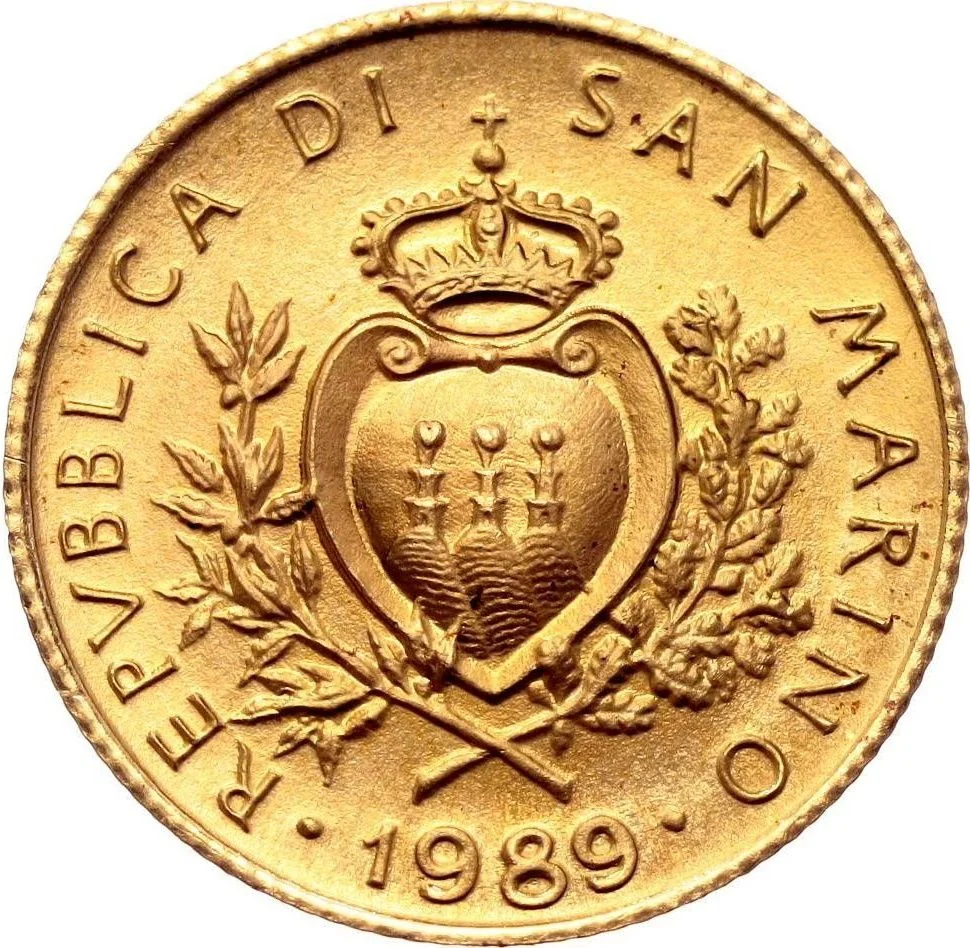
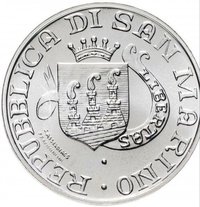
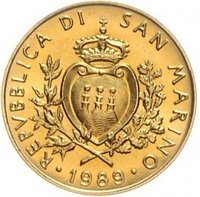
Obverse
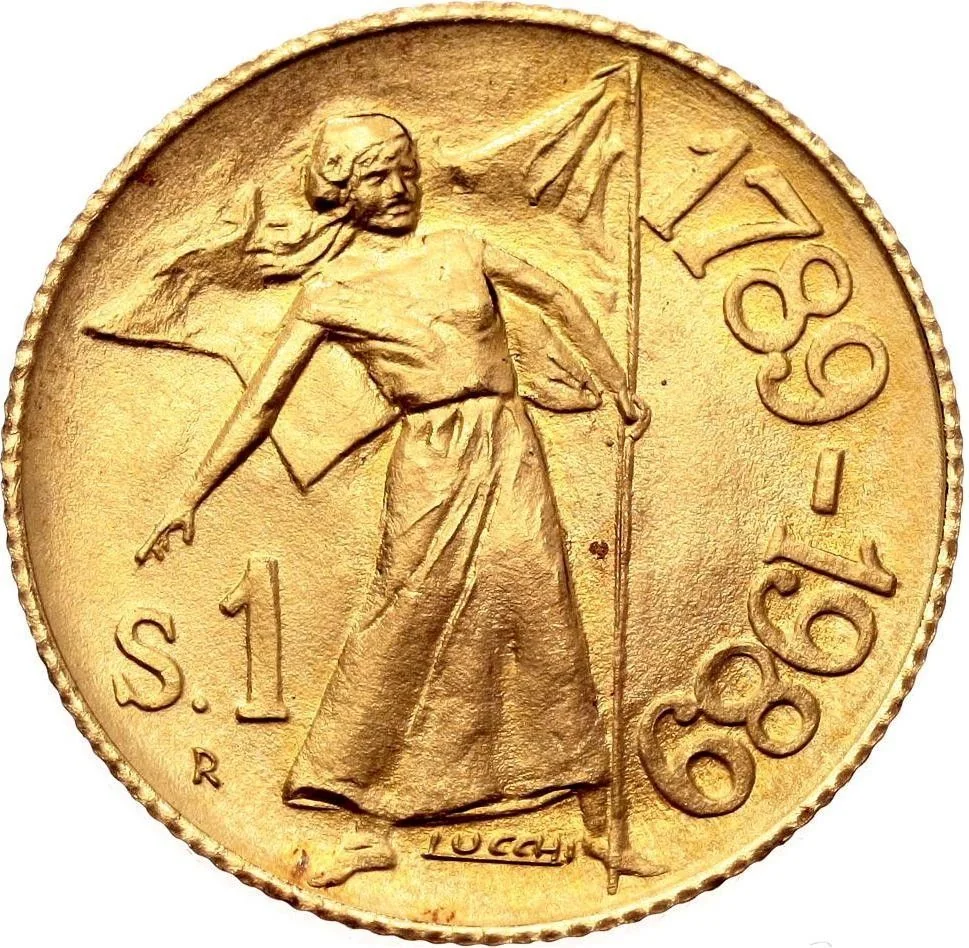
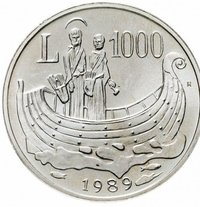
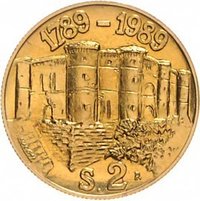
Reverse
Edge
Reeded
Categories
| Event> Revolution |
Mints
| Name | Mark |
|---|---|
| Rome | R |
Mintings
| Year | Mint Mark | Mintage | Quality | Collection |
|---|---|---|---|---|
| 1989 | R | 6,769 |
Historical background
In 1989, the currency situation in the Republic of San Marino was defined by its long-standing and intricate monetary agreements with Italy, formalized in a Convention dating back to 1939 and reaffirmed in subsequent agreements. As a microstate completely surrounded by Italian territory, San Marino lacked its own independent central bank and did not issue a separate, freely circulating currency. Instead, its monetary system was fully integrated with Italy's, with the Italian Lira (ITL) serving as the sole legal tender for all daily transactions, banking, and commerce within its borders. This arrangement provided monetary stability but came at the cost of ceding direct control over monetary policy to the Bank of Italy.
However, San Marino did exercise a limited sovereign right to issue its own distinct coinage. These Sammarinese Lire coins, minted in limited quantities and with designs unique to the republic, were legal tender only within San Marino and had the same metallic composition and face value as their Italian counterparts. They circulated alongside Italian coins, primarily serving as symbolic numismatic items for collectors and tourists rather than as instruments of economic policy. The state derived modest revenue from seigniorage (the profit from minting coins) and the sale of commemorative coin sets.
The year 1989 thus found San Marino in a period of monetary stasis, operating under a system of practical dependency that had functioned for decades. This arrangement was stable but would soon face a monumental external challenge. Just a few years later, the launch of European Economic and Monetary Union and the impending introduction of the Euro would force a fundamental renegotiation of these bilateral treaties, as Italy prepared to replace the Lira. Consequently, 1989 represents the final phase of the classic Lira-based system, with San Marino's currency future quietly poised on the brink of significant change driven by broader European integration.
However, San Marino did exercise a limited sovereign right to issue its own distinct coinage. These Sammarinese Lire coins, minted in limited quantities and with designs unique to the republic, were legal tender only within San Marino and had the same metallic composition and face value as their Italian counterparts. They circulated alongside Italian coins, primarily serving as symbolic numismatic items for collectors and tourists rather than as instruments of economic policy. The state derived modest revenue from seigniorage (the profit from minting coins) and the sale of commemorative coin sets.
The year 1989 thus found San Marino in a period of monetary stasis, operating under a system of practical dependency that had functioned for decades. This arrangement was stable but would soon face a monumental external challenge. Just a few years later, the launch of European Economic and Monetary Union and the impending introduction of the Euro would force a fundamental renegotiation of these bilateral treaties, as Italy prepared to replace the Lira. Consequently, 1989 represents the final phase of the classic Lira-based system, with San Marino's currency future quietly poised on the brink of significant change driven by broader European integration.
✨ Legendary