

1 paisa – Bombay Presidency
Add to wishlist
India
Context
Material
References
KM: #
Numista: #93537
Obverse
Description:
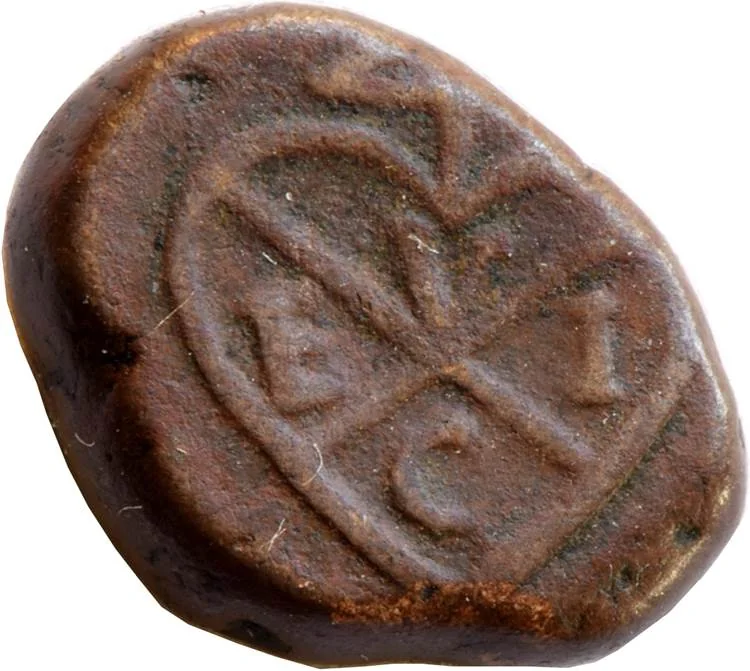
Balemark of the United East India Company within a plain circle.
Inscription:
VEIC
Translation:
Come.
Language: Latin
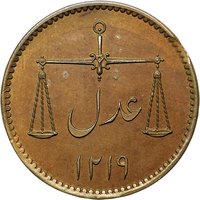
Reverse
Description:
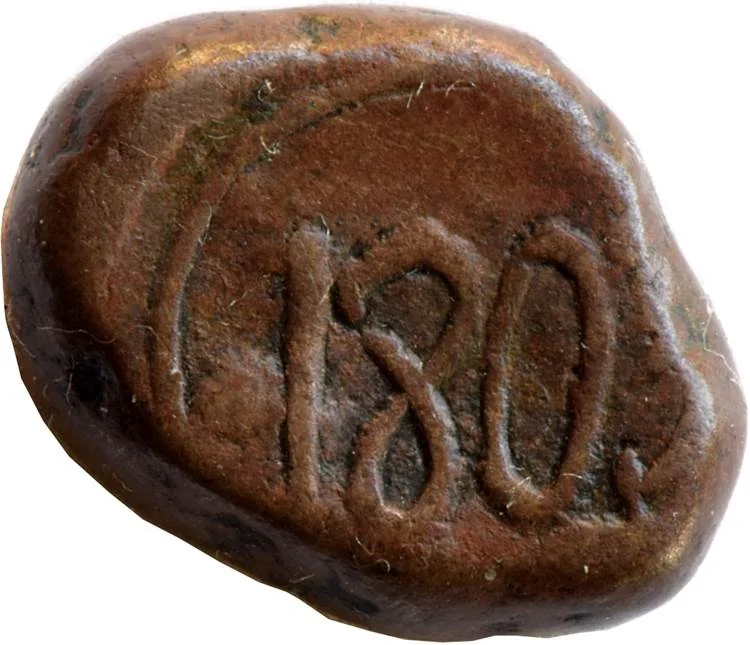
AD date in a circle.
Inscription:
1803
Edge
Plain
Mintings
| Year | Mint Mark | Mintage | Quality | Collection |
|---|---|---|---|---|
| 1803 | — | — | ||
| 1807 | — | — |
Historical background
In 1803, the currency situation in the Bombay Presidency was complex and challenging, characterized by a severe shortage of standardized specie and a chaotic multiplicity of circulating coins. The region operated on a silver standard, with the Company's rupee as the official unit, but its circulation was limited. Instead, the economy relied heavily on a confusing array of older, worn, and foreign silver coins—including Mughal rupees, Arcot rupees, and coins from various Indian states—all circulating at fluctuating values determined by their intrinsic silver weight and local acceptance. This lack of uniformity created significant obstacles for trade, revenue collection, and administration, as constant assays and conversions were necessary.
The root of the problem lay in the absence of a dominant minting authority. While the East India Company's Bombay Mint operated, its output was insufficient to meet the economic needs of the growing Presidency. Furthermore, the Company's military and financial exertions during the ongoing Second Anglo-Maratha War (1803-1805) placed enormous strain on its treasury. Substantial sums of silver bullion and coin were being exported from Bombay to finance warfare on other fronts, particularly in central India, exacerbating the local scarcity and driving up the exchange rate between Bombay rupees and those of Bengal, causing commercial dislocation.
Consequently, the monetary system was inefficient and prone to manipulation. Shroffs (money-changers and bankers) were essential intermediaries, assessing and verifying countless coin types, but their discounts and fees added to transactional costs. The Presidency government made periodic attempts to fix rates for different coins, but these were often ineffective. The situation demanded a comprehensive reform, which would eventually lead to more concerted efforts after the war to suppress foreign coins and establish the Company's rupee as the sole legal tender, a process that took decades to fully accomplish.
The root of the problem lay in the absence of a dominant minting authority. While the East India Company's Bombay Mint operated, its output was insufficient to meet the economic needs of the growing Presidency. Furthermore, the Company's military and financial exertions during the ongoing Second Anglo-Maratha War (1803-1805) placed enormous strain on its treasury. Substantial sums of silver bullion and coin were being exported from Bombay to finance warfare on other fronts, particularly in central India, exacerbating the local scarcity and driving up the exchange rate between Bombay rupees and those of Bengal, causing commercial dislocation.
Consequently, the monetary system was inefficient and prone to manipulation. Shroffs (money-changers and bankers) were essential intermediaries, assessing and verifying countless coin types, but their discounts and fees added to transactional costs. The Presidency government made periodic attempts to fix rates for different coins, but these were often ineffective. The situation demanded a comprehensive reform, which would eventually lead to more concerted efforts after the war to suppress foreign coins and establish the Company's rupee as the sole legal tender, a process that took decades to fully accomplish.

💎 Extremely Rare