

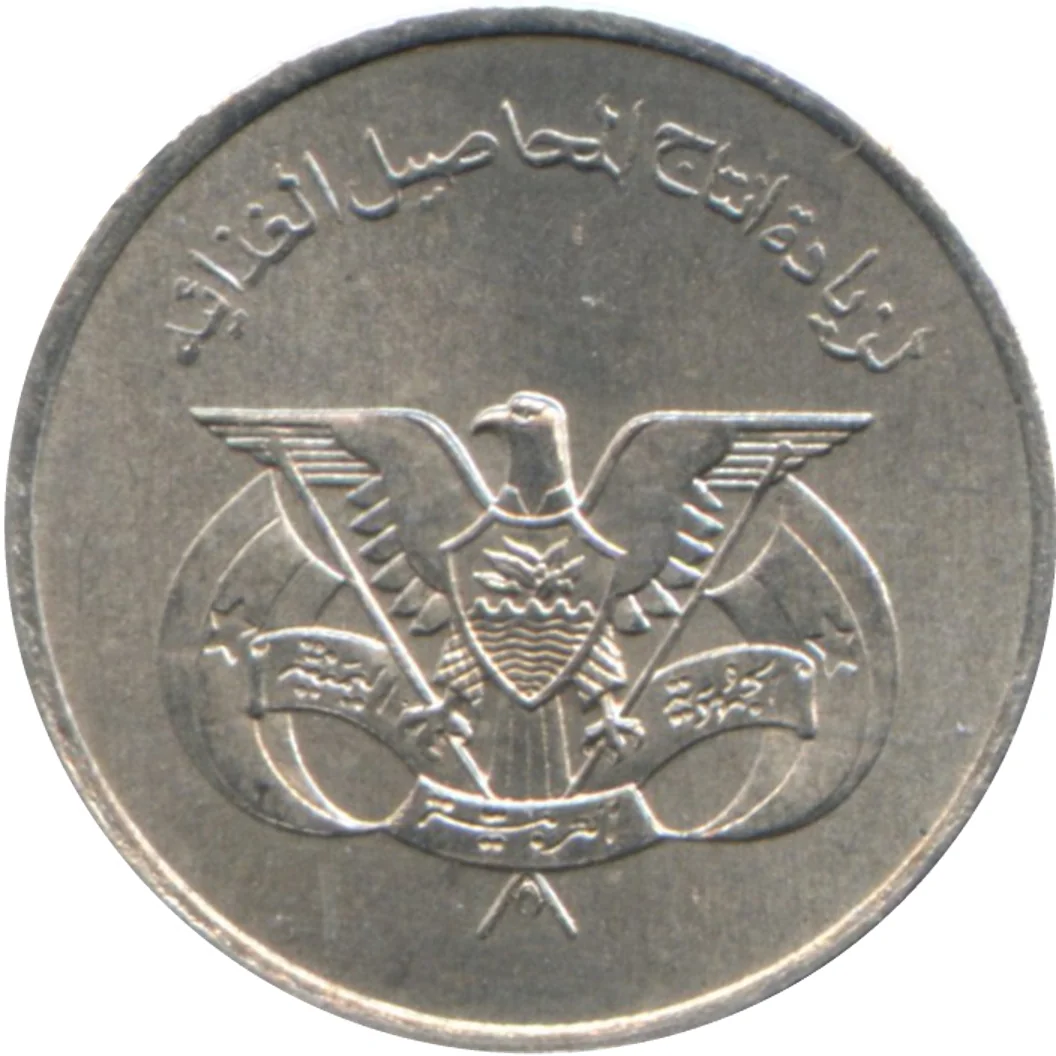
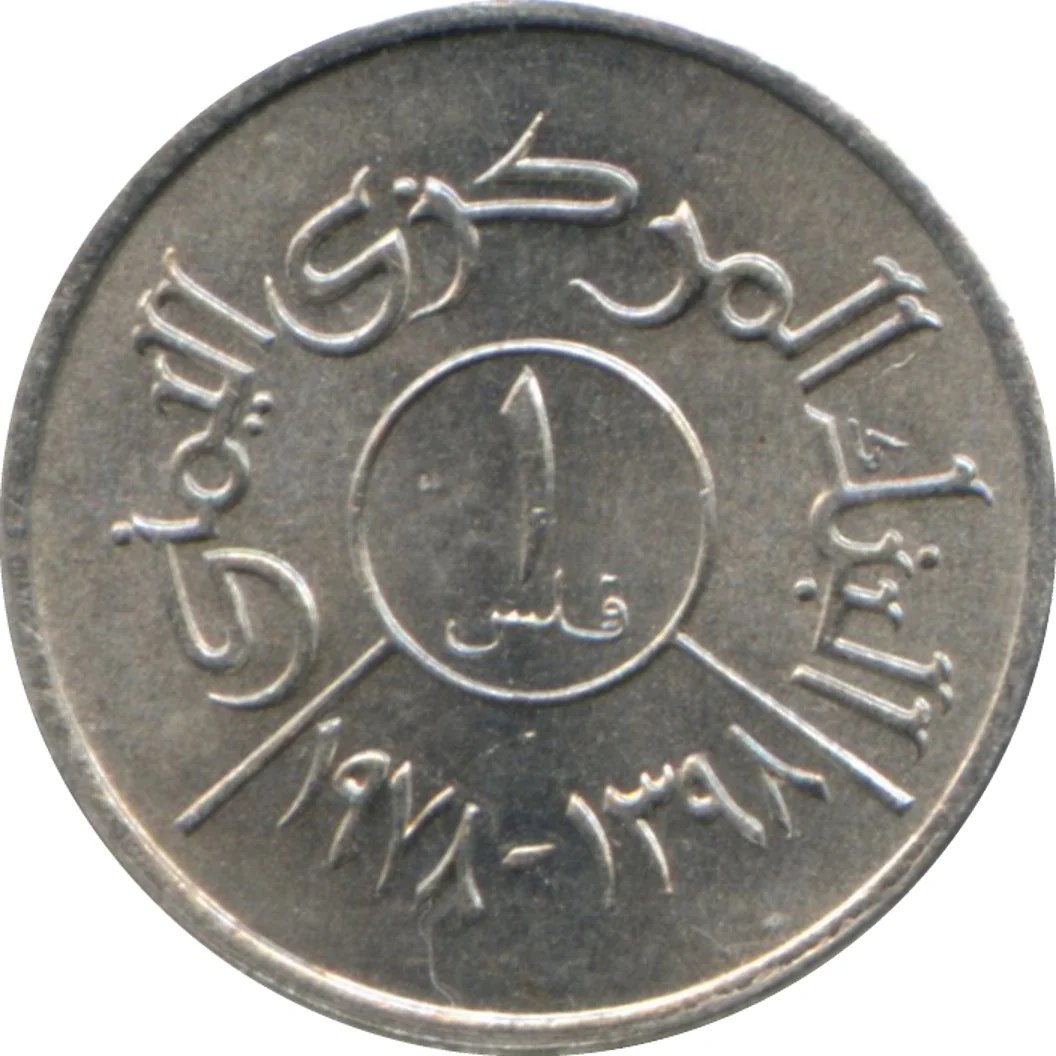
1 fils – North Yemen
Add to wishlist
Circulating commemorative coins
Commemoration: FAO Mint Set
Yemen
Context
Year: 1978
Islamic (Hijri) Year:: 1398
Country: Yemen
Issuer: North Yemen
Period:
(1962—1990)
Currency:
(1974—1990)
Demonetized: Yes
Material
References
Y: #
Numista: #9347
Value
Exchange value: 0.01 YER
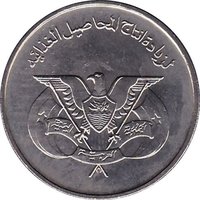
Obverse
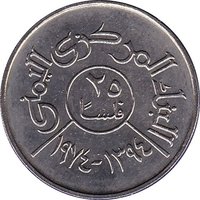
Reverse
Edge
Plain
Categories
| Animal> Bird> Eagle |
| Symbol> Flag |
| Organization> FAO |
| Symbols> Coat of Arms |
Mints
| Name | Mark |
|---|---|
| Royal Mint | — |
Mintings
| Year | Mint Mark | Mintage | Quality | Collection |
|---|---|---|---|---|
| 1978 | — | — |
Historical background
In 1978, the currency situation in the Republic of Yemen Arab Republic (North Yemen) was characterized by the circulation of two distinct paper currencies, reflecting the country's complex political and economic landscape. The official currency was the North Yemeni rial (YAR rial), issued by the Central Bank of Yemen in Sana'a. However, alongside it remained the Yemeni rial (YRI), a currency first issued in 1964 by the Yemeni government-in-exile during the North Yemen Civil War (1962-1970). This dual circulation was a lingering artifact of that conflict, representing the division between republican and royalist factions.
Economically, the country faced significant challenges that strained its monetary system. North Yemen was heavily dependent on remittances from hundreds of thousands of its citizens working in the oil-rich Gulf states and Saudi Arabia. This influx of foreign exchange was crucial for financing imports and supporting the rial's value, but it also contributed to inflation and made the economy vulnerable to external shocks. Furthermore, the state had limited fiscal resources, with a narrow domestic revenue base heavily reliant on customs duties and foreign aid.
Politically, 1978 was a year of acute instability, directly impacting monetary confidence. The year saw the assassinations of two consecutive presidents, Ahmed al-Ghashmi and then his successor within months. This turmoil created uncertainty for economic policy and the authority of the central bank. While steps toward monetary unification with the Marxist South Yemen were discussed in principle following the 1972 ceasefire agreement, the profound political differences and the instability of 1978 meant that a single, unified Yemeni currency remained a distant prospect, leaving the dual-system in place.
Economically, the country faced significant challenges that strained its monetary system. North Yemen was heavily dependent on remittances from hundreds of thousands of its citizens working in the oil-rich Gulf states and Saudi Arabia. This influx of foreign exchange was crucial for financing imports and supporting the rial's value, but it also contributed to inflation and made the economy vulnerable to external shocks. Furthermore, the state had limited fiscal resources, with a narrow domestic revenue base heavily reliant on customs duties and foreign aid.
Politically, 1978 was a year of acute instability, directly impacting monetary confidence. The year saw the assassinations of two consecutive presidents, Ahmed al-Ghashmi and then his successor within months. This turmoil created uncertainty for economic policy and the authority of the central bank. While steps toward monetary unification with the Marxist South Yemen were discussed in principle following the 1972 ceasefire agreement, the profound political differences and the instability of 1978 meant that a single, unified Yemeni currency remained a distant prospect, leaving the dual-system in place.
🌱 Fairly Common