

1 rupee (Allama Muhammad Iqbal) – Pakistan
Add to wishlist
Circulating commemorative coins
Commemoration: 100th birthday of Allama Muhammad Iqbal
Pakistan
Context
Year: 1977
Issuer: Pakistan
Period:
(since 1956)
Currency:
(since 1961)
Demonetized: Yes
Total mintage: 5,000,000
Material
Diameter: 27.5 mm
Weight: 7.5 g
Thickness: 1.7 mm
Shape: Round
Composition: Copper-nickel
Technique: Milled
Alignment: Medal alignment
flip
References
KM: #
Numista: #9249
Value
Exchange value: 1 PKR
Obverse
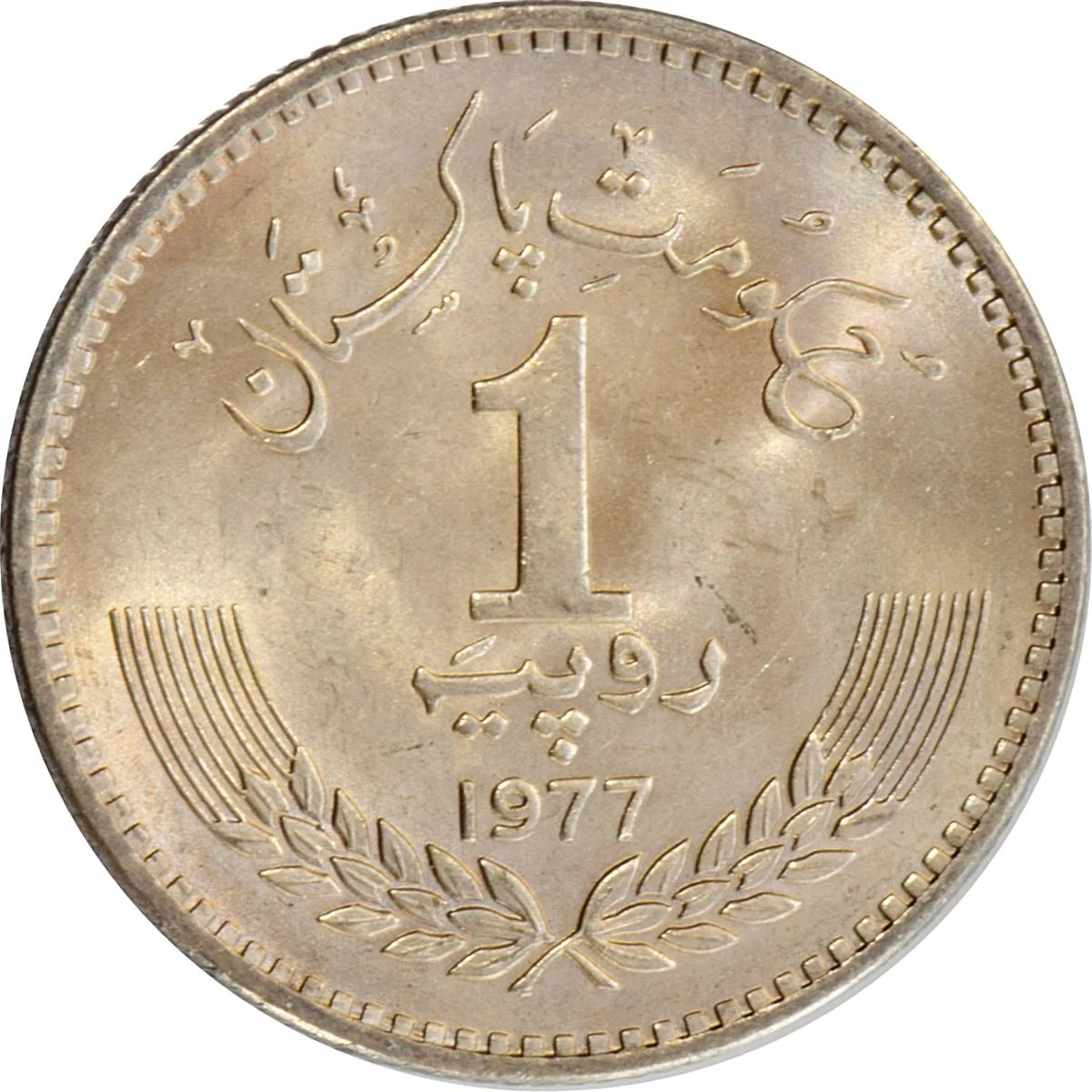
Description:
Wreath beneath value and year.
Inscription:
1
1977
1977
Reverse
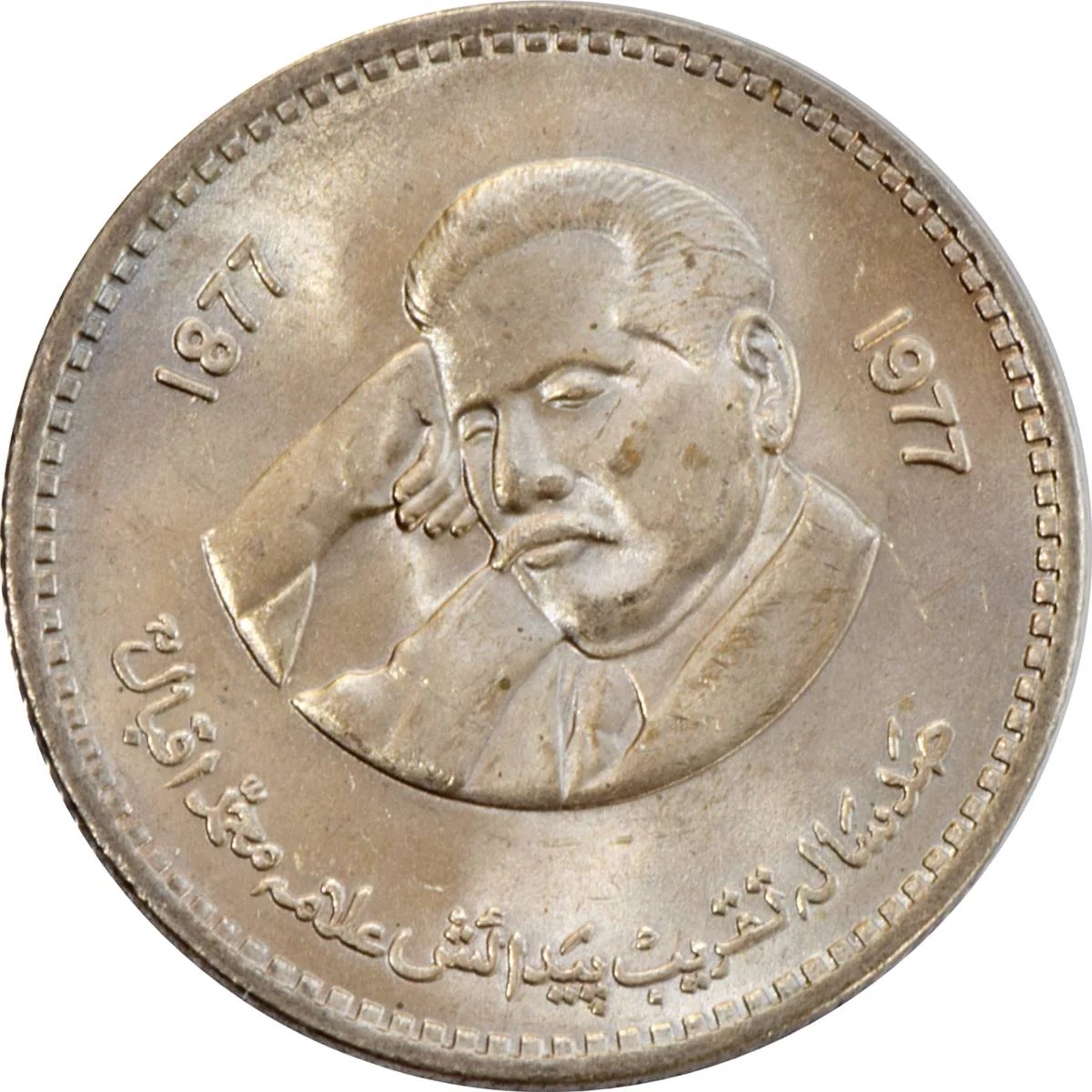
Description:
Portrait with head resting on right hand.
Inscription:
1877 1977
Edge
Reeded
Mintings
| Year | Mint Mark | Mintage | Quality | Collection |
|---|---|---|---|---|
| 1977 | — | 5,000,000 |
Historical background
In 1977, Pakistan's currency situation was characterized by relative stability but underlying economic pressures. The Pakistani rupee, pegged to the U.S. dollar at a fixed rate of 9.9 rupees per dollar since 1973, was maintained under the government of Prime Minister Zulfikar Ali Bhutto. This period followed the 1971 war and the loss of East Pakistan, which had strained the economy, but the mid-1970s saw some recovery due to remittance inflows from overseas workers, increased foreign aid, and a boom in agricultural production. The State Bank of Pakistan managed the peg, and foreign exchange reserves were at a manageable level, preventing any immediate crisis.
However, this stability was fragile and masked significant structural issues. The economy was heavily regulated, with import controls and licensing creating distortions. While the fixed exchange rate provided predictability for trade, it was arguably overvalued, which discouraged exports and encouraged imports, leading to a growing trade deficit. Furthermore, political turmoil was the dominant theme of 1977, as widespread protests against Bhutto's government following disputed elections in March created an atmosphere of uncertainty that threatened economic confidence and policy continuity.
The currency regime would undergo a significant shift shortly after the political upheaval of 1977. Following a military coup in July by General Muhammad Zia-ul-Haq, the new government initially maintained the peg. However, by 1982, facing persistent balance of payments pressures and in line with global trends, Pakistan moved to a managed float system. Thus, while the rupee itself was stable in 1977, the year marked the end of a political era whose economic policies, including the rigid exchange rate, would be reassessed and altered by the subsequent regime.
However, this stability was fragile and masked significant structural issues. The economy was heavily regulated, with import controls and licensing creating distortions. While the fixed exchange rate provided predictability for trade, it was arguably overvalued, which discouraged exports and encouraged imports, leading to a growing trade deficit. Furthermore, political turmoil was the dominant theme of 1977, as widespread protests against Bhutto's government following disputed elections in March created an atmosphere of uncertainty that threatened economic confidence and policy continuity.
The currency regime would undergo a significant shift shortly after the political upheaval of 1977. Following a military coup in July by General Muhammad Zia-ul-Haq, the new government initially maintained the peg. However, by 1982, facing persistent balance of payments pressures and in line with global trends, Pakistan moved to a managed float system. Thus, while the rupee itself was stable in 1977, the year marked the end of a political era whose economic policies, including the rigid exchange rate, would be reassessed and altered by the subsequent regime.
🌱 Common