

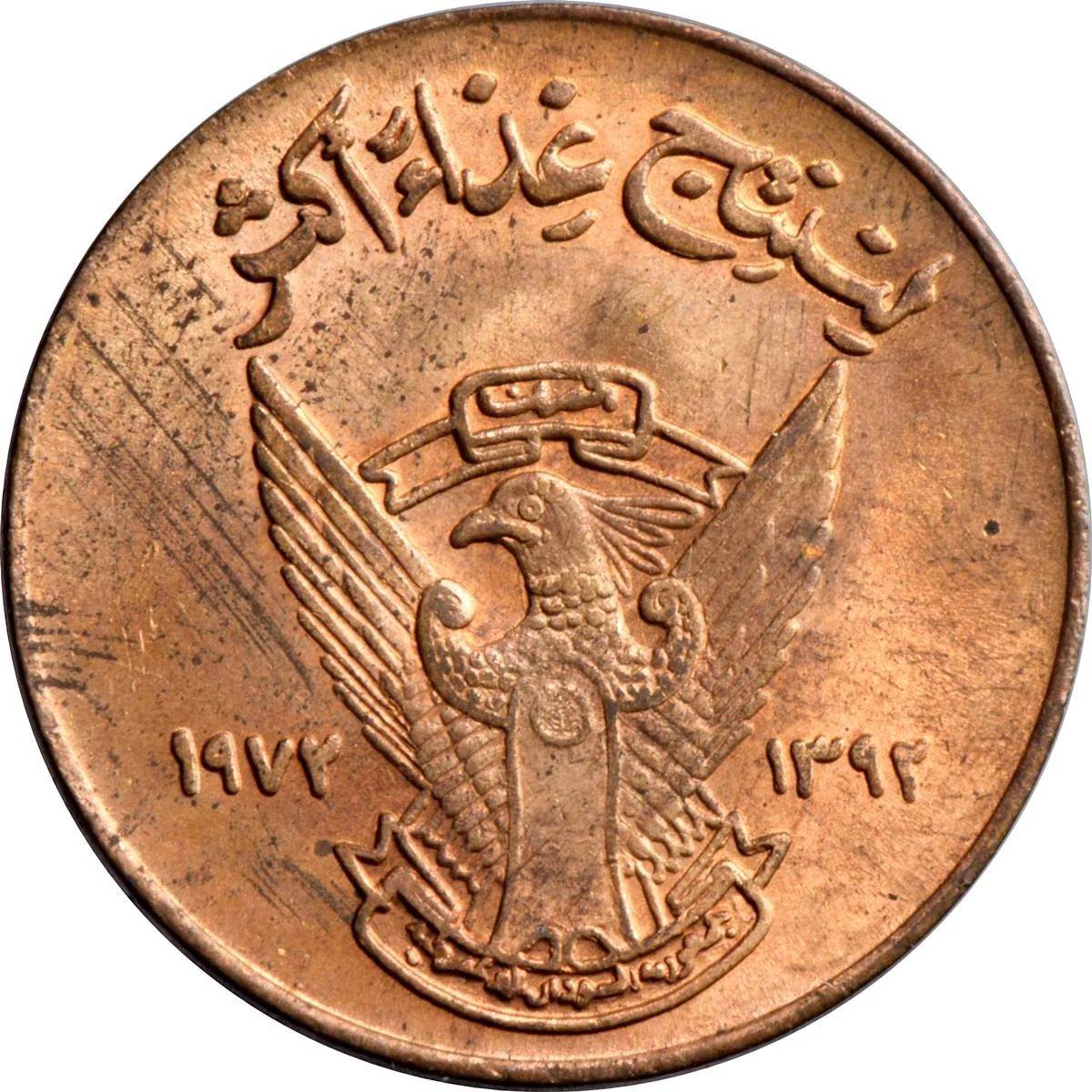
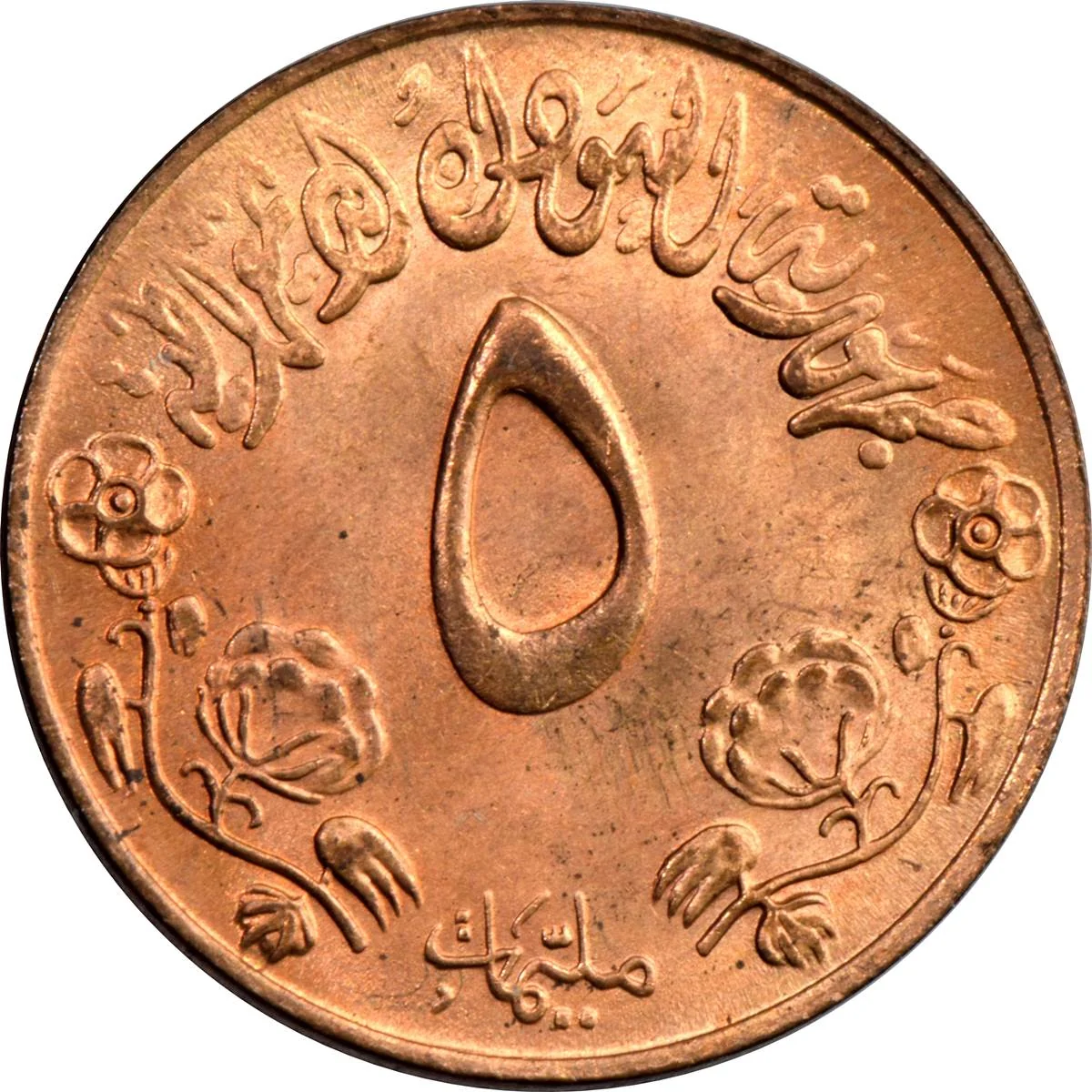
5 Milliemes – Sudan
Circulating commemorative coins
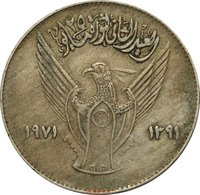
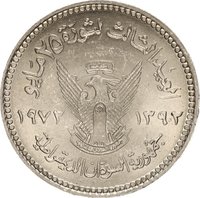
Commemoration: F.A.O.
Sudan

Obverse
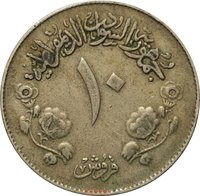
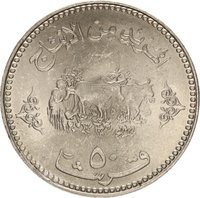
Reverse
Edge
Plain
Categories
| Organization> FAO |
| Symbols> Coat of Arms |
Mintings
| Year | Mint Mark | Mintage | Quality | Collection |
|---|---|---|---|---|
| 1972 | — | 6,000,000 | ||
| 1973 | — | 9,000,000 |
Historical background
In 1972, Sudan's currency situation was directly shaped by the landmark Addis Ababa Agreement, which ended the First Sudanese Civil War (1955-1972). A critical component of the peace accord was the integration of the rebel-held southern regions into the national economic and administrative system. This necessitated the urgent replacement of the makeshift currency that had been in circulation in the south—primarily the "Sudanese Pound" issued by the Anyanya rebellion—with the official national currency issued by the Bank of Sudan in Khartoum.
The central monetary challenge was one of logistics and trust. The government undertook a massive operation to transport new banknotes and coins to the south and exchange them for the rebel currency at a fixed, agreed-upon rate. This was not merely a financial technicality but a profound political act, symbolizing the extension of central government authority and the unification of the country's monetary space. Successfully managing this exchange was crucial for restoring basic commerce and paying civil servants in the newly established Southern Region.
Consequently, 1972 represented a year of singular monetary unification rather than a period of broad economic crisis or hyperinflation for Sudan as a whole. The currency situation was stable under the Sudanese Pound, but the immense costs of post-war reconstruction and integration began placing severe strain on the national treasury. The economic burdens of peace, combined with longstanding structural issues, would later contribute to the debt and inflation problems that plagued the Sudanese economy in the subsequent decades.
The central monetary challenge was one of logistics and trust. The government undertook a massive operation to transport new banknotes and coins to the south and exchange them for the rebel currency at a fixed, agreed-upon rate. This was not merely a financial technicality but a profound political act, symbolizing the extension of central government authority and the unification of the country's monetary space. Successfully managing this exchange was crucial for restoring basic commerce and paying civil servants in the newly established Southern Region.
Consequently, 1972 represented a year of singular monetary unification rather than a period of broad economic crisis or hyperinflation for Sudan as a whole. The currency situation was stable under the Sudanese Pound, but the immense costs of post-war reconstruction and integration began placing severe strain on the national treasury. The economic burdens of peace, combined with longstanding structural issues, would later contribute to the debt and inflation problems that plagued the Sudanese economy in the subsequent decades.
🌱 Very Common