

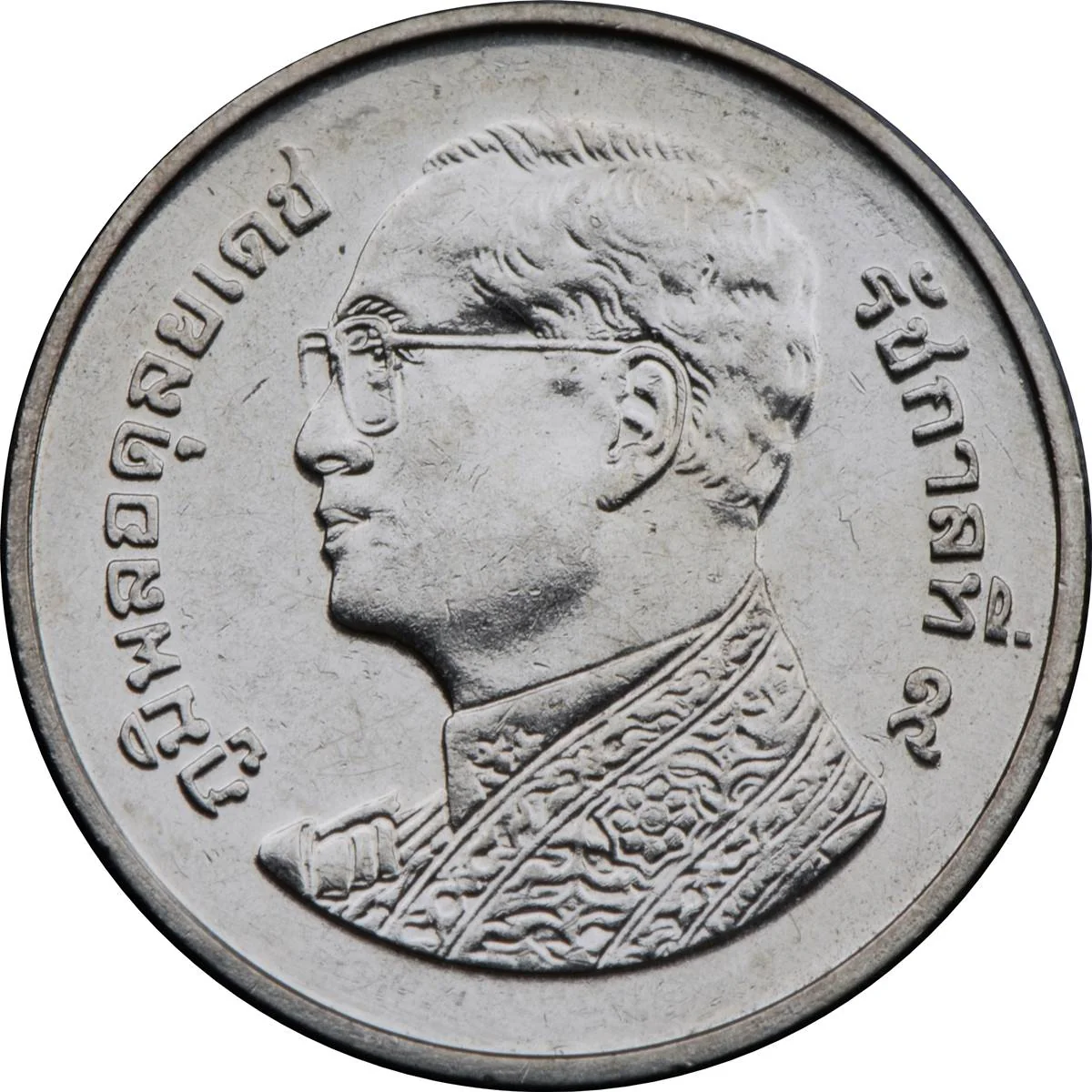
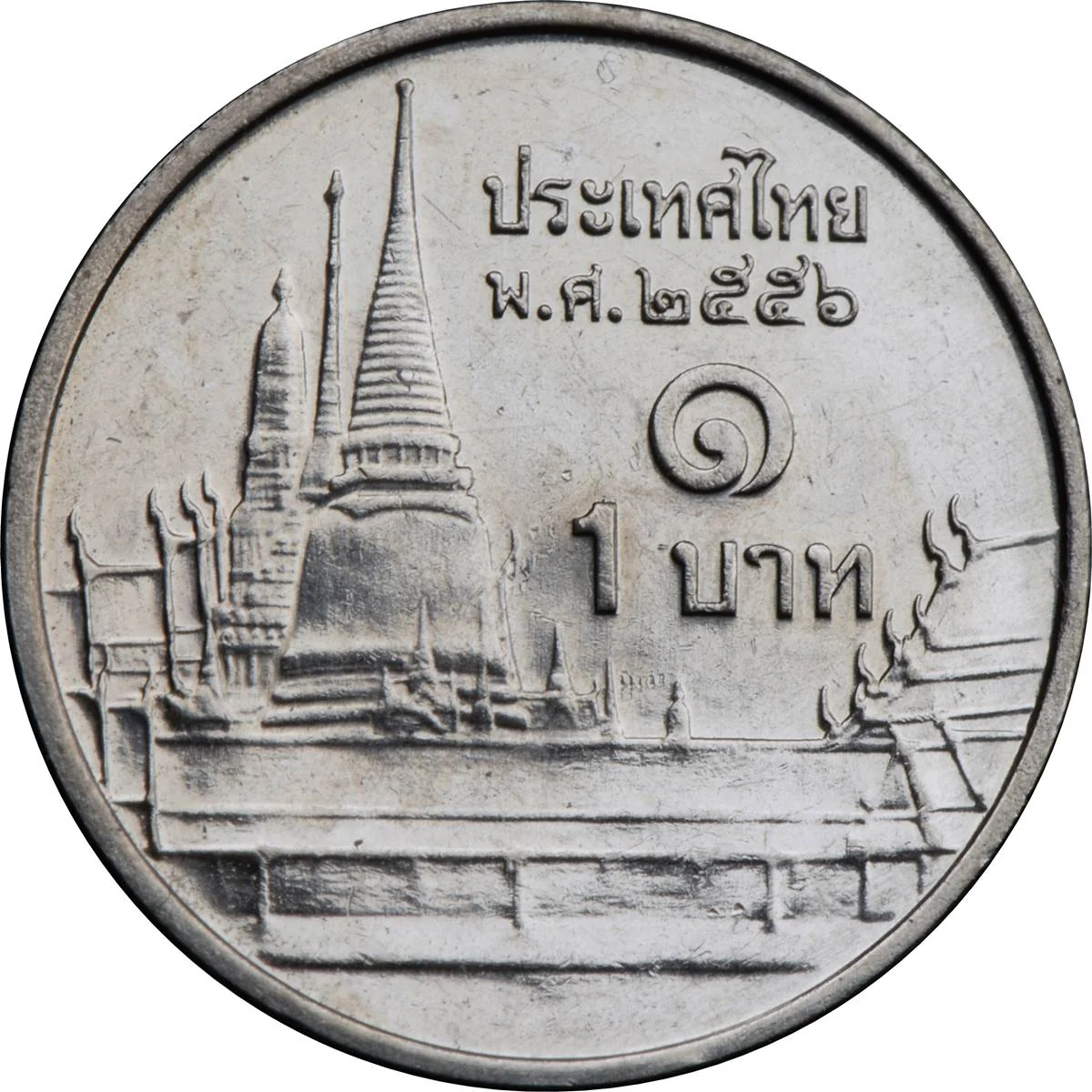
1 baht – Thailand
Add to wishlist
Thailand
Context
Years: 2009–2017
Issuer: Thailand
Ruler: Bhumibol Adulyadej
Currency:
(since 1897)
Total mintage: 4,199,463,050
Material
References
Y: #
Numista: #9226
Value
Exchange value: 1 THB
Obverse
Reverse
Edge
Reeded
Categories
| Building> Religious building |
Mints
| Name | Mark |
|---|---|
| Munich | — |
| Pathum Thani | — |
| Royal Mint | — |
Mintings
| Year | Mint Mark | Mintage | Quality | Collection |
|---|---|---|---|---|
| 2009 | — | 246,000,000 | ||
| 2010 | — | 551,853,000 | ||
| 2011 | — | — | ||
| 2012 | — | 964,338,550 | ||
| 2013 | — | 760,121,500 | ||
| 2014 | — | — | ||
| 2015 | — | — | ||
| 2016 | — | 746,900,000 | ||
| 2017 | — | 930,250,000 |
Historical background
In 2009, Thailand's currency, the baht (THB), experienced significant volatility and appreciation pressure, emerging as one of Asia's best-performing currencies that year. This strength was paradoxical against the backdrop of a severe domestic political crisis and a sharp economic contraction due to the global financial crisis. The key driver was not robust Thai economic fundamentals, but large-scale capital inflows into the region. As investors fled low interest rates and quantitative easing in the West, they sought higher yields in emerging Asian markets, including Thailand. This created strong demand for baht-denominated assets, pushing the currency's value upward despite the country's recession.
This appreciation posed a serious policy dilemma for the Bank of Thailand (BoT). A stronger baht threatened to undermine the crucial export sector, which accounted for over 60% of GDP, by making Thai goods more expensive overseas during a period of collapsing global demand. The BoT intervened heavily in the foreign exchange market throughout the year, buying US dollars to slow the baht's rise and build foreign reserves, which swelled to over $138 billion. These actions were accompanied by verbal warnings and the imposition of capital controls on certain foreign investments, reflecting authorities' anxiety over hot money flows and potential asset bubbles.
The situation was further complicated by domestic political instability, including protests and government changes, which typically deter investment but were overshadowed by the global "risk-on" sentiment. By year's end, the baht had appreciated approximately 4% against the US dollar, a gain that masked the underlying economic pain. The 2009 experience highlighted the challenges for a small, open economy in managing external monetary spillovers, forcing the BoT to walk a tightrope between controlling currency volatility, preserving export competitiveness, and maintaining financial stability in a turbulent global environment.
This appreciation posed a serious policy dilemma for the Bank of Thailand (BoT). A stronger baht threatened to undermine the crucial export sector, which accounted for over 60% of GDP, by making Thai goods more expensive overseas during a period of collapsing global demand. The BoT intervened heavily in the foreign exchange market throughout the year, buying US dollars to slow the baht's rise and build foreign reserves, which swelled to over $138 billion. These actions were accompanied by verbal warnings and the imposition of capital controls on certain foreign investments, reflecting authorities' anxiety over hot money flows and potential asset bubbles.
The situation was further complicated by domestic political instability, including protests and government changes, which typically deter investment but were overshadowed by the global "risk-on" sentiment. By year's end, the baht had appreciated approximately 4% against the US dollar, a gain that masked the underlying economic pain. The 2009 experience highlighted the challenges for a small, open economy in managing external monetary spillovers, forcing the BoT to walk a tightrope between controlling currency volatility, preserving export competitiveness, and maintaining financial stability in a turbulent global environment.
🌱 Very Common