

1000 Rupees – Seychelles
Non-circulating coins
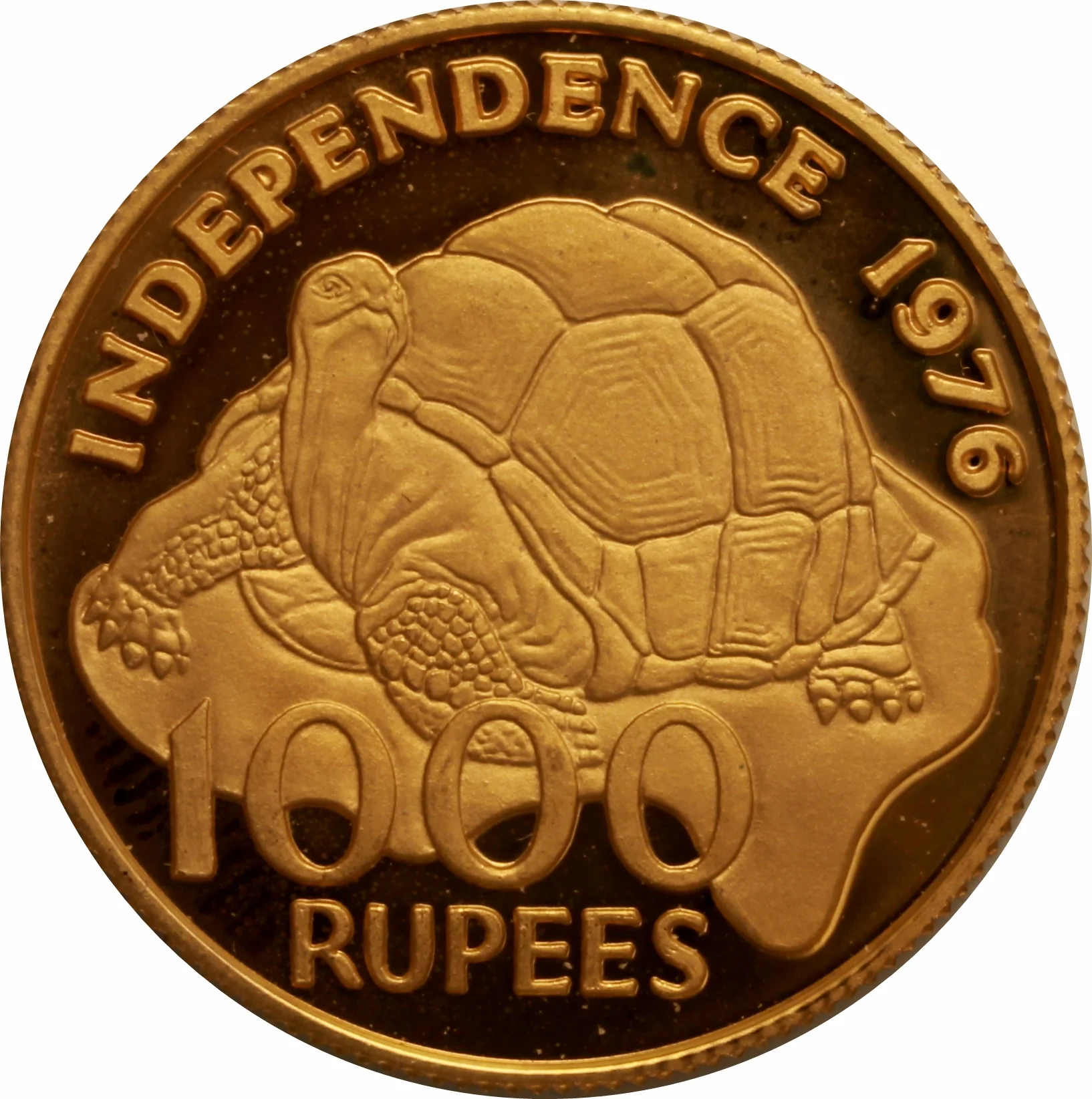
Commemoration: Declaration of Independence
Seychelles
Context

Material
References
KM: #Click to copy to clipboard29
Numista: #92233
Value
Exchange value: 1000 SCR
Bullion value: $2439.54
Obverse
Description:
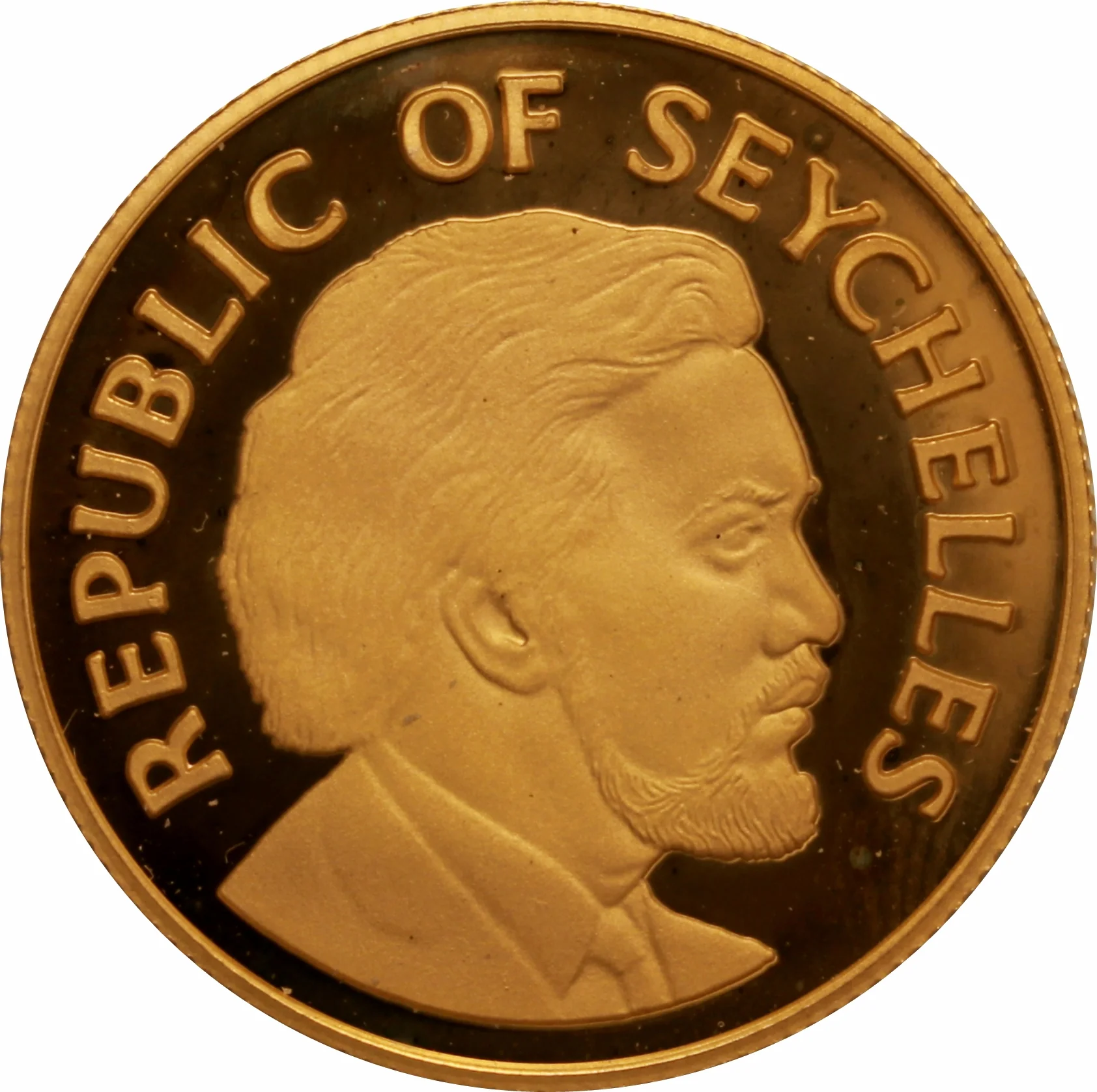
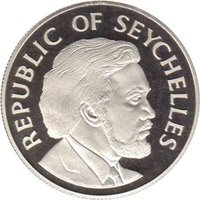
President James Mancham, right.
Inscription:
REPUBLIC OF SEYCHELLES
Script: Latin
Engraver: Michael Rizzello
Reverse
Edge
Reeded
Categories
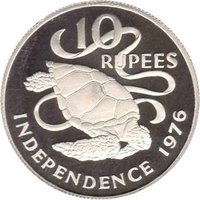
| Animal> Turtle or tortoise |
| Event> Independence |
Mintings
| Year | Mint Mark | Mintage | Quality | Collection |
|---|---|---|---|---|
| 1976 | — | 5,000 | ||
| 1976 | — | 1,000 | Proof |
Historical background
Upon gaining independence from Britain in June 1976, Seychelles inherited a currency system directly tied to its colonial past. The official currency was the Seychelles rupee (SCR), which had been introduced in 1914 and was pegged to sterling. This peg meant the rupee's value was fixed to the British pound, making monetary policy in Victoria largely dependent on decisions made in London. The economy was modest, heavily reliant on the export of copra and cinnamon, with a nascent tourism sector just beginning to develop.
The immediate post-independence period did not see an abrupt monetary change. The new government, led by President James Mancham, maintained the sterling peg as a symbol of stability and continuity during the political transition. This was a pragmatic choice, aimed at preserving confidence for foreign investors and the vital tourism industry. The country's foreign exchange reserves were managed through the Currency Commission, the precursor to the Central Bank of Seychelles, which would not be established until 1978.
However, this stability was short-lived. The political landscape shifted dramatically in 1977 with a coup that brought France-Albert René to power, instituting a socialist-leaning government. This political upheaval, combined with global economic pressures and a desire for greater monetary sovereignty, soon led to significant changes. The fixed peg to sterling was abandoned in the early 1980s, marking the true beginning of an independent monetary policy for the young nation, navigating between the demands of a controlled economy and the realities of a small, open island state.
The immediate post-independence period did not see an abrupt monetary change. The new government, led by President James Mancham, maintained the sterling peg as a symbol of stability and continuity during the political transition. This was a pragmatic choice, aimed at preserving confidence for foreign investors and the vital tourism industry. The country's foreign exchange reserves were managed through the Currency Commission, the precursor to the Central Bank of Seychelles, which would not be established until 1978.
However, this stability was short-lived. The political landscape shifted dramatically in 1977 with a coup that brought France-Albert René to power, instituting a socialist-leaning government. This political upheaval, combined with global economic pressures and a desire for greater monetary sovereignty, soon led to significant changes. The fixed peg to sterling was abandoned in the early 1980s, marking the true beginning of an independent monetary policy for the young nation, navigating between the demands of a controlled economy and the realities of a small, open island state.
✨ Legendary