

500 dollars – The Bahamas
Non-circulating coins
Commemoration: Royal Wedding
Bahamas
Context
Year: 1981
Country: Bahamas 
Issuer: The Bahamas
Ruler: Elizabeth II
Currency:
(since 1966)
Total mintage: 5,000
Material
References
KM: #Click to copy to clipboard88
Numista: #91834
Value
Exchange value: 500 BSD
Bullion value: $3960.21
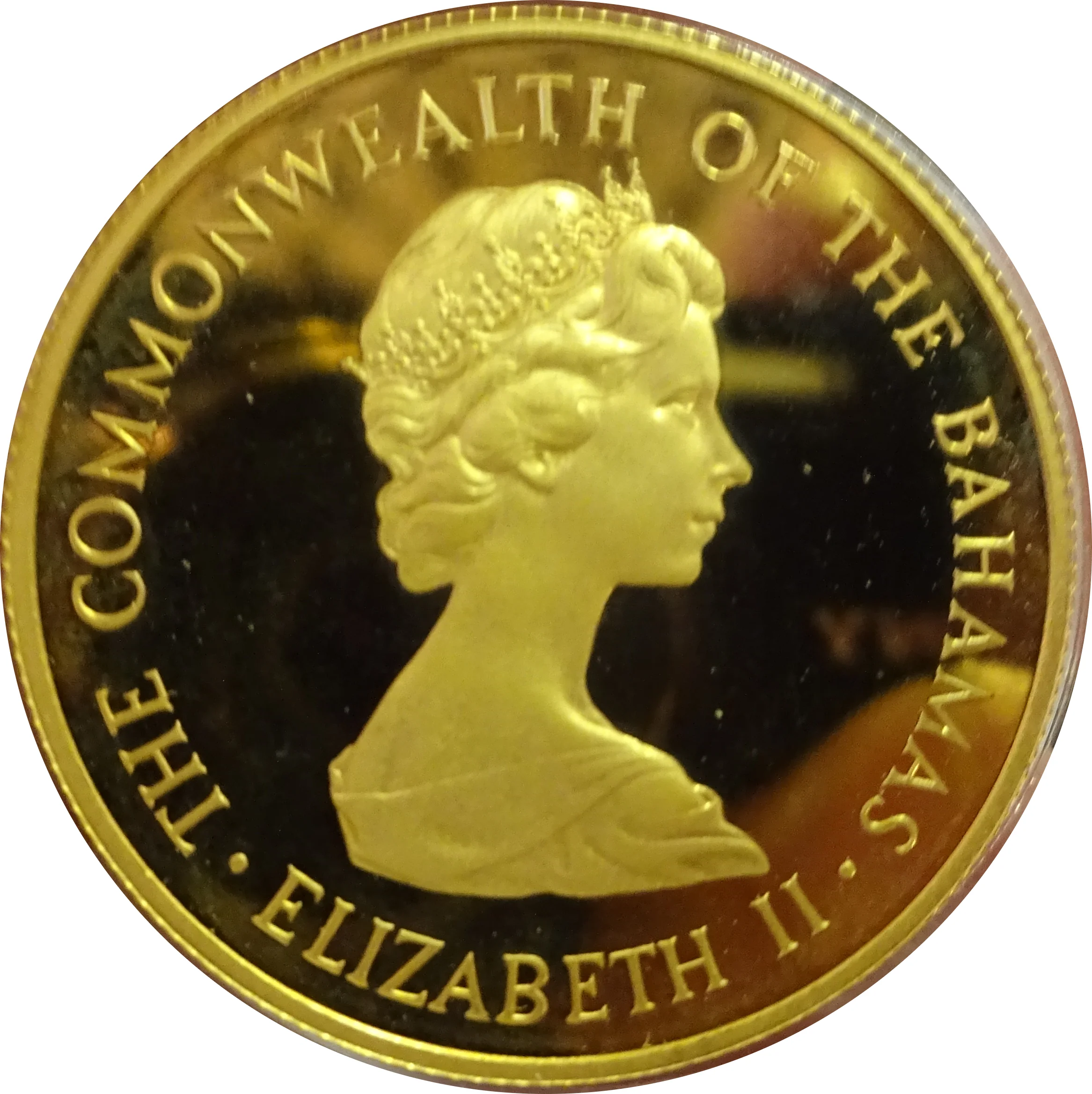
Obverse
Description:
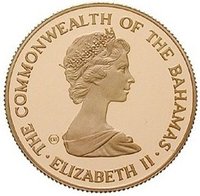
Bust of Queen Elizabeth II in right profile.
Inscription:
THE COMMONWEALTH OF THE BAHAMAS
· ELIZABETH II ·
· ELIZABETH II ·
Script: Latin
Engraver: Arnold Machin
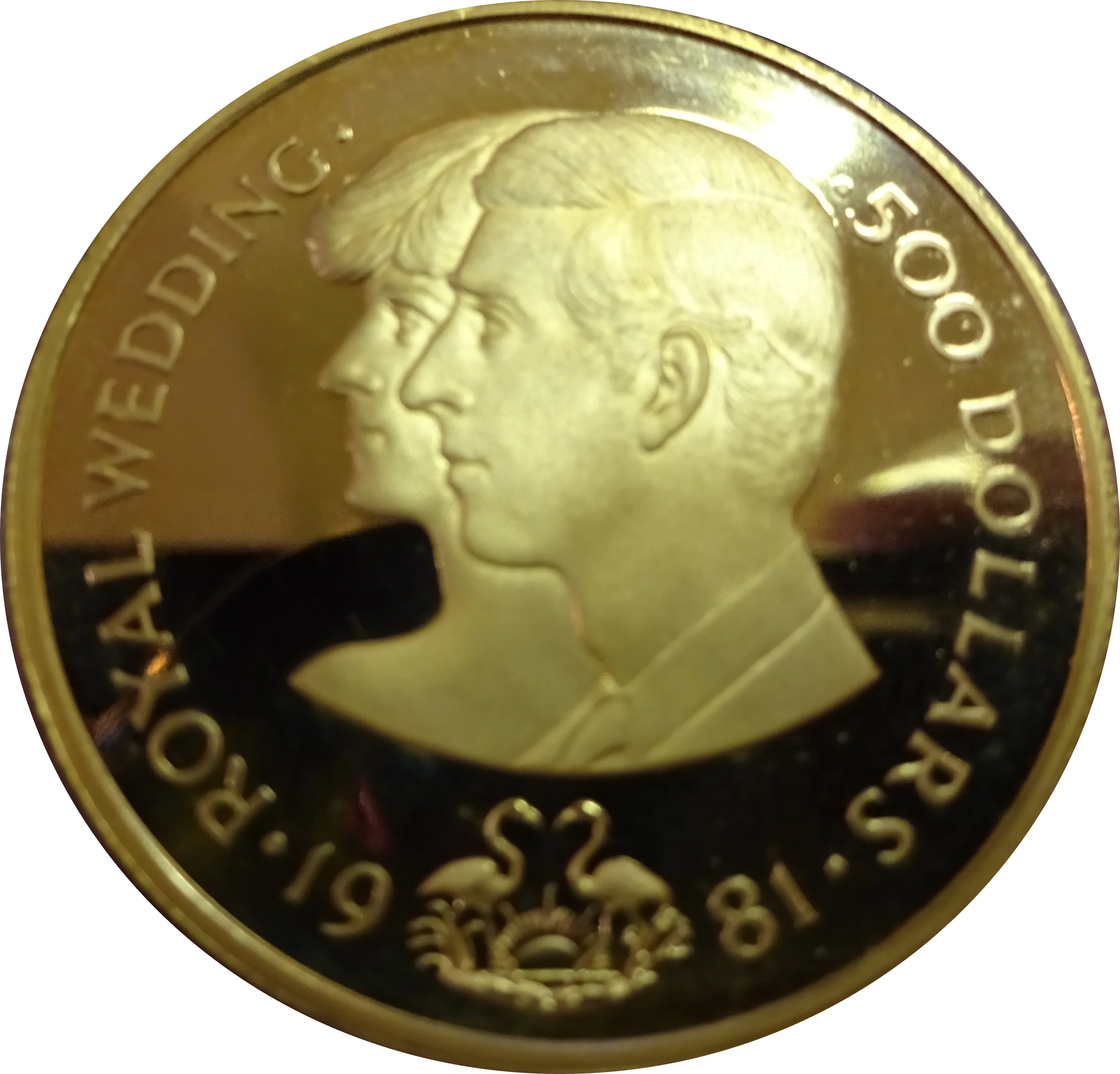
Reverse
Description:
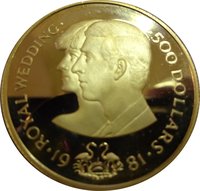
Busts of Charles and Diana facing left.
Inscription:
· ROYAL WEDDING · · 500 DOLLARS ·
19 81
19 81
Script: Latin
Edge
Reeded
Mints
| Name | Mark |
|---|---|
| Royal Mint | — |
Mintings
| Year | Mint Mark | Mintage | Quality | Collection |
|---|---|---|---|---|
| 1981 | — | 5,000 | Proof |
Historical background
In 1981, The Bahamas operated under a fixed exchange rate system, with its currency, the Bahamian dollar (BSD), pegged at par to the United States dollar (USD). This one-to-one peg, established in 1966, was a cornerstone of the nation's financial stability, particularly given its heavy reliance on tourism and foreign investment, sectors predominantly conducted in USD. The arrangement provided predictability for businesses and helped control inflation, but it also meant the country's monetary policy was largely constrained by the need to maintain sufficient foreign exchange reserves to defend the peg.
The economy during this period was navigating the aftermath of global oil shocks and a recession in the United States, its primary trading partner. While tourism remained the economic engine, there were concerns about a growing fiscal deficit and public debt under the Lynden Pindling administration. The fixed parity, while stable, limited the Central Bank of The Bahamas' ability to use devaluation as a tool to boost competitiveness. Instead, economic adjustments had to come through fiscal policy and controlling domestic costs, a challenge given the nation's import-dependent structure.
Overall, the currency situation in 1981 was characterized by institutional stability but underlying economic pressures. The fixed peg to the USD was a double-edged sword: it fostered confidence and facilitated key industries but also exposed the country to external economic fluctuations and restricted policy flexibility. This framework set the stage for ongoing debates about managing growth, reserves, and external balances while maintaining the currency's credibility, a balancing act that would define Bahamian monetary policy for decades to come.
The economy during this period was navigating the aftermath of global oil shocks and a recession in the United States, its primary trading partner. While tourism remained the economic engine, there were concerns about a growing fiscal deficit and public debt under the Lynden Pindling administration. The fixed parity, while stable, limited the Central Bank of The Bahamas' ability to use devaluation as a tool to boost competitiveness. Instead, economic adjustments had to come through fiscal policy and controlling domestic costs, a challenge given the nation's import-dependent structure.
Overall, the currency situation in 1981 was characterized by institutional stability but underlying economic pressures. The fixed peg to the USD was a double-edged sword: it fostered confidence and facilitated key industries but also exposed the country to external economic fluctuations and restricted policy flexibility. This framework set the stage for ongoing debates about managing growth, reserves, and external balances while maintaining the currency's credibility, a balancing act that would define Bahamian monetary policy for decades to come.
✨ Legendary