

200 Lire – Vatican City
Circulating commemorative coins
Commemoration: Year of Peace
Vatican City
Context
Year: 1984
Issuer: Vatican City 
Ruler: John Paul II
Currency:
(1929—2001)
Demonetization: 1 March 2002
Total mintage: 192,000
Material
References
KM: #Click to copy to clipboard181
Numista: #9179
Value
Exchange value: 200 VAL
Obverse
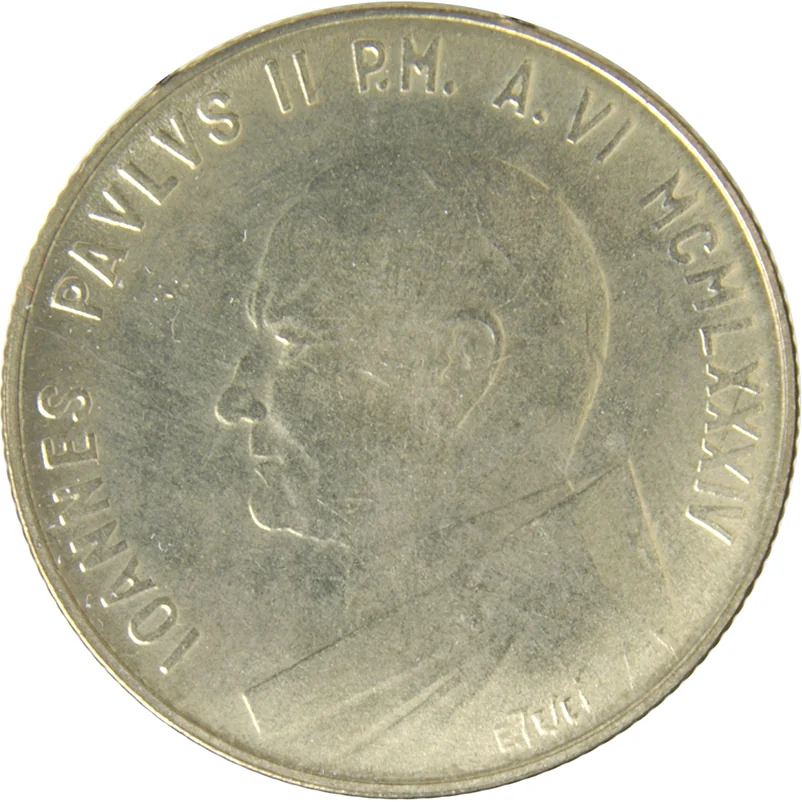
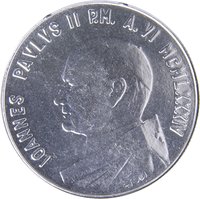
Description:
Left turn
Inscription:
IOANNES PAVLVS II P.M. A. VI MCMLXXXIV
E TESEI
E TESEI
Translation:
John Paul II, Supreme Pontiff, Year 6, 1984.
And You?
And You?
Script: Latin
Engraver: Ennio Tesei
Reverse
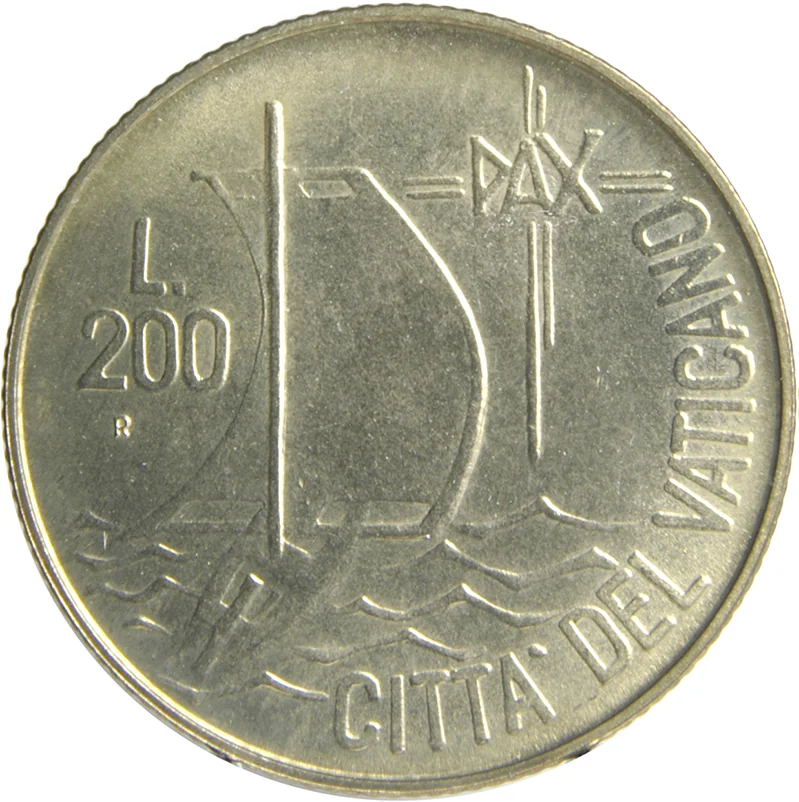
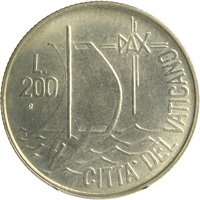
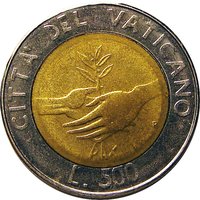
Description:
Sailing to a cross.
Inscription:
PAX
L. 200 R
CITTA' DEL VATICANO
L. 200 R
CITTA' DEL VATICANO
Translation:
Peace
L. 200 R
Vatican City
L. 200 R
Vatican City
Script: Latin
Engraver: Ennio Tesei
Edge
Reeded
Categories
| Person> Religious figure |
| Transportation> Watercraft |
| Religion> Religious objects |
Mints
| Name | Mark |
|---|---|
| Rome | R |
Mintings
| Year | Mint Mark | Mintage | Quality | Collection |
|---|---|---|---|---|
| 1984 | R | 192,000 |
Historical background
In 1984, Vatican City’s currency situation was defined by its unique status as an independent city-state embedded within Italy and its complex relationship with the Italian lira. While the Vatican minted its own coins—the Vatican lira—these were not a standalone currency but part of the Italian monetary system under strict bilateral agreements. The Lateran Treaty of 1929 granted the Holy See the right to issue its own coins, which were legal tender in Italy and San Marino due to a convention with the Italian government. Consequently, Vatican lire circulated at par with Italian lire, with their value, money supply, and economic stability entirely dependent on the Italian economy and the Bank of Italy.
The year 1984 was particularly significant as it marked the revision of the Lateran Treaty’s financial annexes. The new agreement, signed on June 3rd, significantly curtailed the Vatican’s minting rights. Previously, the Holy See could issue coins in quantities roughly proportional to its small population’s needs. The 1984 accord limited the annual coin production to a fixed, symbolic value (initially set at 1 billion lire, or approximately $600,000 USD at the time), intended primarily for numismatic collectors rather than general circulation. This change reflected Italy’s desire to modernize its monetary controls and the practical reality that Vatican-issued coins were largely collected as souvenirs or investments, not used in daily commerce within the city-state.
Therefore, the background of Vatican currency in 1984 is one of transition from a functional, though limited, circulating currency to a commemorative system. The city-state’s daily financial operations relied overwhelmingly on Italian lire, with its own coinage serving as a sovereign numismatic product and a source of revenue. This shift cemented the Vatican’s monetary dependency on Italy, a arrangement that would persist until the introduction of the Euro in 2002, when the Vatican again negotiated limited rights to issue its own euro coins under strict European Central Bank quotas.
The year 1984 was particularly significant as it marked the revision of the Lateran Treaty’s financial annexes. The new agreement, signed on June 3rd, significantly curtailed the Vatican’s minting rights. Previously, the Holy See could issue coins in quantities roughly proportional to its small population’s needs. The 1984 accord limited the annual coin production to a fixed, symbolic value (initially set at 1 billion lire, or approximately $600,000 USD at the time), intended primarily for numismatic collectors rather than general circulation. This change reflected Italy’s desire to modernize its monetary controls and the practical reality that Vatican-issued coins were largely collected as souvenirs or investments, not used in daily commerce within the city-state.
Therefore, the background of Vatican currency in 1984 is one of transition from a functional, though limited, circulating currency to a commemorative system. The city-state’s daily financial operations relied overwhelmingly on Italian lire, with its own coinage serving as a sovereign numismatic product and a source of revenue. This shift cemented the Vatican’s monetary dependency on Italy, a arrangement that would persist until the introduction of the Euro in 2002, when the Vatican again negotiated limited rights to issue its own euro coins under strict European Central Bank quotas.
🌱 Common