

250 Dollars – The Bahamas
Non-circulating coins
Commemoration: Royal visit
Bahamas
Context
Year: 1985
Country: Bahamas 
Issuer: The Bahamas
Ruler: Elizabeth II
Currency:
(since 1966)
Total mintage: 101
Material
References
KM: #Click to copy to clipboard137
Numista: #91727
Value
Exchange value: 250 BSD
Bullion value: $7262.17
Obverse
Description:
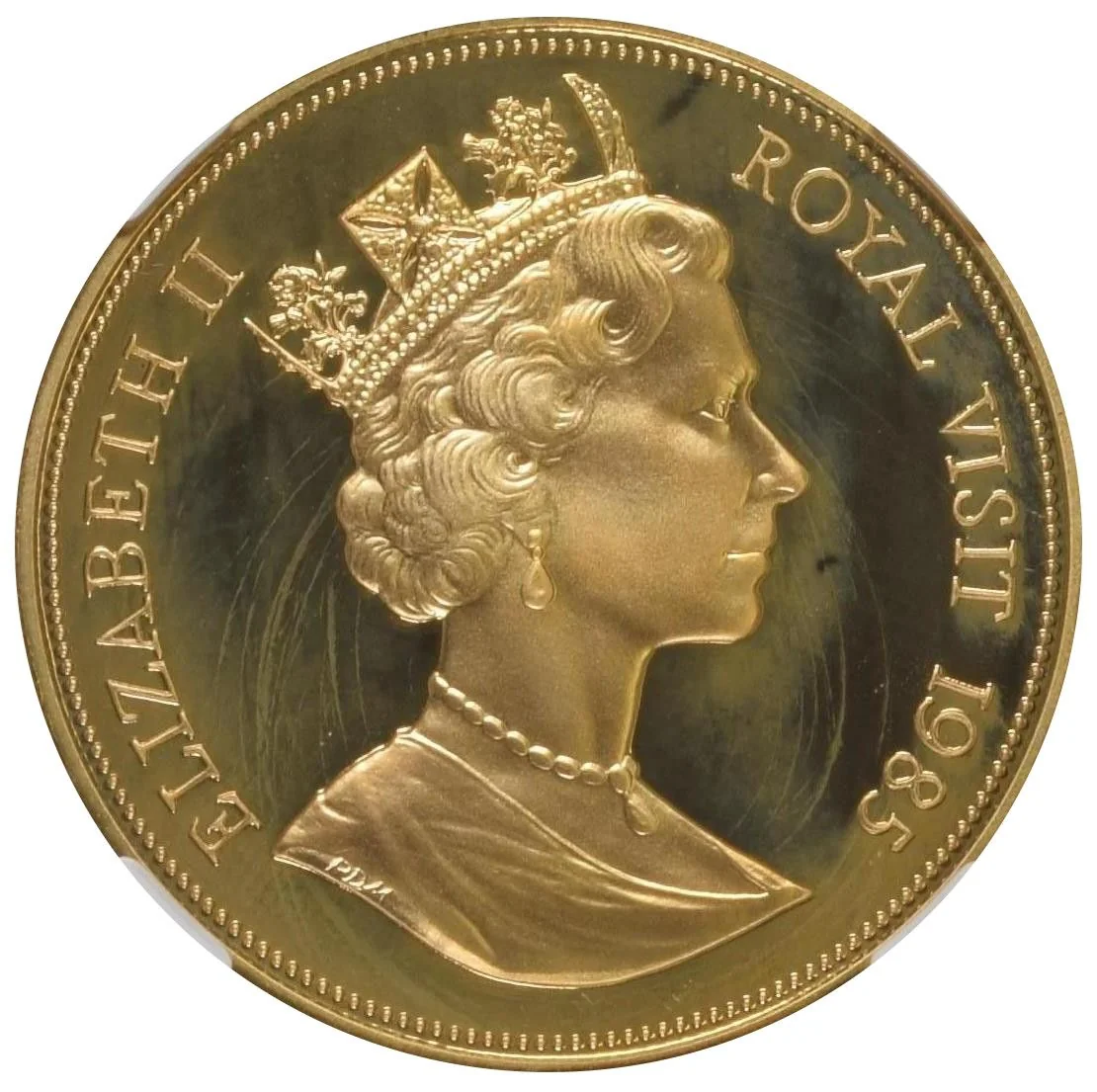
Queen Elizabeth II in profile, wearing the King George IV State Diadem.
Inscription:
ELIZABETH II ROYAL VISIT 1985
Translation:
ELIZABETH II ROYAL VISIT 1985
Script: Latin
Language: English
Designer: Raphael David Maklouf
Reverse
Description:
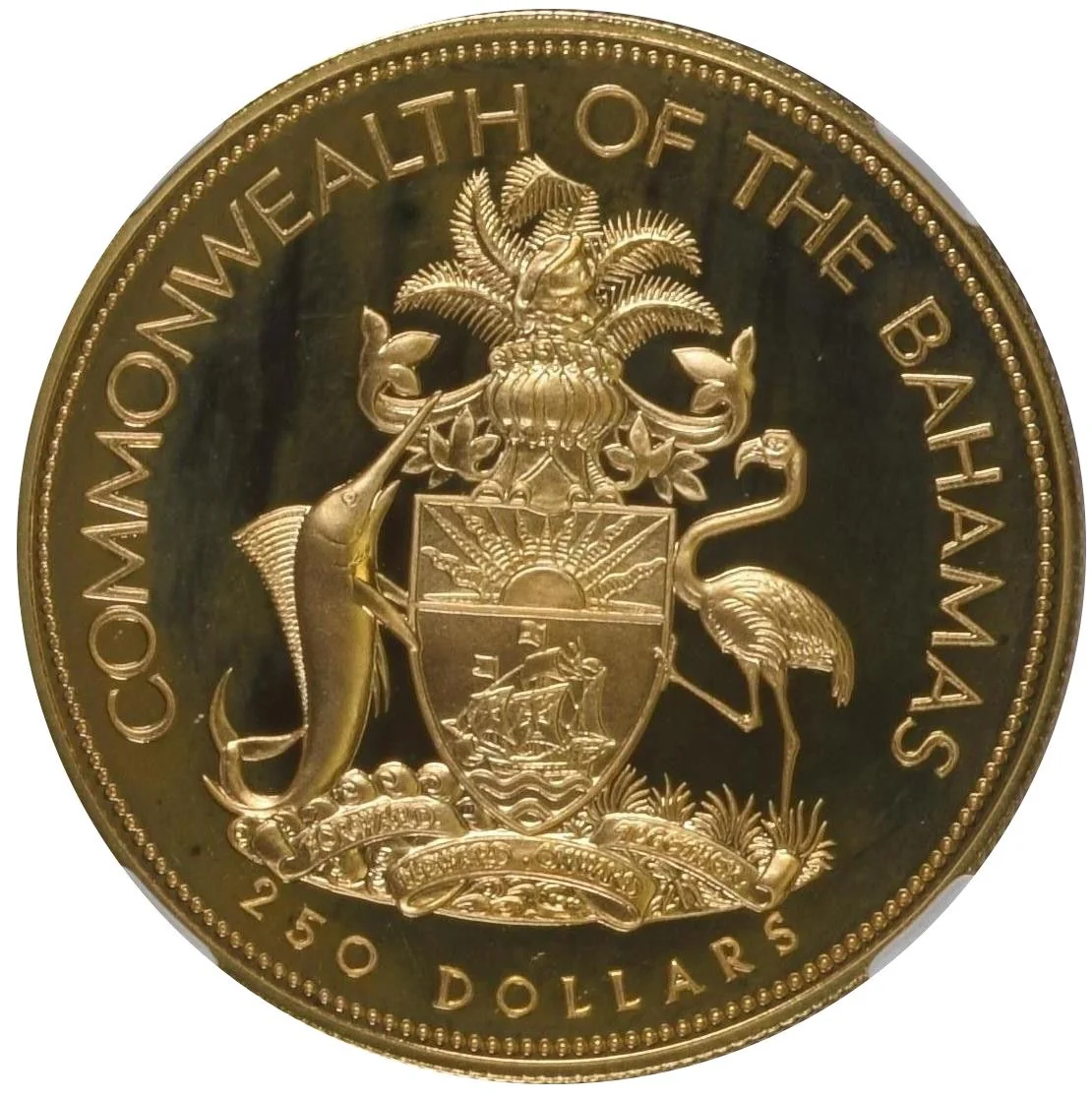
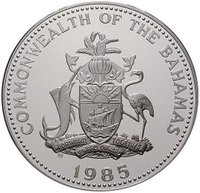
Bahamian coat of arms and motto.
Inscription:
COMMONWEALTH OF THE BAHAMAS
FORWARD UPWARD ONWARD TOGETHER
250 DOLLARS
FORWARD UPWARD ONWARD TOGETHER
250 DOLLARS
Script: Latin
Edge
Reeded
Categories
| Symbol> Shell |
| Person> Monarch |
| Animal> Bird |
| Animal> Fish |
| Symbols> Coat of Arms |
| Symbol> Crown |
Mintings
| Year | Mint Mark | Mintage | Quality | Collection |
|---|---|---|---|---|
| 1985 | — | 101 | Proof |
Historical background
In 1985, The Bahamas operated under a fixed exchange rate system, pegging the Bahamian dollar (BSD) at par to the United States dollar (USD). This one-to-one parity, established in 1966, was a cornerstone of the nation's financial policy, managed by The Central Bank of The Bahamas which was founded in 1974. The primary objectives of this regime were to ensure monetary stability, control inflation, and foster confidence in the financial sector—a critical consideration for a nation whose economy was heavily reliant on tourism and foreign investment, both predominantly sourced from the United States.
The period was characterized by relative stability in the currency market, but not without underlying economic pressures. The Bahamas, like many nations in the mid-1980s, was navigating the aftermath of global recessions. While the fixed rate provided predictability for businesses and protected the purchasing power of citizens, it also limited the Central Bank's ability to use monetary policy as a tool for domestic economic adjustment. The country maintained strict exchange controls for residents to prevent capital flight and defend the peg, requiring approval for foreign currency transactions and limiting investments abroad.
Overall, the currency situation in 1985 reflected a deliberate trade-off. The Bahamian government prioritized the stability and international credibility afforded by the USD peg, essential for its service-based economy, over the flexibility of a floating currency. This policy successfully anchored prices and facilitated seamless transactions for the crucial tourism industry, but it also meant the country's monetary conditions were effectively imported from the United States, tying The Bahamas' economic fortunes closely to the monetary policy decisions of the U.S. Federal Reserve.
The period was characterized by relative stability in the currency market, but not without underlying economic pressures. The Bahamas, like many nations in the mid-1980s, was navigating the aftermath of global recessions. While the fixed rate provided predictability for businesses and protected the purchasing power of citizens, it also limited the Central Bank's ability to use monetary policy as a tool for domestic economic adjustment. The country maintained strict exchange controls for residents to prevent capital flight and defend the peg, requiring approval for foreign currency transactions and limiting investments abroad.
Overall, the currency situation in 1985 reflected a deliberate trade-off. The Bahamian government prioritized the stability and international credibility afforded by the USD peg, essential for its service-based economy, over the flexibility of a floating currency. This policy successfully anchored prices and facilitated seamless transactions for the crucial tourism industry, but it also meant the country's monetary conditions were effectively imported from the United States, tying The Bahamas' economic fortunes closely to the monetary policy decisions of the U.S. Federal Reserve.
✨ Legendary