

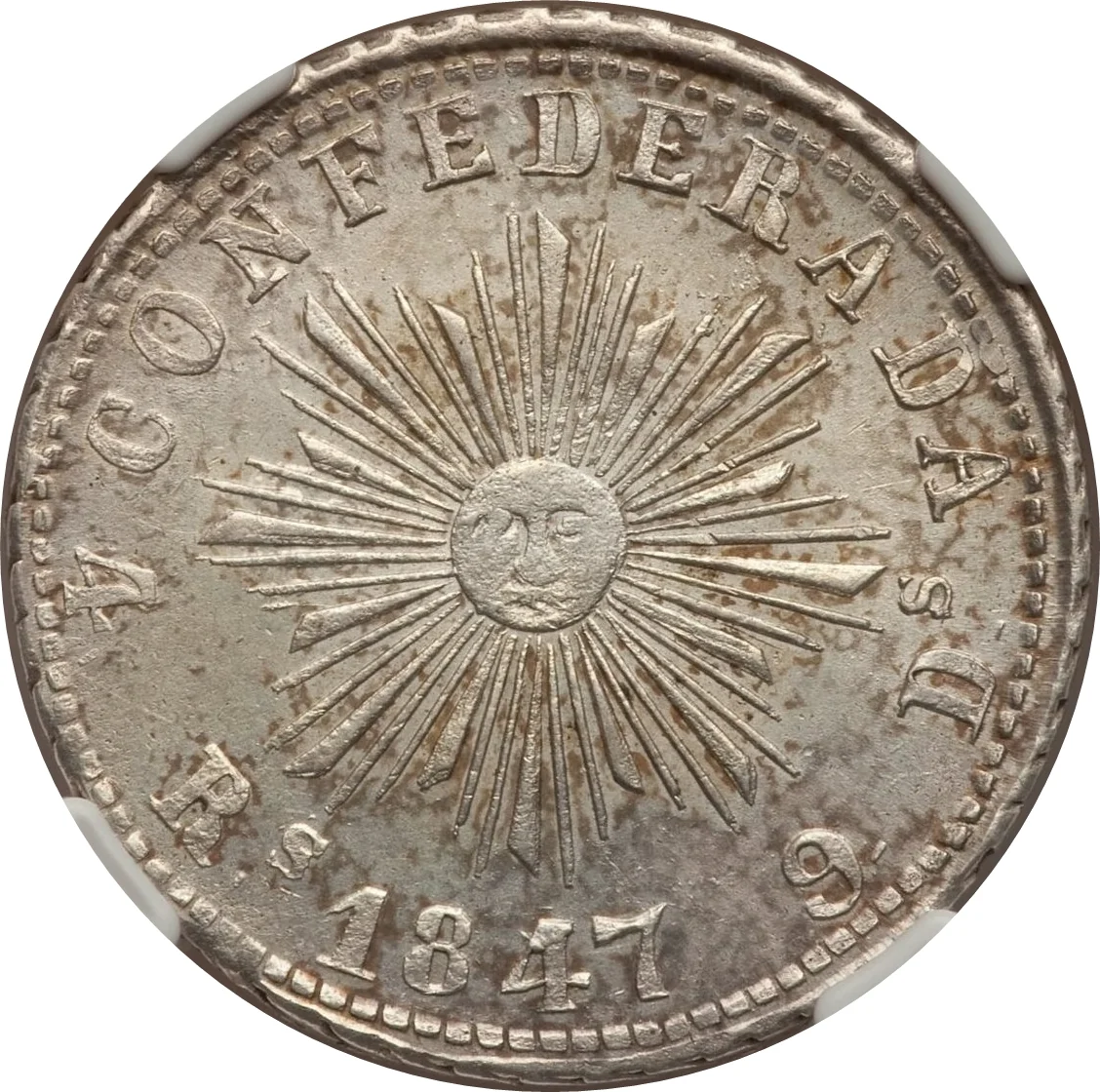
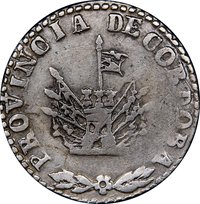
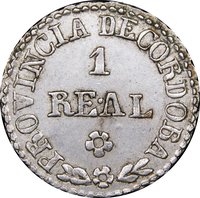
Obverse
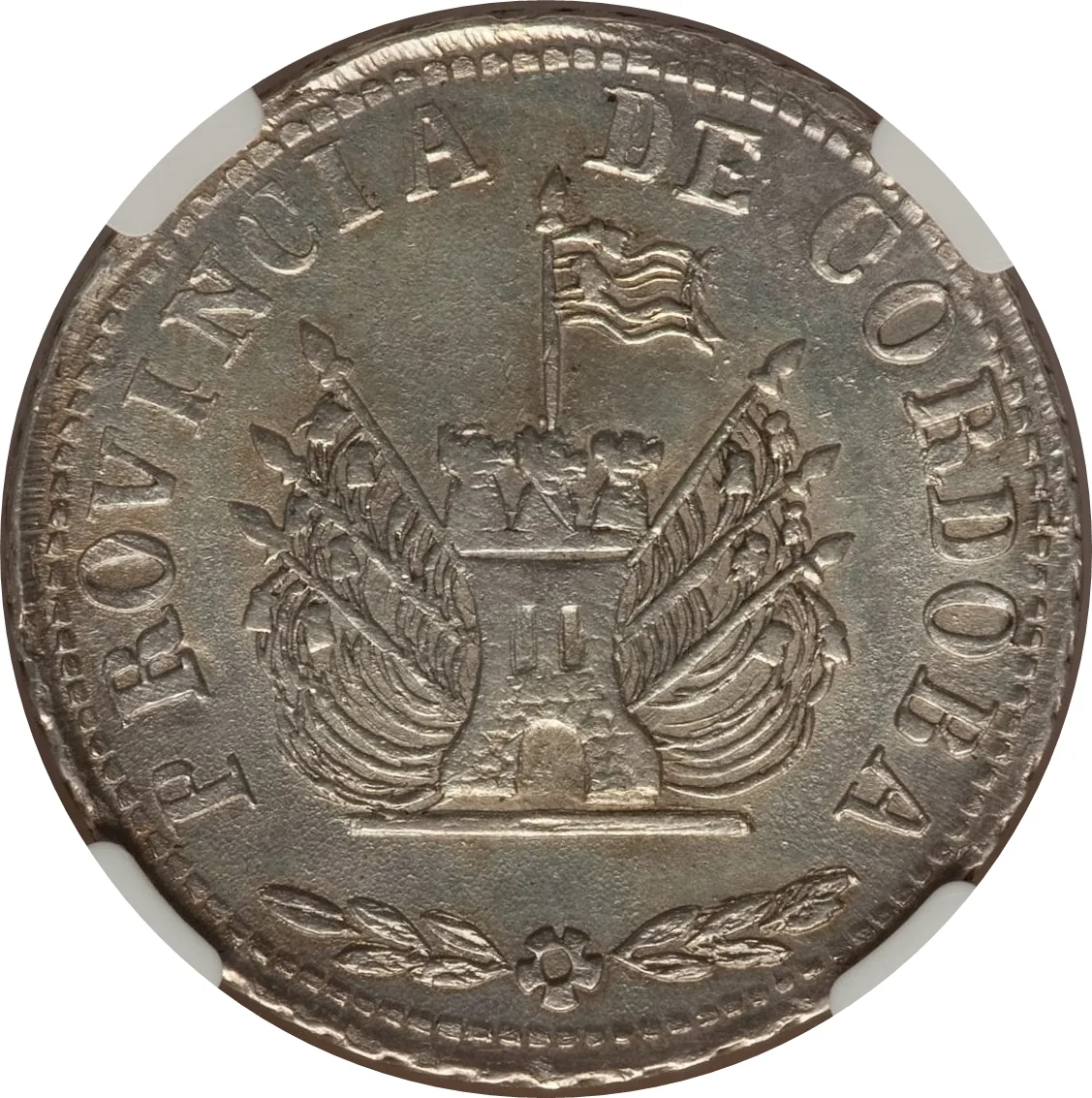
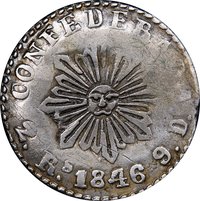
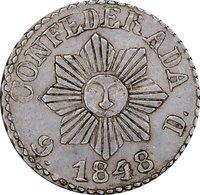
Reverse
Description:
Glowing sun with a face.
Inscription:
CONFEDERADA
4 R.ˢ 1847 9̠ D.ˢ
4 R.ˢ 1847 9̠ D.ˢ
Translation:
Four Reis, 1847, Nine Dots.
Script: Latin
Language: Portuguese
Edge
Laureate
Categories
| Symbol> Sun |
| Building> Castle or fortification |
| Symbol> Flag |
| Symbols> Coat of Arms |
Mints
| Name | Mark |
|---|---|
| Córdoba | — |
Mintings
| Year | Mint Mark | Mintage | Quality | Collection |
|---|---|---|---|---|
| 1847 | — | — |
Historical background
In 1847, the currency situation in Córdoba, Argentina, was chaotic and emblematic of the broader economic disintegration following the collapse of the central authority of the Argentine Confederation. The province, like most others, issued its own paper money—billetes de Córdoba—to finance its operations and debts, as the national government in Buenos Aires had repudiated the central bank's debt in 1836 and ceased guaranteeing a uniform currency. This provincial paper was not backed by specie (gold or silver) and its value was entirely dependent on public confidence in the Córdoba government, which was tenuous.
The system was plagued by severe depreciation and widespread discounting. The value of Córdoba's paper currency fluctuated wildly based on the province's military fortunes and fiscal health, often trading at a fraction of its face value. This created a complex and inefficient economy where multiple forms of money circulated simultaneously: the devalued provincial paper, scarce metallic coinage (which commanded a high premium), and even the paper currencies of other provinces, all exchanged at variable discount rates. Merchants and the public faced significant uncertainty in everyday transactions.
This monetary anarchy severely hampered trade and economic stability within the province and with neighboring regions. The situation was exacerbated by the ongoing civil wars, which drained provincial coffers and forced further emissions of paper money, leading to a vicious cycle of inflation and devaluation. Ultimately, the currency crisis of 1847 was a microcosm of Argentina's fragmented political state, demonstrating how provincial autonomy, in the absence of national coordination, led to economic disorder that would only begin to resolve after national unification in the 1860s.
The system was plagued by severe depreciation and widespread discounting. The value of Córdoba's paper currency fluctuated wildly based on the province's military fortunes and fiscal health, often trading at a fraction of its face value. This created a complex and inefficient economy where multiple forms of money circulated simultaneously: the devalued provincial paper, scarce metallic coinage (which commanded a high premium), and even the paper currencies of other provinces, all exchanged at variable discount rates. Merchants and the public faced significant uncertainty in everyday transactions.
This monetary anarchy severely hampered trade and economic stability within the province and with neighboring regions. The situation was exacerbated by the ongoing civil wars, which drained provincial coffers and forced further emissions of paper money, leading to a vicious cycle of inflation and devaluation. Ultimately, the currency crisis of 1847 was a microcosm of Argentina's fragmented political state, demonstrating how provincial autonomy, in the absence of national coordination, led to economic disorder that would only begin to resolve after national unification in the 1860s.
💎 Extremely Rare