

50 escudos – Cape Verde
Add to wishlist
Non-circulating coins
Commemoration: FAO - World Fisheries Conference
Cape Verde
Context
Material
References
KM: #
Numista: #90960
Value
Exchange value: 50 CVE
Bullion value: $36.94
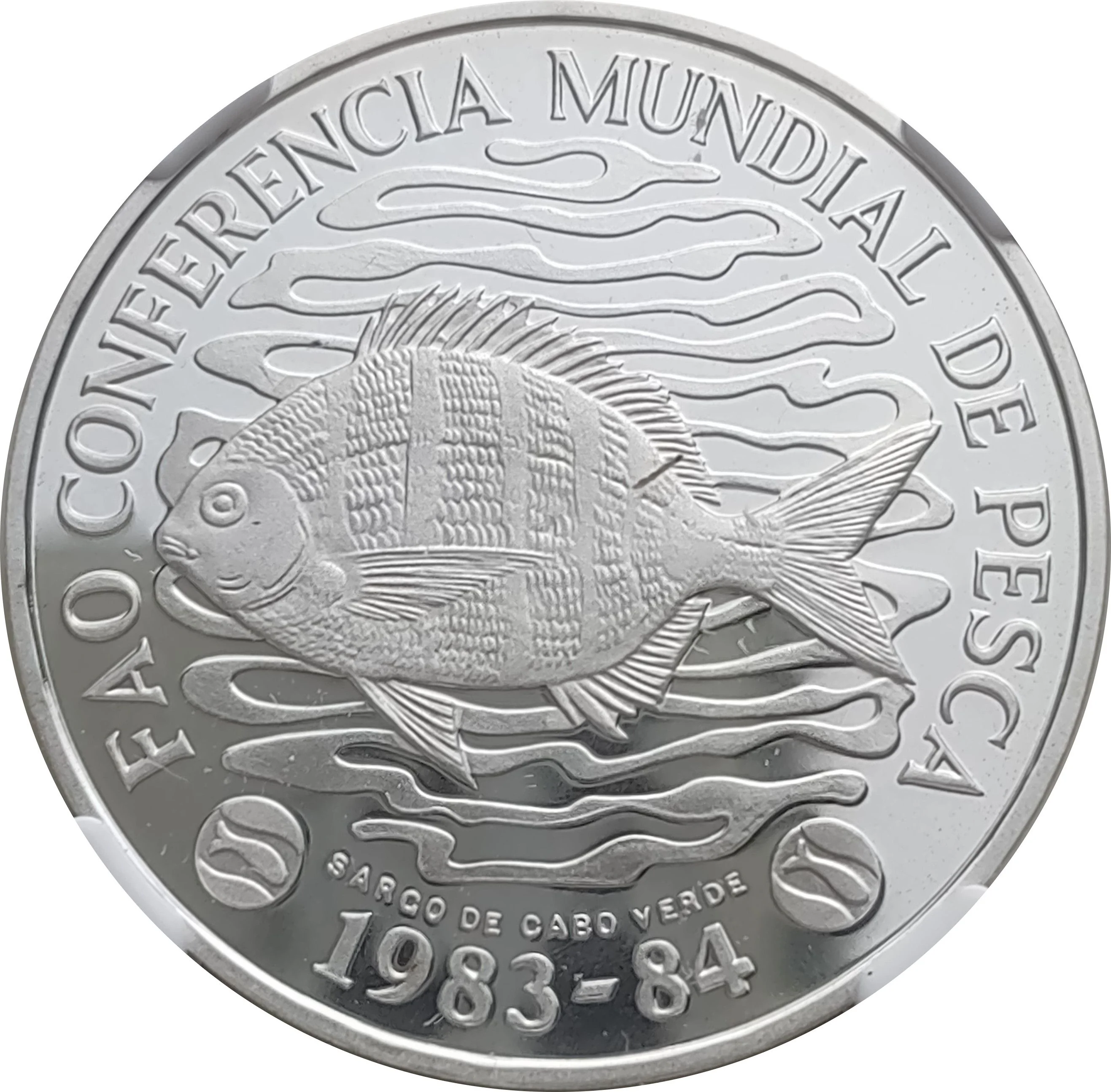
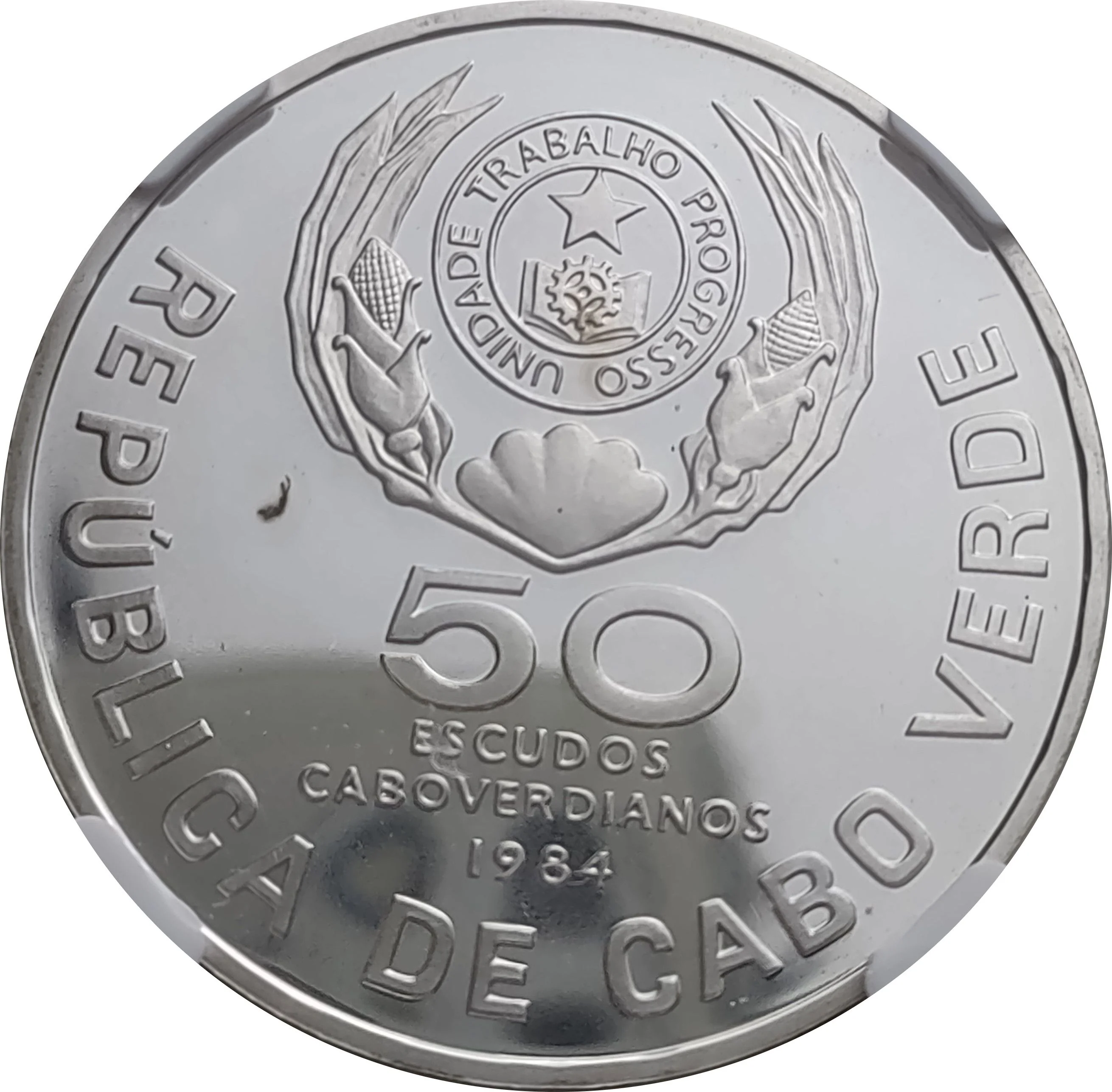
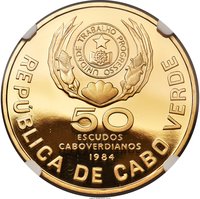
Obverse
Inscription:
50
ESCUDOS
CABOVERDIANOS
1984
REPÚBLICA DE CABO VERDE
ESCUDOS
CABOVERDIANOS
1984
REPÚBLICA DE CABO VERDE
Translation:
Fifty
Escudos
Cape Verdean
1984
Republic of Cape Verde
Escudos
Cape Verdean
1984
Republic of Cape Verde
Script: Latin
Language: Portuguese
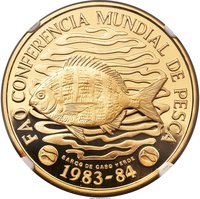
Reverse
Inscription:
FAO CONFERENCIA MUNDIAL DE PESCA
SARGO DE CABO VERDE
1983-84
SARGO DE CABO VERDE
1983-84
Script: Latin
Edge
Categories
| Organization> FAO |
Mintings
| Year | Mint Mark | Mintage | Quality | Collection |
|---|---|---|---|---|
| 1984 | — | — | Proof |
Historical background
In 1984, the currency situation in Cape Verde was characterized by the use of the Cape Verdean escudo (CVE), which was pegged to the Portuguese escudo. This peg was a direct legacy of the colonial period, as Cape Verde had gained independence from Portugal less than a decade earlier, in 1975. The fixed exchange rate provided a measure of monetary stability for the young nation, but it also tied its economy closely to that of its former colonial power, limiting autonomous monetary policy. The country's central bank, Banco de Cabo Verde, established in 1975, was responsible for issuing currency and managing foreign exchange within a framework of strict controls.
Economically, Cape Verde in 1984 was a poor, agrarian nation grappling with severe droughts and a lack of natural resources, leading to heavy dependence on foreign aid and remittances from its diaspora. The fixed peg, while stabilizing, did not reflect the stark economic differences between Cape Verde and Portugal. Foreign exchange reserves were chronically low, and access to hard currency for imports was tightly regulated. This created a constrained environment for trade and investment, as the official exchange rate often masked underlying economic pressures and did not fully accommodate the country's specific needs as a small, isolated archipelago.
The period was one of transition and consolidation under the ruling African Party for the Independence of Cape Verde (PAICV), which pursued a centralized economic model. While there was no currency crisis in 1984, the system's inherent rigidity highlighted the challenges of maintaining a colonial-era peg amidst post-independence nation-building. This setup would persist until 1998, when the escudo's peg was shifted from the Portuguese currency to the euro, reflecting Portugal's own integration into the European Monetary System and marking a new phase in Cape Verde's monetary policy aimed at greater stability and integration with international partners.
Economically, Cape Verde in 1984 was a poor, agrarian nation grappling with severe droughts and a lack of natural resources, leading to heavy dependence on foreign aid and remittances from its diaspora. The fixed peg, while stabilizing, did not reflect the stark economic differences between Cape Verde and Portugal. Foreign exchange reserves were chronically low, and access to hard currency for imports was tightly regulated. This created a constrained environment for trade and investment, as the official exchange rate often masked underlying economic pressures and did not fully accommodate the country's specific needs as a small, isolated archipelago.
The period was one of transition and consolidation under the ruling African Party for the Independence of Cape Verde (PAICV), which pursued a centralized economic model. While there was no currency crisis in 1984, the system's inherent rigidity highlighted the challenges of maintaining a colonial-era peg amidst post-independence nation-building. This setup would persist until 1998, when the escudo's peg was shifted from the Portuguese currency to the euro, reflecting Portugal's own integration into the European Monetary System and marking a new phase in Cape Verde's monetary policy aimed at greater stability and integration with international partners.
💎 Extremely Rare