

1 Cent – Jamaica
Circulating commemorative coins
Commemoration: F.A.O.
Jamaica
Context
Years: 1975–2002
Issuer: Jamaica 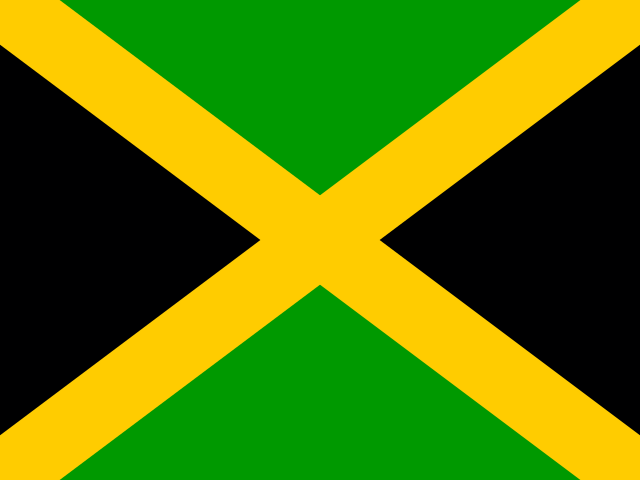
Ruler: Elizabeth II
Currency:
(since 1969)
Demonetization: 15 February 2018
Total mintage: 120,060,500
Material
Diameter: 21.08 mm
Weight: 1.22 g
Thickness: 1.2 mm
Shape: Dodecagonal
Composition: Aluminium
Magnetic: No
Technique: Milled
Alignment: Medal alignment
flip
References
KM: #Click to copy to clipboard64
Numista: #901
Value
Exchange value: 0.01 JMD
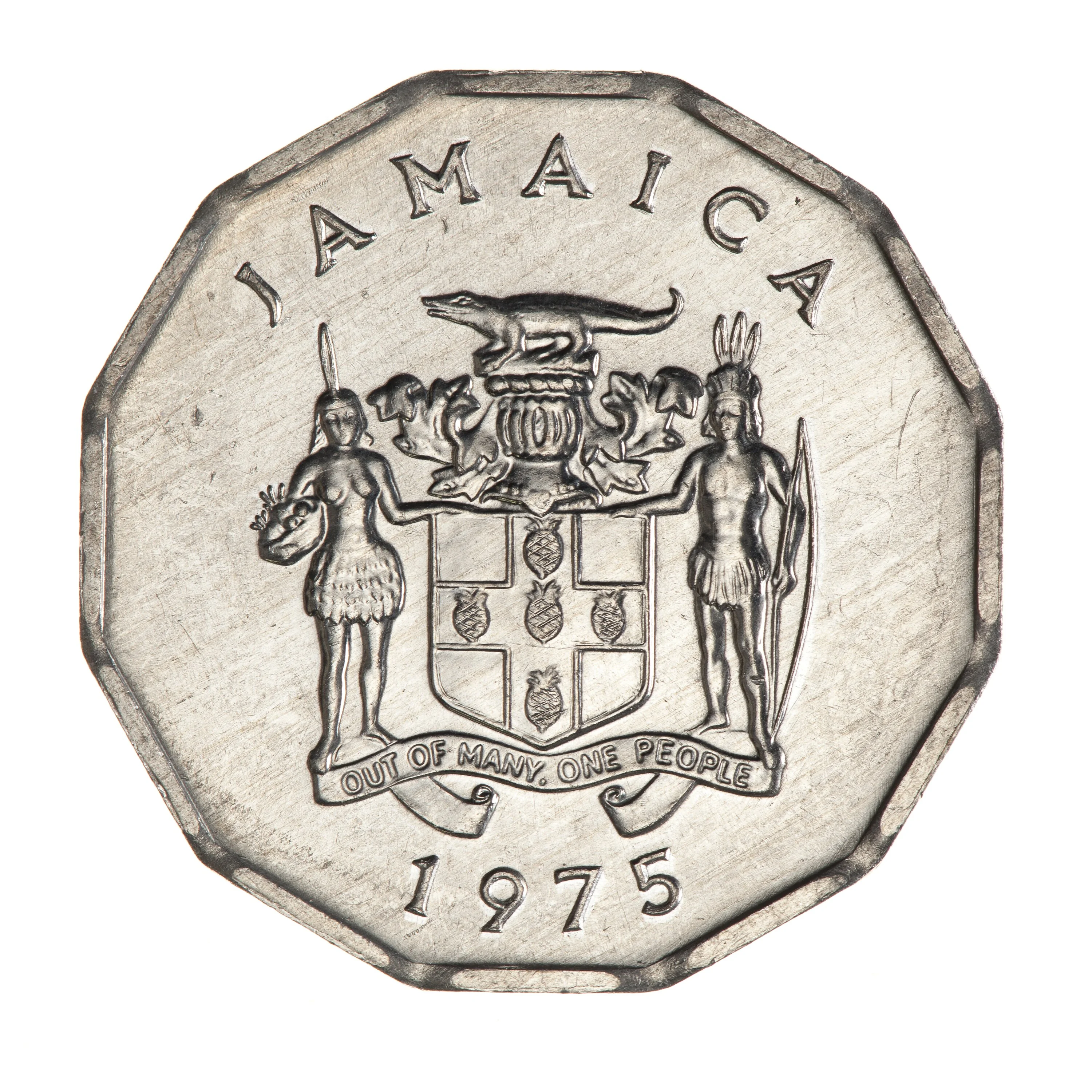
Obverse
Description:
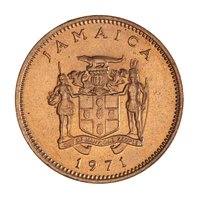
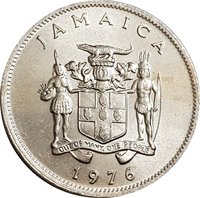
Jamaican coat of arms.
Inscription:
JAMAICA
OUT OF MANY ONE PEOPLE
1987
OUT OF MANY ONE PEOPLE
1987
Translation:
JAMAICA
OUT OF MANY ONE PEOPLE
1987
OUT OF MANY ONE PEOPLE
1987
Script: Latin
Language: English
Engraver: Christopher Ironside
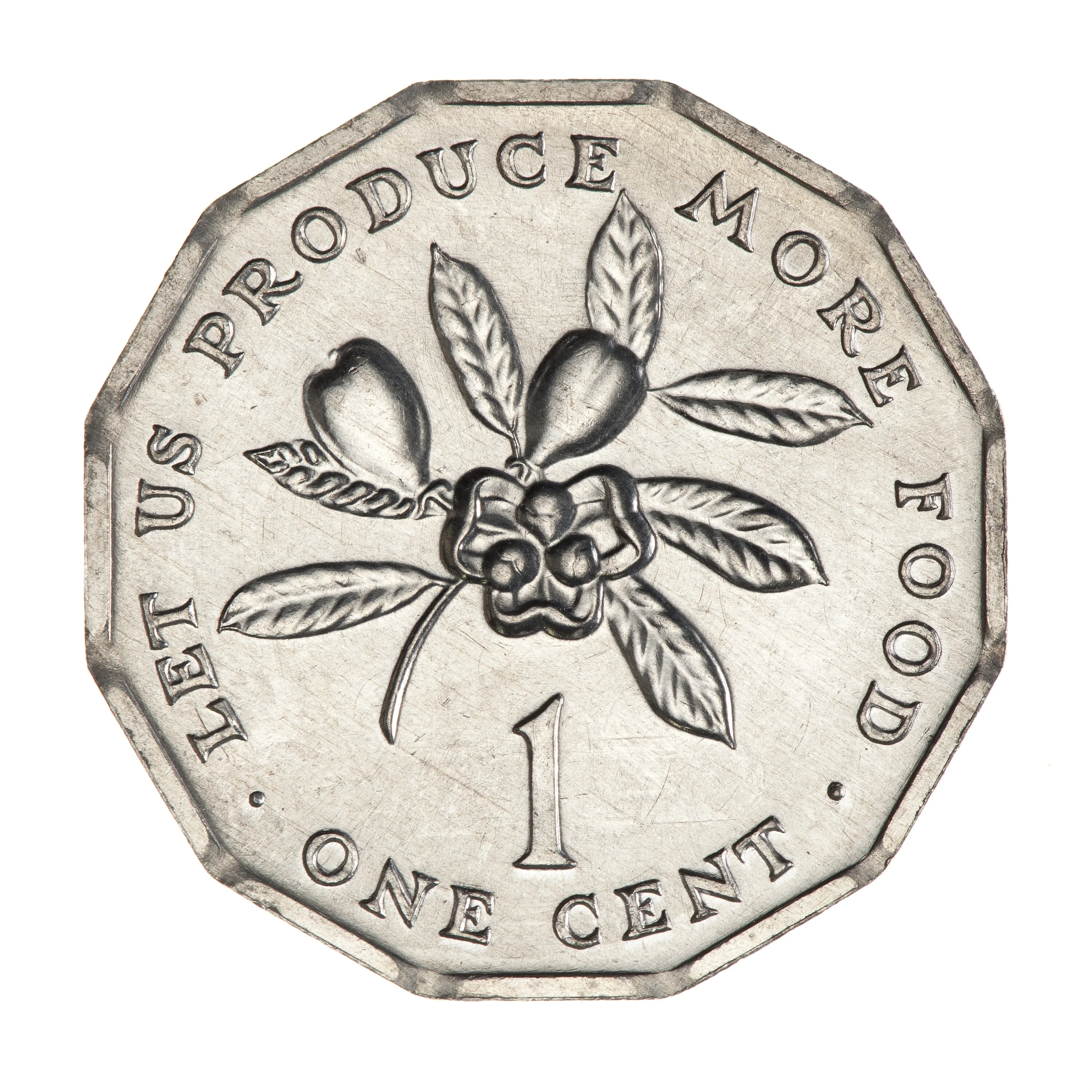
Reverse
Description:
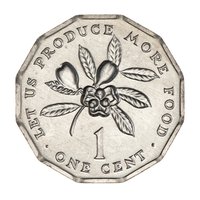
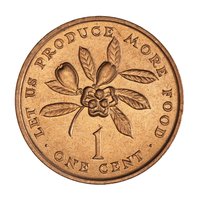
Ackee fruit above, legend below.
Inscription:
LET US PRODUCE MORE FOOD
1
· ONE CENT ·
1
· ONE CENT ·
Script: Latin
Engraver: Christopher Ironside
Edge
Plain
Categories
| Symbols> Coat of Arms |
| Organization> FAO |
| Plant> Fruit |
Mints
| Name | Mark |
|---|---|
| Royal Mint | — |
Mintings
| Year | Mint Mark | Mintage | Quality | Collection |
|---|---|---|---|---|
| 1975 | — | 15,000,000 | ||
| 1976 | — | 16,000,000 | ||
| 1977 | — | — | ||
| 1978 | — | 8,400,000 | ||
| 1980 | — | 10,000,000 | ||
| 1981 | — | 8,000,000 | ||
| 1982 | — | 10,000,000 | ||
| 1983 | — | 1,342,000 | ||
| 1984 | — | 8,704,000 | ||
| 1985 | — | 5,112,000 | ||
| 1985 | — | — | Proof | |
| 1986 | — | 17,534,000 | ||
| 1987 | — | 9,968,000 | ||
| 1987 | — | — | Proof | |
| 1988 | — | — | Proof | |
| 1989 | — | — | Proof | |
| 1990 | — | 10,000,000 | ||
| 1990 | — | — | Proof | |
| 1991 | — | — | ||
| 1991 | — | — | Proof | |
| 1992 | — | — | Proof | |
| 1993 | — | — | Proof | |
| 1995 | — | — | Proof | |
| 1996 | — | — | ||
| 2000 | — | — | ||
| 2000 | — | — | Proof | |
| 2002 | — | — | ||
| 2002 | — | 500 | Proof |
Historical background
By 1975, Jamaica's currency situation was deeply strained, reflecting the broader economic and political crisis of the Michael Manley-led People's National Party (PNP) government. The country was grappling with the dual shocks of the 1973 oil price crisis and a sharp decline in global demand for bauxite, its key export. In response, the government had levied a controversial production levy on bauxite companies in 1974, which, while increasing state revenue, also triggered capital flight and a collapse in foreign investment. This eroded confidence in the Jamaican dollar, which was pegged to the US dollar, and led to severe balance of payments difficulties and dwindling foreign exchange reserves.
The government's policy response, framed within its democratic socialist agenda, included the imposition of strict exchange controls to conserve scarce foreign currency. These controls created a complex system of licensing for imports and limited access to foreign exchange for both businesses and individuals, leading to widespread shortages of essential goods. A thriving black market for US dollars emerged, where the Jamaican dollar traded at a significant discount compared to the official fixed rate. This parallel market became a critical, though illegal, avenue for obtaining foreign exchange, further undermining the official financial system and contributing to inflation.
Ultimately, the pressures proved unsustainable. In 1977, the government was forced to formally devalue the Jamaican dollar and seek assistance from the International Monetary Fund (IMF), marking a pivotal shift in economic policy. However, the conditions of 1975—characterized by a fixed but overvalued currency, severe foreign exchange shortages, rampant black-market activity, and declining investor confidence—set the stage for this eventual economic reckoning and defined a period of profound hardship for the Jamaican economy.
The government's policy response, framed within its democratic socialist agenda, included the imposition of strict exchange controls to conserve scarce foreign currency. These controls created a complex system of licensing for imports and limited access to foreign exchange for both businesses and individuals, leading to widespread shortages of essential goods. A thriving black market for US dollars emerged, where the Jamaican dollar traded at a significant discount compared to the official fixed rate. This parallel market became a critical, though illegal, avenue for obtaining foreign exchange, further undermining the official financial system and contributing to inflation.
Ultimately, the pressures proved unsustainable. In 1977, the government was forced to formally devalue the Jamaican dollar and seek assistance from the International Monetary Fund (IMF), marking a pivotal shift in economic policy. However, the conditions of 1975—characterized by a fixed but overvalued currency, severe foreign exchange shortages, rampant black-market activity, and declining investor confidence—set the stage for this eventual economic reckoning and defined a period of profound hardship for the Jamaican economy.
🌱 Very Common