

1 pound (Battle of Jersey) – Jersey
Add to wishlist
Non-circulating coins
Commemoration: 200th anniversary of the Battle of Jersey
Context
Year: 1981
Country: British Crown dependencies
Issuer: Jersey
Ruler: Elizabeth II
Currency:
(since 1971)
Demonetized: Yes
Total mintage: 5,000
Material
Weight: 17.55 g
Gold Weight:: 16.09 g
Shape: Square with rounded corners
Composition: 91.7% Gold
Magnetic: No
Technique: Milled
Alignment: Medal alignment
flip
References
KM: #
Numista: #89575
Value
Exchange value: 1 JEP
Bullion value: $2505.78
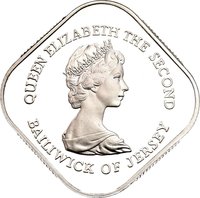
Obverse
Description:
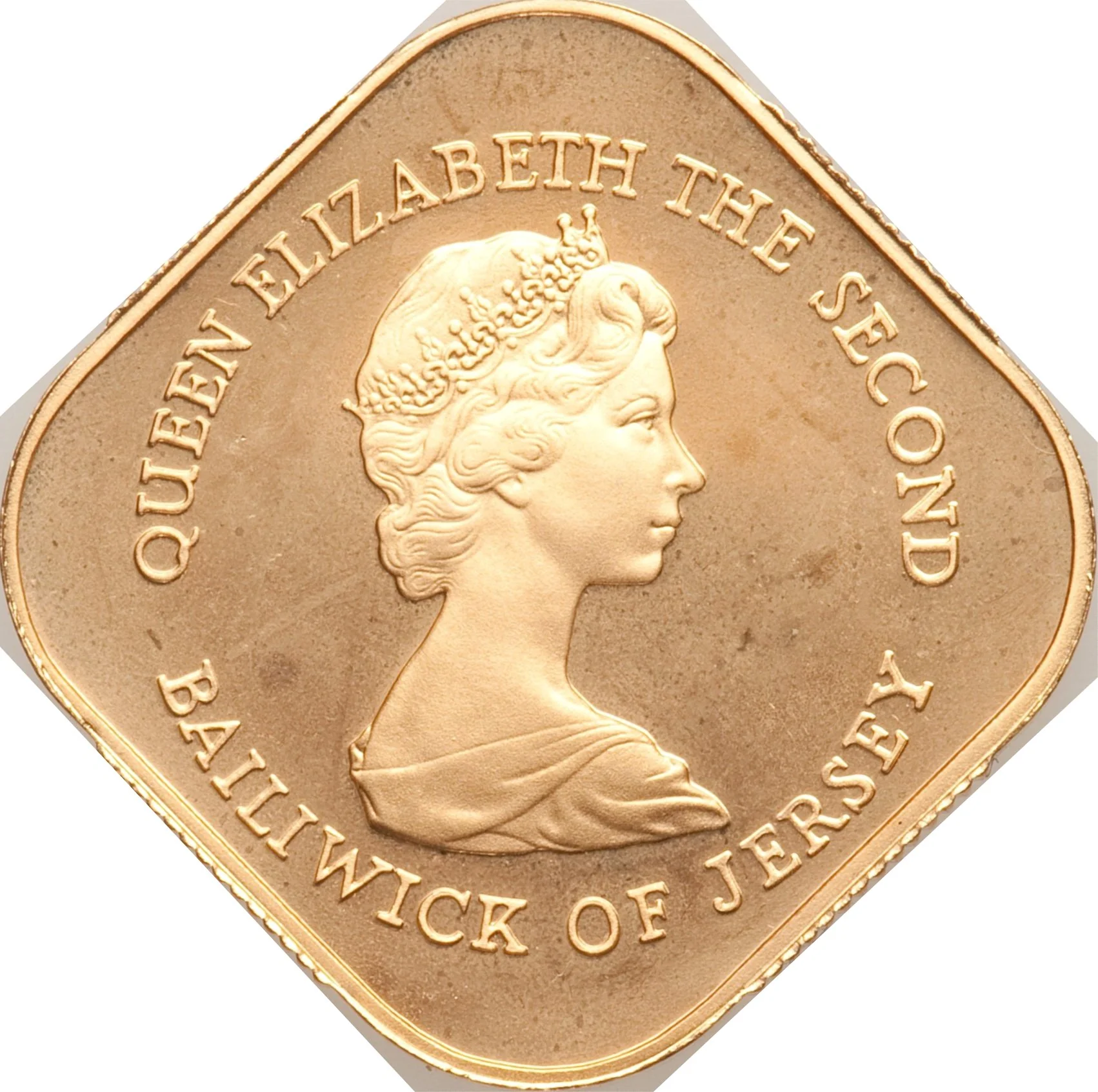
Second crowned portrait of Queen Elizabeth II facing right, wearing the Girls of Great Britain tiara.
Inscription:
QUEEN ELIZABETH THE SECOND
BAILIWICK OF JERSEY
BAILIWICK OF JERSEY
Script: Latin
Engraver: Arnold Machin
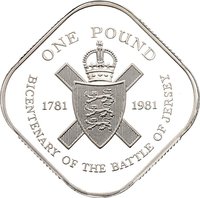
Reverse
Description:
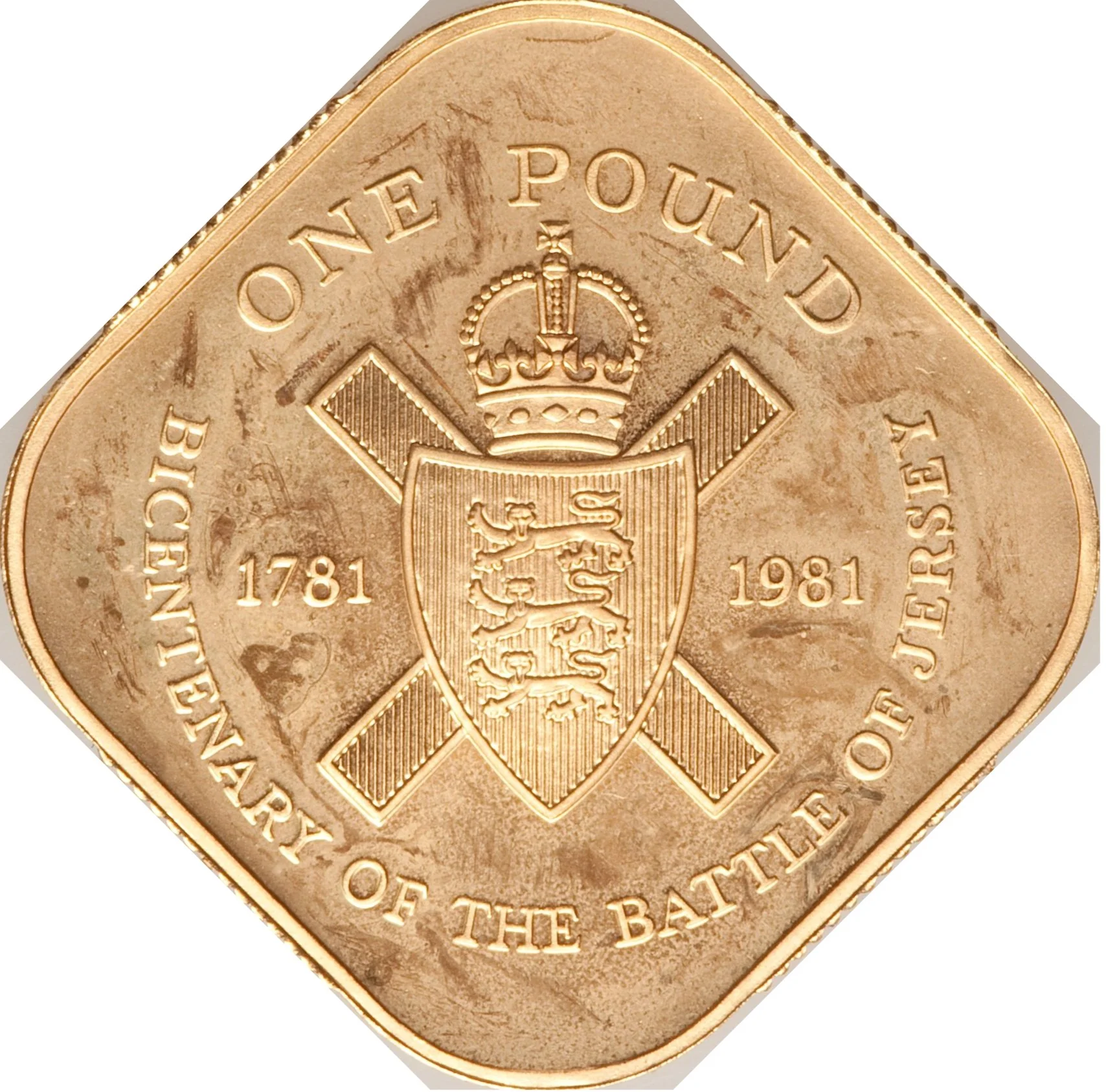
Shield within X divides dates.
Inscription:
ONE POUND
1781 1981
BICENTENARY OF THE BATTLE OF JERSEY
1781 1981
BICENTENARY OF THE BATTLE OF JERSEY
Script: Latin
Edge
Partly Milled, Partly Smooth
Mintings
| Year | Mint Mark | Mintage | Quality | Collection |
|---|---|---|---|---|
| 1981 | — | 5,000 | Proof |
Historical background
In 1981, Jersey's currency situation was defined by its unique and dual-circulation system, a legacy of its political status as a Crown Dependency. The island was not part of the United Kingdom and thus not obligated to use Pound Sterling, yet it issued its own local currency, the Jersey pound, at par with Sterling. Crucially, both currencies circulated side-by-side as legal tender on the island, with Bank of England notes and local States of Jersey notes used interchangeably in daily transactions. This system functioned on trust and a guarantee of convertibility, underpinned by Jersey's substantial sterling reserves held in London.
The year 1981 fell within a period of significant economic transition for Jersey. The finance sector was rapidly expanding, shifting the economy away from its traditional agricultural base. This growth increased the volume and sensitivity of capital flows, making the stability of the currency arrangement paramount. Furthermore, the early 1980s was a time of high inflation and volatility in international markets, following the oil crises of the 1970s. In this context, Jersey's fixed 1:1 link to Sterling provided crucial monetary stability and certainty for both international business and local commerce, anchoring the island's financial credibility.
However, this link also meant Jersey imported the monetary policy of the Bank of England, including high interest rates aimed at combating UK inflation. This was not always perfectly aligned with Jersey's domestic economic conditions. Consequently, 1981 represented a point where the benefits of stability and recognisability were carefully weighed against a growing consciousness of the limitations of ceding monetary autonomy. This ongoing evaluation would eventually lead to future reforms, such as the establishment of the Jersey Currency Fund in 1976 to formally back the issue of local notes, a framework still being consolidated in the early 1980s.
The year 1981 fell within a period of significant economic transition for Jersey. The finance sector was rapidly expanding, shifting the economy away from its traditional agricultural base. This growth increased the volume and sensitivity of capital flows, making the stability of the currency arrangement paramount. Furthermore, the early 1980s was a time of high inflation and volatility in international markets, following the oil crises of the 1970s. In this context, Jersey's fixed 1:1 link to Sterling provided crucial monetary stability and certainty for both international business and local commerce, anchoring the island's financial credibility.
However, this link also meant Jersey imported the monetary policy of the Bank of England, including high interest rates aimed at combating UK inflation. This was not always perfectly aligned with Jersey's domestic economic conditions. Consequently, 1981 represented a point where the benefits of stability and recognisability were carefully weighed against a growing consciousness of the limitations of ceding monetary autonomy. This ongoing evaluation would eventually lead to future reforms, such as the establishment of the Jersey Currency Fund in 1976 to formally back the issue of local notes, a framework still being consolidated in the early 1980s.
✨ Legendary