

10 Sheqalim (Israel's Brotherhood) – Israel
Non-circulating coins
Commemoration: Independence Day, 36th Anniversary: Israel's Brotherhood
Israel


Obverse
Description:
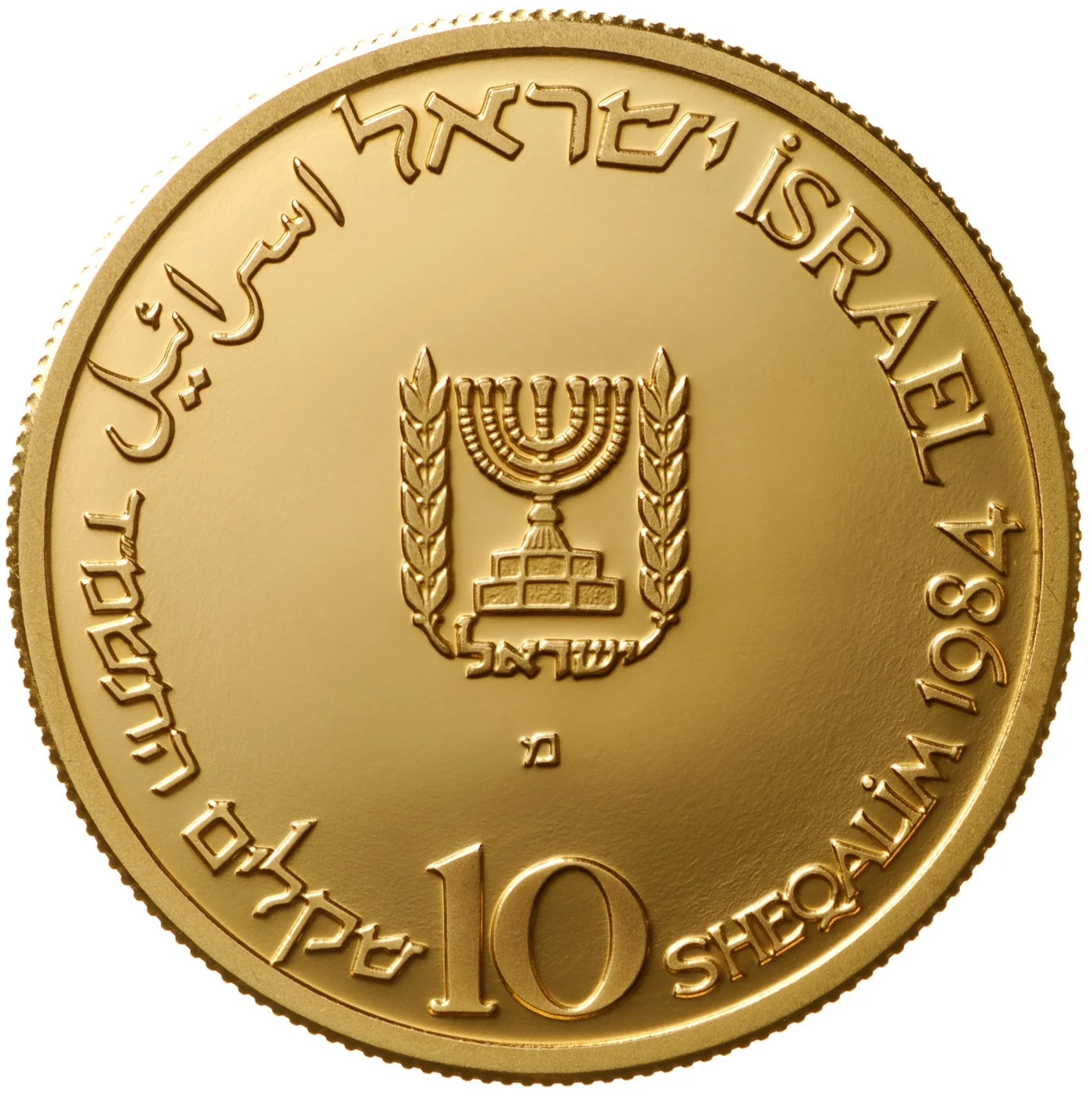
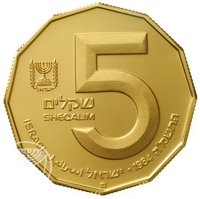
Israel's emblem, "Israel" in Hebrew, English, and Arabic, the year 5744-1983, and the face value.
Inscription:
ישראל اسرائيل ISRAEL
מ
שקלים התשמ"ד
10
SHEQALIM 1984
מ
שקלים התשמ"ד
10
SHEQALIM 1984
Translation:
State of Israel
1
Sheqalim 5744
10
SHEQALIM 1984
1
Sheqalim 5744
10
SHEQALIM 1984
Engraver: Yitzhak Pugatz
Reverse
Description:
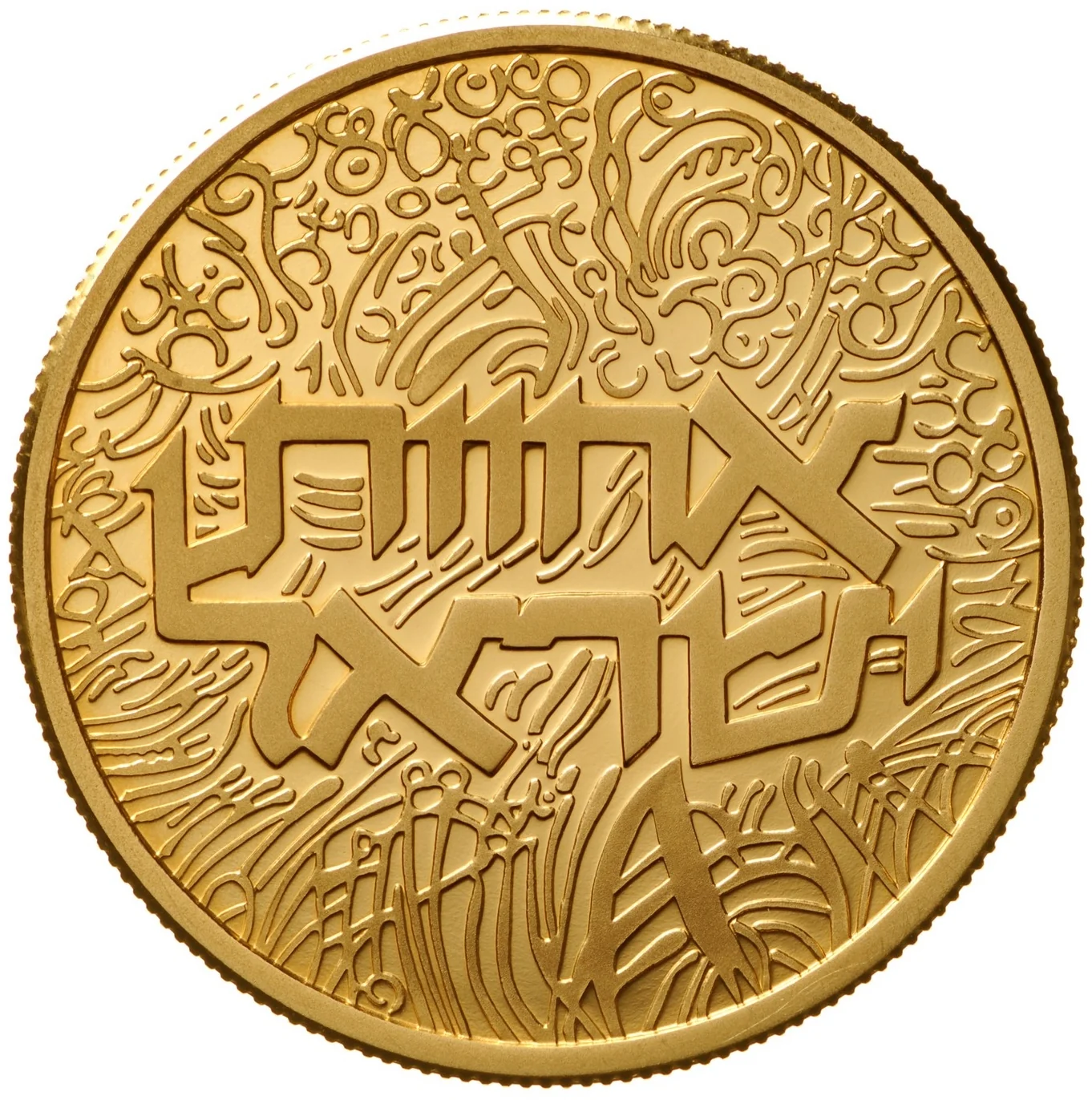
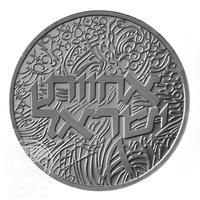
A filigree of branches and roots frames the Hebrew words "Achvat Israel" (brotherhood).
Inscription:
אחוה
ישראל
ישראל
Translation:
Brotherhood
Israel
Israel
Script: Hebrew
Language: Hebrew
Engraver: Yitzhak Pugatz
Edge
Milled
Categories
| Event> Independence |
Mints
| Name | Mark |
|---|---|
| Royal Canadian Mint of Ottawa | מ |
Mintings
| Year | Mint Mark | Mintage | Quality | Collection |
|---|---|---|---|---|
| 1984 | — | 3,798 | Proof |
Historical background
In 1984, Israel faced a severe currency crisis, marked by hyperinflation that had been accelerating for nearly a decade and peaked at an annual rate of approximately 450%. The root causes were deeply structural: massive government deficits used to fund extensive social programs, settlements, and a large defense budget, all financed by printing money rather than through taxation or sustainable borrowing. This created a vicious cycle where prices soared, the Israeli shekel (IL) plummeted in value, and the public lost all confidence in the currency, preferring to hold and transact in U.S. dollars as a stable alternative.
The situation reached a critical point in the summer and fall of 1984. A national unity government, led by Shimon Peres, took office in September and recognized that economic stabilization was an immediate existential priority. The currency was in freefall, with a dual exchange rate system—one official and one semi-legal "black market"—failing to prevent capital flight and rampant speculation. The economy was caught in an "inflationary inertia" where widespread indexation of wages and prices to the Consumer Price Index (CPI) automatically baked expected inflation into the system, making it self-perpetuating.
This crisis set the stage for the historic Economic Stabilization Plan of July 1985. While implemented the following year, the desperate conditions of 1984 were the direct catalyst. The plan, crafted with guidance from American economists, would involve drastic measures: a sharp devaluation and then a fixed exchange rate for the shekel, severe budget cuts, a temporary wage and price freeze, and a commitment to cease monetary financing of the deficit. Thus, 1984 is remembered as the tumultuous prelude to a painful but necessary economic overhaul that ultimately broke the hyperinflation and restored basic monetary stability.
The situation reached a critical point in the summer and fall of 1984. A national unity government, led by Shimon Peres, took office in September and recognized that economic stabilization was an immediate existential priority. The currency was in freefall, with a dual exchange rate system—one official and one semi-legal "black market"—failing to prevent capital flight and rampant speculation. The economy was caught in an "inflationary inertia" where widespread indexation of wages and prices to the Consumer Price Index (CPI) automatically baked expected inflation into the system, making it self-perpetuating.
This crisis set the stage for the historic Economic Stabilization Plan of July 1985. While implemented the following year, the desperate conditions of 1984 were the direct catalyst. The plan, crafted with guidance from American economists, would involve drastic measures: a sharp devaluation and then a fixed exchange rate for the shekel, severe budget cuts, a temporary wage and price freeze, and a commitment to cease monetary financing of the deficit. Thus, 1984 is remembered as the tumultuous prelude to a painful but necessary economic overhaul that ultimately broke the hyperinflation and restored basic monetary stability.
✨ Legendary