

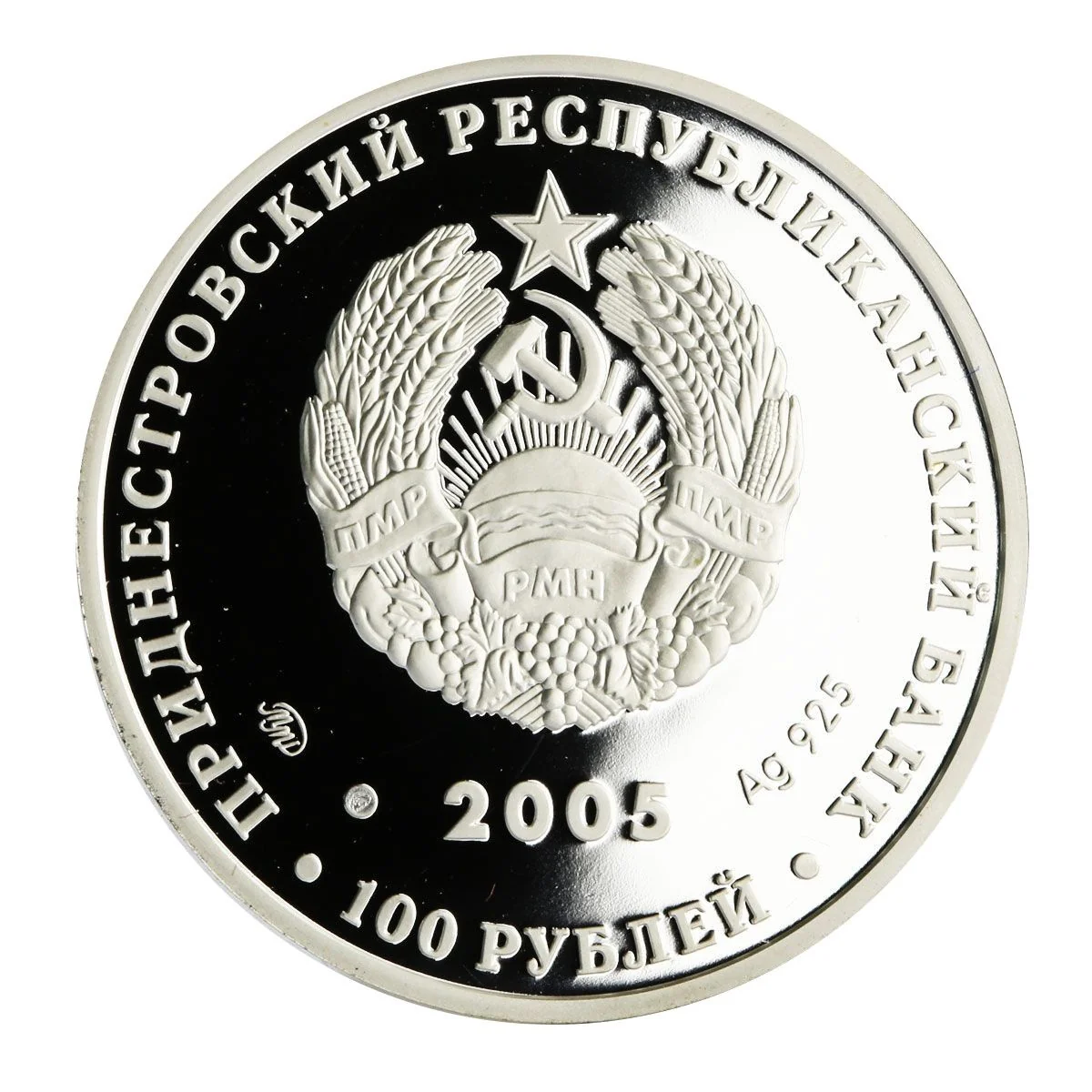
100 Rubles – Transnistria
Non-circulating coins
Commemoration: Series Signs of the Zodiac
Moldova
Context
Year: 2005
Country: Moldova 
Issuer: Transnistria
Issuing organization: Transnistrian Republican Bank
Period:
(since 1990)
Currency:
(since 2000)
Total mintage: 500
Material
References
KM: #Click to copy to clipboard72
Numista: #88778
Value
Exchange value: 100 PRB
Bullion value: $37.71
Obverse
Reverse
Description:
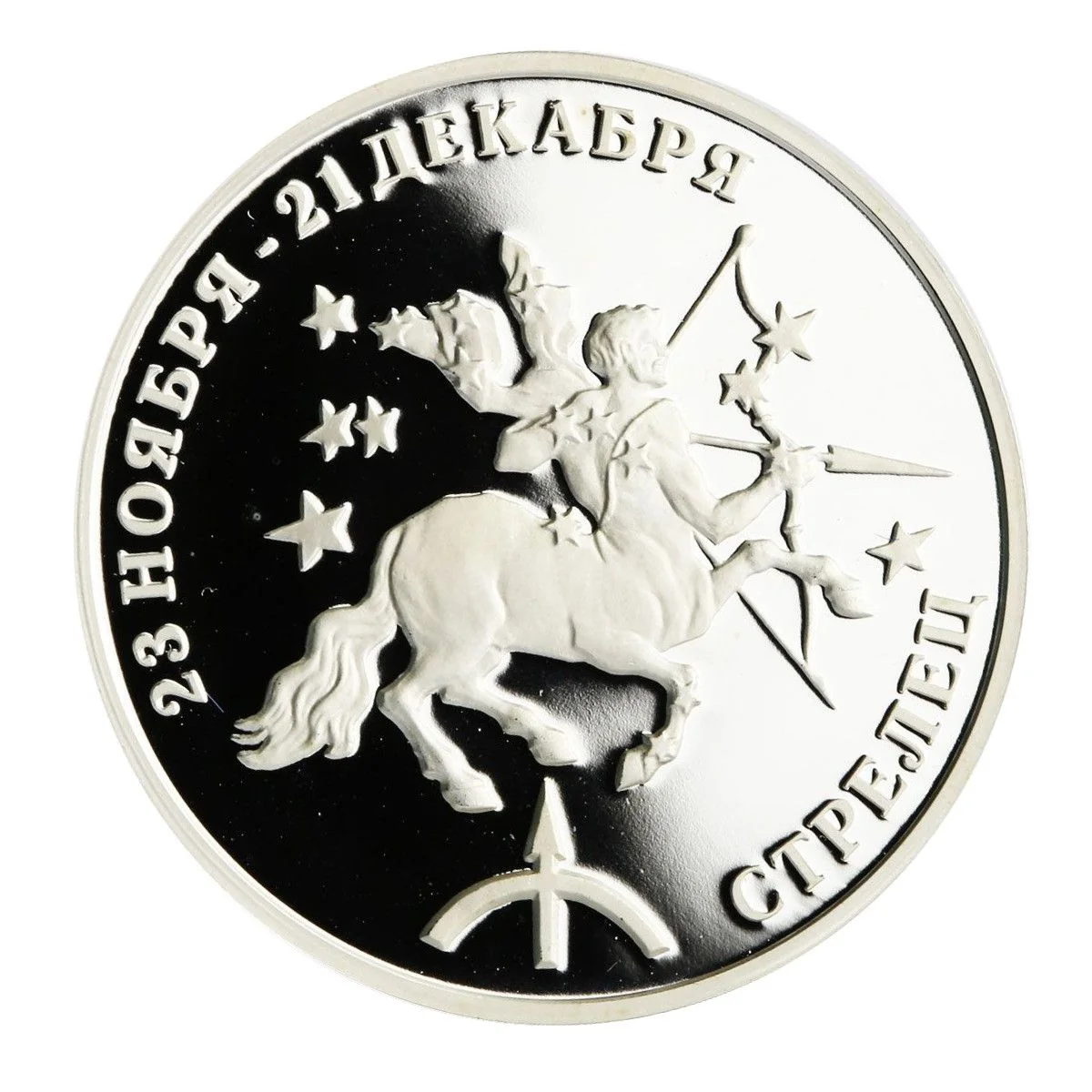
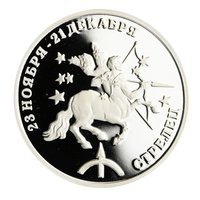
An inscription at the top reads "23 НОЯБРЯ - 21 ДЕКАБРЯ". The centre features a stylized Sagittarius symbol. Along the bottom edging, a semicircular inscription reads "СТРЕЛЕЦ".
Inscription:
23 НОЯБРЯ - 21 ДЕКАБРЯ
СТРЕЛЕЦ
СТРЕЛЕЦ
Translation:
November 23 - December 21
Sagittarius
Sagittarius
Script: Cyrillic
Language: Russian
Edge
Plain
Categories
| Astrology> Western astrological sign |
Mintings
| Year | Mint Mark | Mintage | Quality | Collection |
|---|---|---|---|---|
| 2005 | — | 500 | Prooflike |
Historical background
In 2005, the currency situation in the breakaway region of Transnistria remained a complex and unique hybrid system, a direct legacy of its unresolved political status. The region, unrecognized internationally, could not issue a legitimate national currency. Instead, it operated on a dual-currency basis, with the Transnistrian ruble (PRB) serving as the de facto domestic currency for all local transactions, wages, and prices. This ruble was not convertible on international markets and its value was entirely managed by the Transnistrian Republican Bank, lacking the backing of substantial foreign reserves or economic credibility.
Alongside the local ruble, hard currencies—primarily the US dollar, euro, and Russian ruble—circulated widely and were essential for significant transactions, particularly in trade. This dollarization was crucial because Transnistria's economy was heavily dependent on exporting steel and electricity from its large, Soviet-era industrial plants, primarily to the European Union and Russia. Revenue from these exports flowed in foreign currency, which was needed to pay for critical energy imports (especially Russian gas) and to support the local currency's artificial stability. The exchange rate between the Transnistrian ruble and these foreign currencies was strictly controlled by authorities.
This system created a fragile economic environment. The fixed official exchange rate often diverged significantly from the black-market rate, reflecting underlying inflationary pressures and a lack of confidence. The situation was further complicated by Moldova's ongoing economic blockade and Transnistria's isolation from international financial institutions. Consequently, the currency regime in 2005 functioned as a tool of political and economic survival for the separatist government, insulating the local population from immediate hyperinflation but perpetuating an economy characterized by opacity, smuggling, and dependence on external patrons, chiefly Russia.
Alongside the local ruble, hard currencies—primarily the US dollar, euro, and Russian ruble—circulated widely and were essential for significant transactions, particularly in trade. This dollarization was crucial because Transnistria's economy was heavily dependent on exporting steel and electricity from its large, Soviet-era industrial plants, primarily to the European Union and Russia. Revenue from these exports flowed in foreign currency, which was needed to pay for critical energy imports (especially Russian gas) and to support the local currency's artificial stability. The exchange rate between the Transnistrian ruble and these foreign currencies was strictly controlled by authorities.
This system created a fragile economic environment. The fixed official exchange rate often diverged significantly from the black-market rate, reflecting underlying inflationary pressures and a lack of confidence. The situation was further complicated by Moldova's ongoing economic blockade and Transnistria's isolation from international financial institutions. Consequently, the currency regime in 2005 functioned as a tool of political and economic survival for the separatist government, insulating the local population from immediate hyperinflation but perpetuating an economy characterized by opacity, smuggling, and dependence on external patrons, chiefly Russia.
✨ Legendary