

1 Cruzeiro – Brazil
Brazil
Context
Years: 1974–1978
Issuer: Brazil 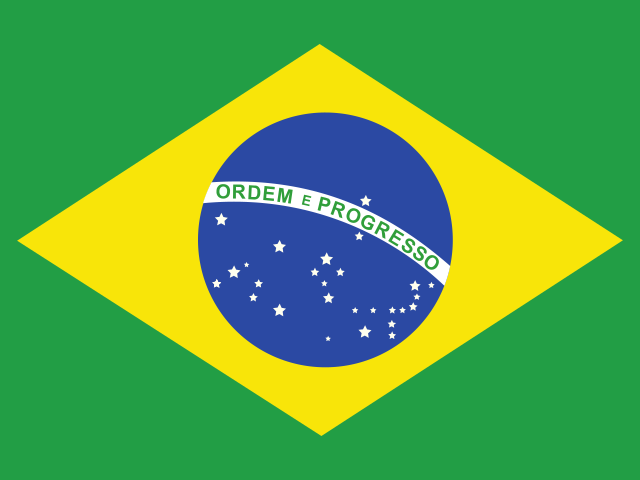
Issuing organization: Central Bank of Brazil
Period:
(since 1967)
Currency:
(1967—1986)
Demonetization: 27 February 1986
Total mintage: 72,069,256
Material
References
KM: #Click to copy to clipboard581a
Numista: #8852
Value
Exchange value: 1 BRB
Obverse
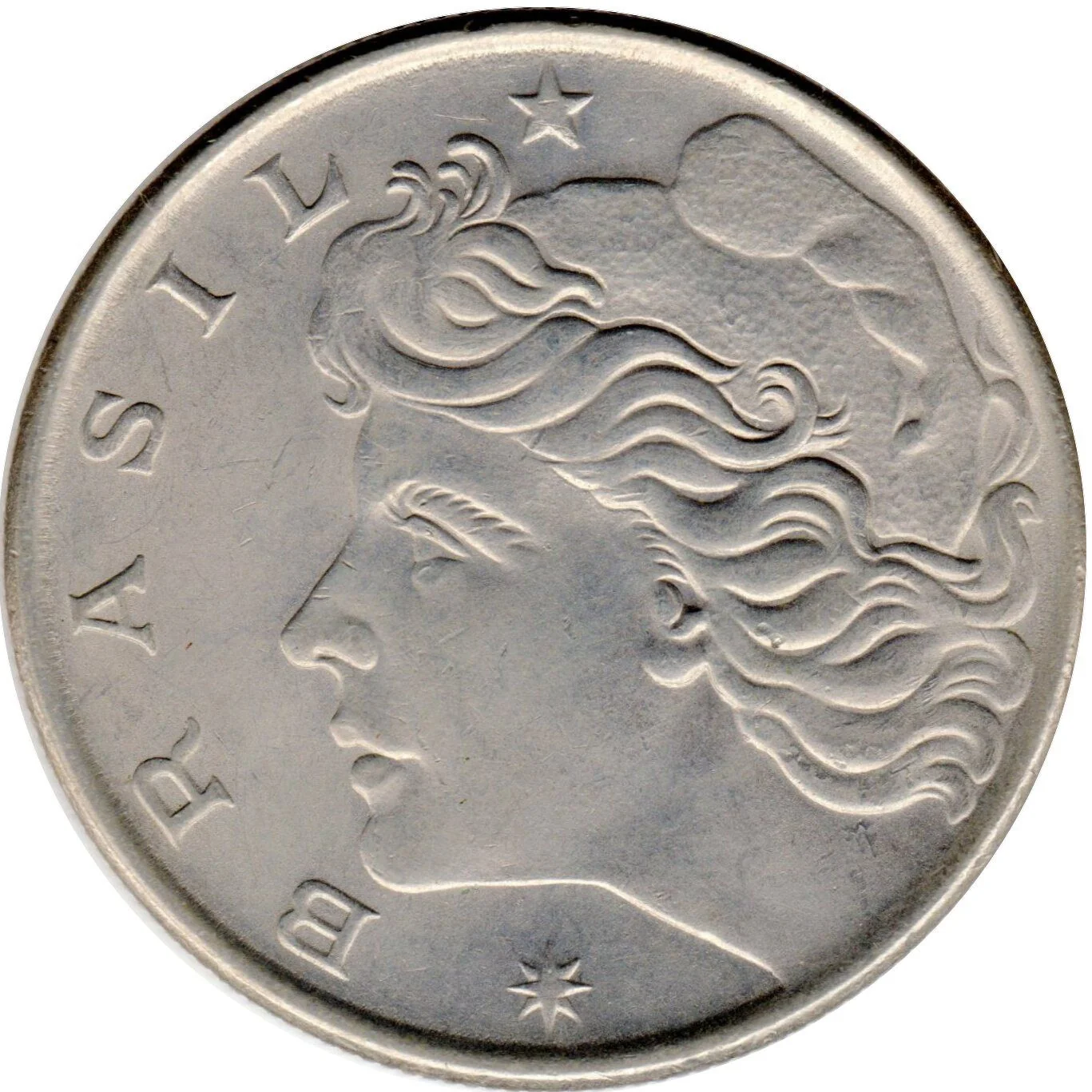
Description:
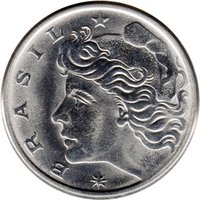
Republic emblem: "BRAZIL" within a compass and star.
Inscription:
* BRASIL *
Translation:
* BRAZIL *
Script: Latin
Languages: Latin, Portuguese
Reverse
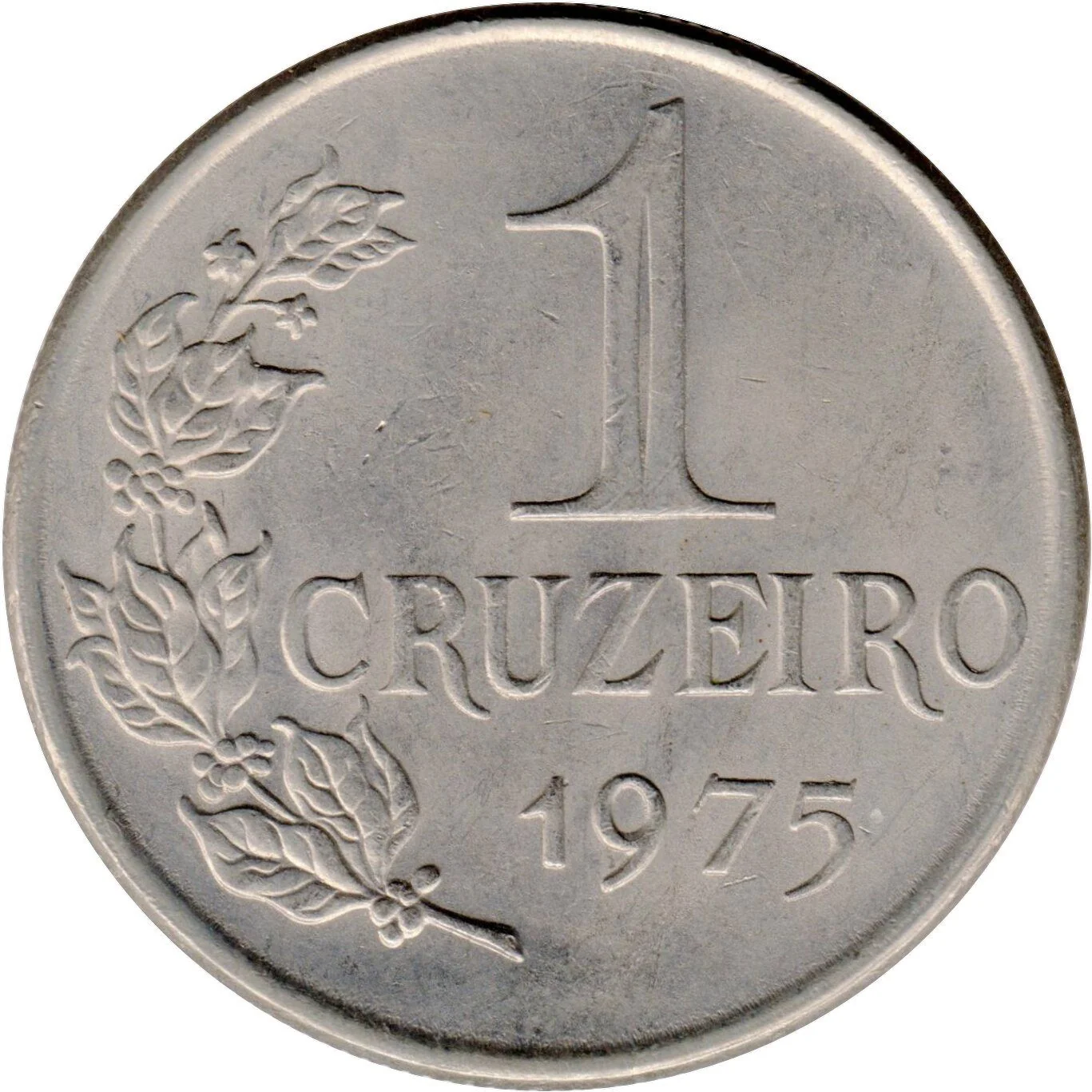
Description:
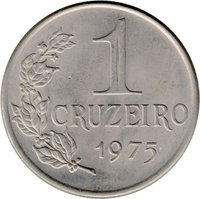
Coffee Robusta branch with fruit. Denomination and year at right.
Inscription:
1
CRUZEIRO
1975
CRUZEIRO
1975
Script: Latin
Edge
Reeded
Categories
| Agriculture |
| Symbol> Allegory |
Mints
| Name | Mark |
|---|---|
| Casa da Moeda do Brasil | — |
Mintings
| Year | Mint Mark | Mintage | Quality | Collection |
|---|---|---|---|---|
| 1974 | — | 24,135,256 | ||
| 1975 | — | 21,613,000 | ||
| 1976 | — | 26,146,000 | ||
| 1977 | — | 98,000 | ||
| 1978 | — | 77,000 |
Historical background
In 1974, Brazil was in the midst of the "Brazilian Miracle," a period of rapid economic growth fueled by heavy state investment and foreign borrowing under the military dictatorship. The currency, the Cruzeiro (Cr$), was managed under a crawling peg exchange rate regime, where its value was adjusted frequently by small, pre-announced devaluations against the US dollar. This policy, initiated in 1968, aimed to maintain export competitiveness by offsetting high domestic inflation, which was running at around 34% annually. The system provided a semblance of stability for international trade and encouraged capital inflows, which were crucial for financing the government's ambitious industrial and infrastructure projects.
However, the external economic landscape shifted dramatically in late 1973 with the first oil shock. The quadrupling of oil prices severely strained Brazil's balance of payments, as the country was a major oil importer. Despite this, the government, led by President Ernesto Geisel, chose to maintain its growth-oriented strategy, doubling down on import-substituting industrialization. To cover the soaring current account deficit and finance development, Brazil aggressively borrowed petrodollars recycled through international banks, leading to a sharp rise in external debt. This policy deferred immediate currency pressure but stored up significant vulnerabilities for the future.
Consequently, while the currency regime appeared stable on the surface in 1974, the foundations were becoming precarious. The crawling peg successfully masked inflation's impact on exports in the short term, but the country's growing dependency on volatile foreign capital to sustain its growth and service its debt created long-term fragility. The choices made in 1974—prioritizing growth over adjustment—set the stage for the profound debt and currency crises that would engulf Brazil in the early 1980s.
However, the external economic landscape shifted dramatically in late 1973 with the first oil shock. The quadrupling of oil prices severely strained Brazil's balance of payments, as the country was a major oil importer. Despite this, the government, led by President Ernesto Geisel, chose to maintain its growth-oriented strategy, doubling down on import-substituting industrialization. To cover the soaring current account deficit and finance development, Brazil aggressively borrowed petrodollars recycled through international banks, leading to a sharp rise in external debt. This policy deferred immediate currency pressure but stored up significant vulnerabilities for the future.
Consequently, while the currency regime appeared stable on the surface in 1974, the foundations were becoming precarious. The crawling peg successfully masked inflation's impact on exports in the short term, but the country's growing dependency on volatile foreign capital to sustain its growth and service its debt created long-term fragility. The choices made in 1974—prioritizing growth over adjustment—set the stage for the profound debt and currency crises that would engulf Brazil in the early 1980s.
🌱 Very Common