

100 Zlotys – Poland
Non-circulating coins
Commemoration: Environmental Protection
Poland

Obverse
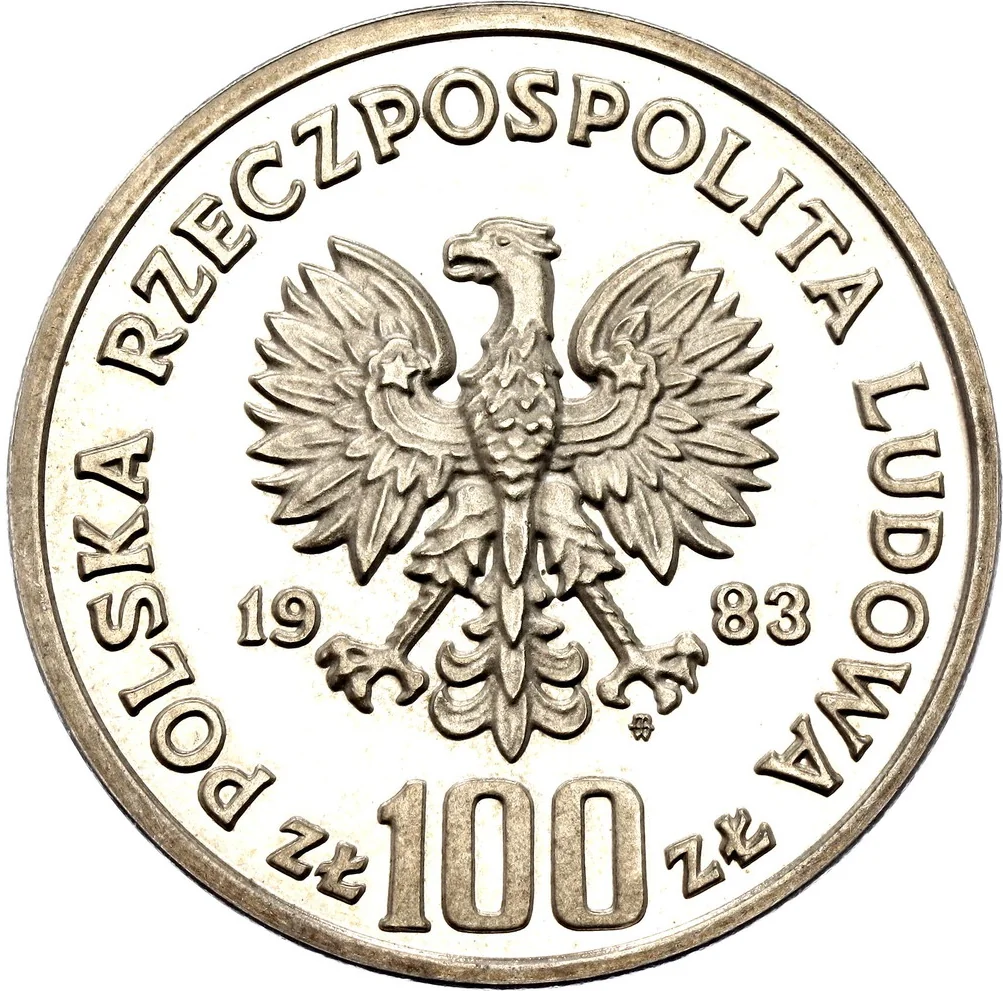
Inscription:
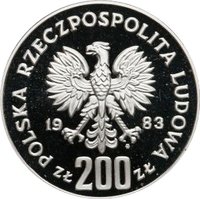
POLSKA RZECZPOSPOLITA LUDOWA
19 83
mw
ZŁ 100 ZŁ
19 83
mw
ZŁ 100 ZŁ
Translation:
Polish People's Republic
1983
mw
100 ZŁOTYCH 100 ZŁ
1983
mw
100 ZŁOTYCH 100 ZŁ
Script: Latin
Language: Polish
Engraver: Stanisława Wątróbska-Frindt
Reverse
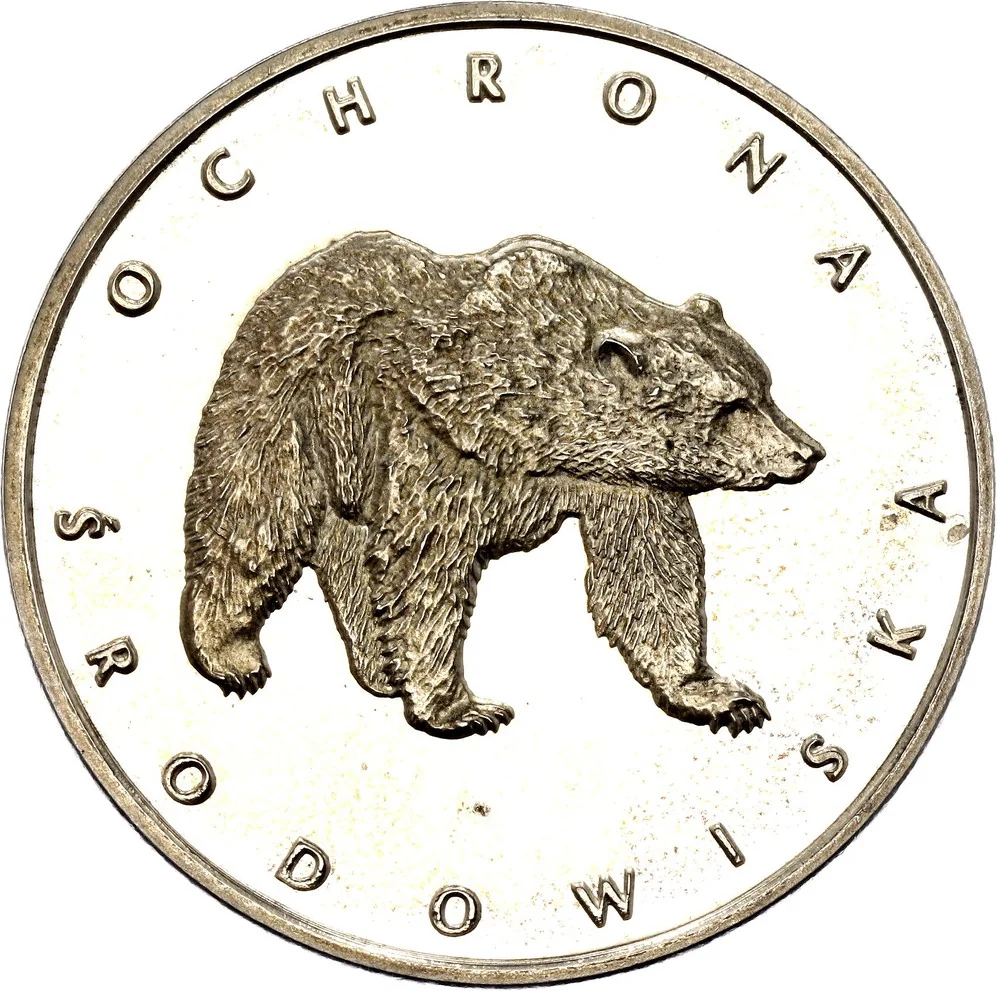
Description:
Bear.
Inscription:
OCHRONA ŚRODOWISKA
Translation:
Environmental Protection
Script: Latin
Language: Polish
Engraver: Ewa Tyc-Karpińska
Edge
Plain
Mints
| Name | Mark |
|---|---|
| Mint of Poland | (MW) |
Mintings
| Year | Mint Mark | Mintage | Quality | Collection |
|---|---|---|---|---|
| 1983 | MW | 8,000 | Proof |
Historical background
In 1983, Poland's currency situation was a direct reflection of the deep economic and political crisis engulfing the country under martial law. The Polish złoty (PLN) was a non-convertible, centrally planned currency with an official exchange rate set by the state that bore no relation to its real value. This artificial rate, pegged to the US dollar at approximately 50 złoty, existed alongside a vast black market where the dollar could fetch over 200 złoty, exposing the severe lack of public confidence in the national currency and the government's financial management.
The root cause was the collapsing command economy, burdened by massive foreign debt, chronic shortages of basic goods, and hyperinflation that would officially reach 22% that year. The government, led by General Wojciech Jaruzelski, attempted to enforce price controls and rationing (kartki) for essentials like food, fuel, and clothing, but this only fueled a thriving underground economy. Savings in złoty eroded rapidly, and hard currencies like US dollars and Deutsche Marks became the preferred means for significant transactions and a crucial store of value, creating a de facto dual-currency system within the country.
This monetary chaos was a key factor in the authorities' controversial decision to dollarize parts of the economy. In 1983, the government expanded the network of state-run Pewex and Baltona hard-currency shops, where Poles with access to foreign remittances or black-market earnings could purchase scarce, high-quality goods unavailable in regular stores. This policy, while generating vital hard currency for the state, starkly highlighted social inequalities and further undermined the legitimacy of the złoty, cementing a monetary duality that would persist until the economic transformation of the 1990s.
The root cause was the collapsing command economy, burdened by massive foreign debt, chronic shortages of basic goods, and hyperinflation that would officially reach 22% that year. The government, led by General Wojciech Jaruzelski, attempted to enforce price controls and rationing (kartki) for essentials like food, fuel, and clothing, but this only fueled a thriving underground economy. Savings in złoty eroded rapidly, and hard currencies like US dollars and Deutsche Marks became the preferred means for significant transactions and a crucial store of value, creating a de facto dual-currency system within the country.
This monetary chaos was a key factor in the authorities' controversial decision to dollarize parts of the economy. In 1983, the government expanded the network of state-run Pewex and Baltona hard-currency shops, where Poles with access to foreign remittances or black-market earnings could purchase scarce, high-quality goods unavailable in regular stores. This policy, while generating vital hard currency for the state, starkly highlighted social inequalities and further undermined the legitimacy of the złoty, cementing a monetary duality that would persist until the economic transformation of the 1990s.
✨ Legendary