

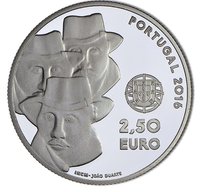
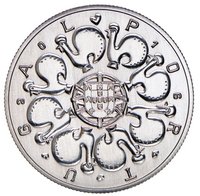
Obverse
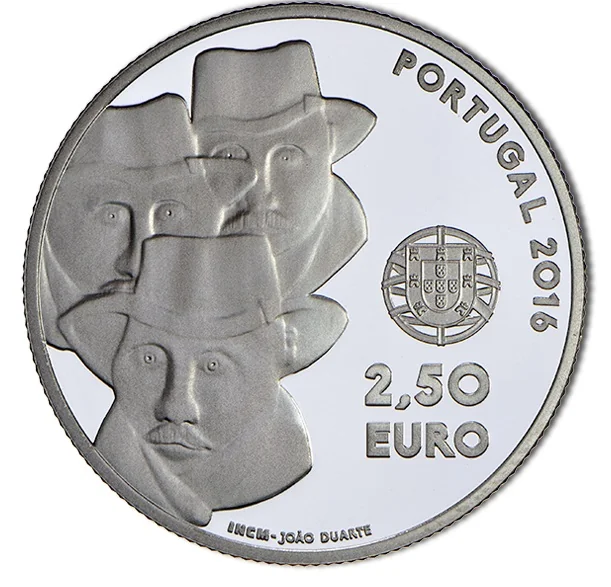
Description:
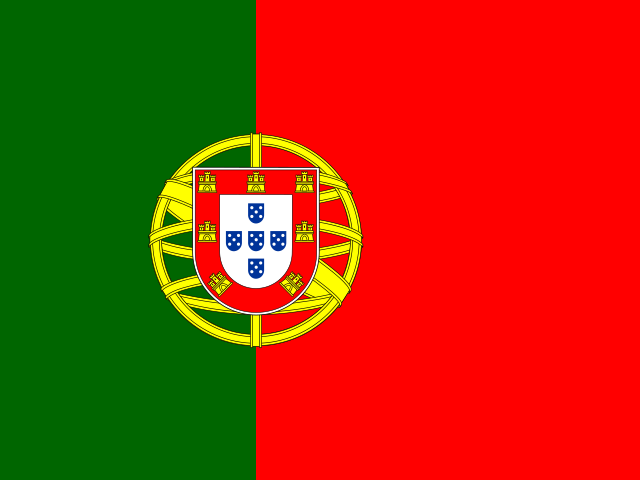
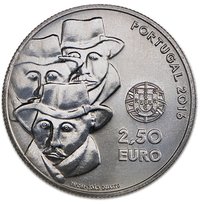
Portuguese coat of arms.
Inscription:
2,50 EURO
PORTUGAL 2016
INCM - JOÃO DUARTE
PORTUGAL 2016
INCM - JOÃO DUARTE
Translation:
PORTUGAL 2016
Portuguese Mint - JOÃO DUARTE
Portuguese Mint - JOÃO DUARTE
Script: Latin
Languages: Portuguese, Latin
Engraver: João Duarte
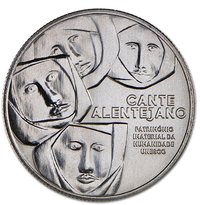
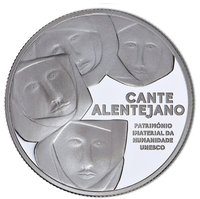
Reverse
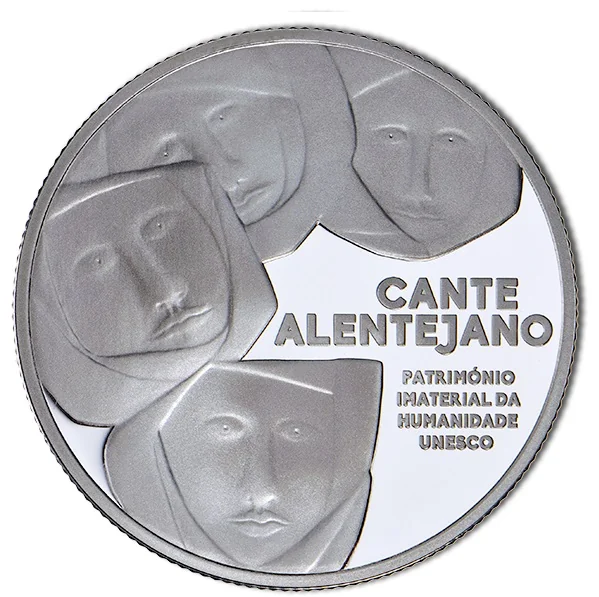
Inscription:
CANTE ALENTEJANO
PATRIMÓNIO
IMATERIAL DA
HUMANIDADE
UNESCO
PATRIMÓNIO
IMATERIAL DA
HUMANIDADE
UNESCO
Translation:
Alentejo Song
Intangible Heritage
of Humanity
UNESCO
Intangible Heritage
of Humanity
UNESCO
Script: Latin
Language: Portuguese
Engraver: João Duarte
Edge
Reeded
Categories
| Organization> UNESCO |
Mints
| Name | Mark |
|---|---|
| Imprensa Nacional - Casa da Moeda | INCM |
Mintings
| Year | Mint Mark | Mintage | Quality | Collection |
|---|---|---|---|---|
| 2016 | INCM | 2,496 | Proof |
Historical background
In 2016, Portugal's currency situation was defined by its continued use of the euro as a member of the Eurozone, a status it had maintained since 1999. The country was still navigating the aftermath of the 2011-2014 sovereign debt crisis, during which it required a €78 billion international bailout from the European Commission, European Central Bank (ECB), and International Monetary Fund (IMF). While Portugal had successfully exited the bailout program in 2014 without requesting a precautionary credit line, 2016 was a year of fragile economic recovery under the constraints of the single currency, with the government focusing on reducing its budget deficit while managing a high public debt burden exceeding 130% of GDP.
The monetary policy governing Portugal's currency was entirely set by the European Central Bank, which in 2016 maintained historically low interest rates and continued its quantitative easing (Asset Purchase Programme) to stimulate the Eurozone economy. This ECB support helped keep Portuguese borrowing costs low, with 10-year government bond yields falling to around 3% by year-end—a stark contrast to the crisis-era peaks above 17%. However, the lack of national monetary tools meant Portugal could not devalue its currency to boost competitiveness; instead, it relied on internal devaluation (wage moderation and structural reforms) to adjust its economy, a process that contributed to persistent challenges like high unemployment and low investment.
By the close of 2016, the currency framework was stable but the economic landscape remained challenging. The centre-left Socialist government, which had taken office in late 2015, pursued a policy of easing some austerity measures while pledging to maintain fiscal discipline to comply with Eurozone rules. The year was marked by a delicate balance: enjoying the stability and low interest rates provided by the euro, while grappling with the structural constraints it imposed on a economy still recovering from a deep recession and working to restore full market confidence.
The monetary policy governing Portugal's currency was entirely set by the European Central Bank, which in 2016 maintained historically low interest rates and continued its quantitative easing (Asset Purchase Programme) to stimulate the Eurozone economy. This ECB support helped keep Portuguese borrowing costs low, with 10-year government bond yields falling to around 3% by year-end—a stark contrast to the crisis-era peaks above 17%. However, the lack of national monetary tools meant Portugal could not devalue its currency to boost competitiveness; instead, it relied on internal devaluation (wage moderation and structural reforms) to adjust its economy, a process that contributed to persistent challenges like high unemployment and low investment.
By the close of 2016, the currency framework was stable but the economic landscape remained challenging. The centre-left Socialist government, which had taken office in late 2015, pursued a policy of easing some austerity measures while pledging to maintain fiscal discipline to comply with Eurozone rules. The year was marked by a delicate balance: enjoying the stability and low interest rates provided by the euro, while grappling with the structural constraints it imposed on a economy still recovering from a deep recession and working to restore full market confidence.
Series: UNESCO World Heritage
💎 Extremely Rare