

5000 zlotys – Poland
Add to wishlist
Poland
Obverse
Description:
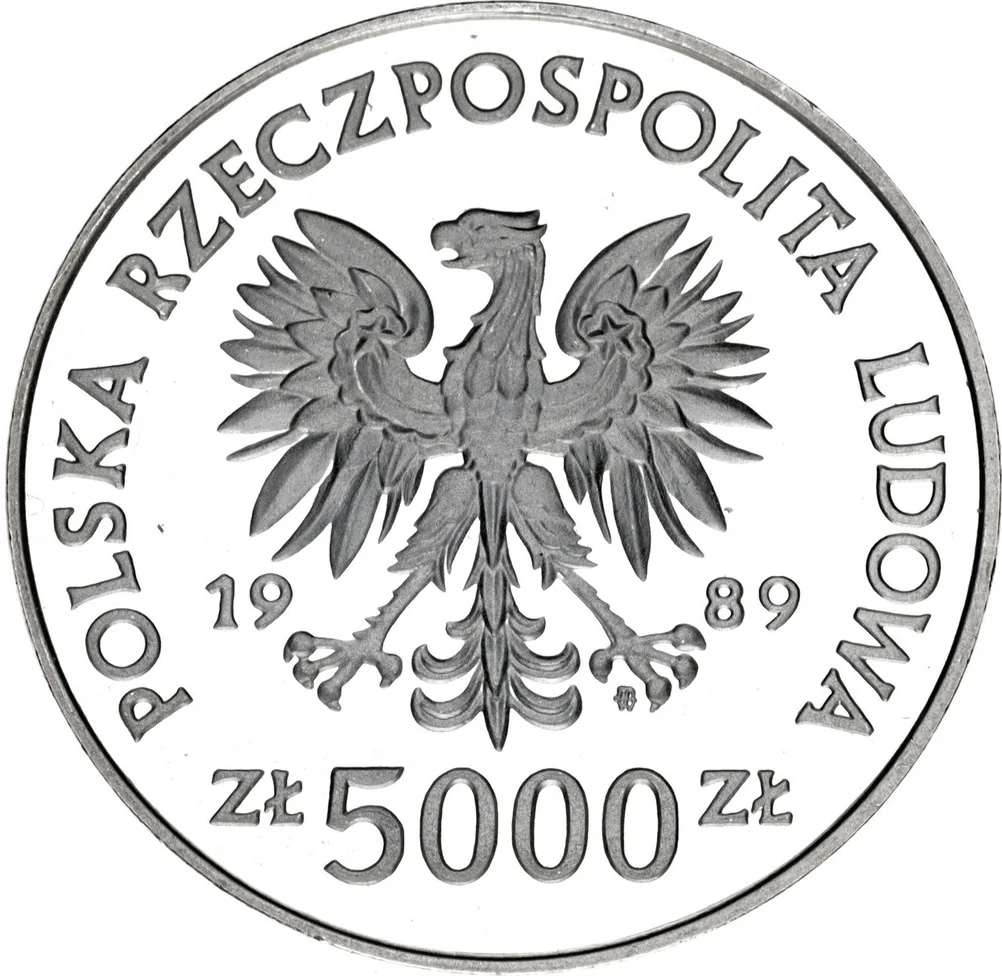
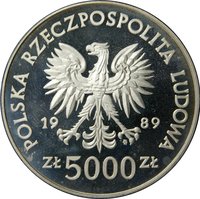
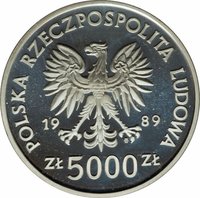
Polish eagle flanking date and value.
Inscription:
POLSKA RZECZPOSPOLITA LUDOWA
19 89
mw
ZŁ 5000 ZŁ
19 89
mw
ZŁ 5000 ZŁ
Translation:
PEOPLE'S REPUBLIC OF POLAND
19 89
mw
ZŁ 5000 ZŁ
19 89
mw
ZŁ 5000 ZŁ
Script: Latin
Language: Polish
Designer: Ewa Tyc-Karpińska
Reverse
Inscription:
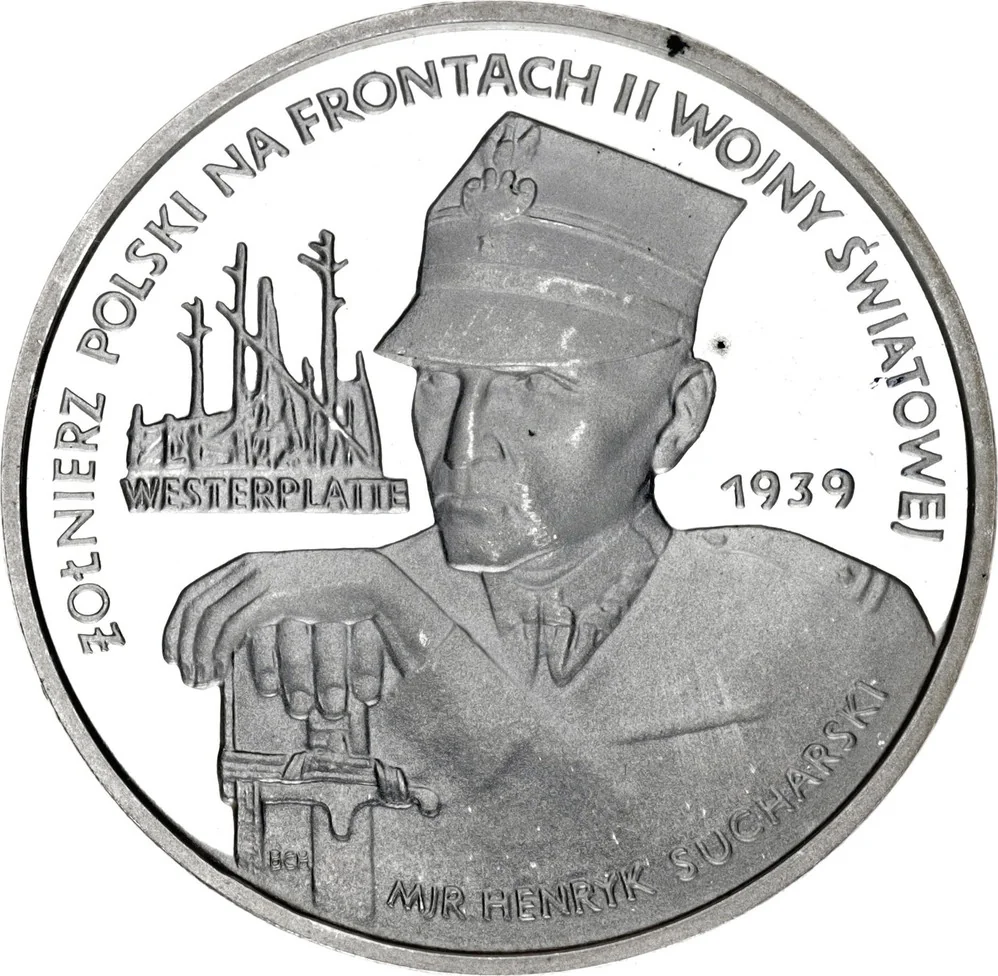
ŹOŁNIERZ POLSKI NA FRONTACH II WOJNY ŚWIATOWEJ
WESTERPLATTE 1939
MJR HENRYK SUCHARSKI
WESTERPLATTE 1939
MJR HENRYK SUCHARSKI
Translation:
POLISH SOLDIER ON THE FRONTS OF THE SECOND WORLD WAR
WESTERPLATTE 1939
MAJOR HENRYK SUCHARSKI
WESTERPLATTE 1939
MAJOR HENRYK SUCHARSKI
Script: Latin
Language: Polish
Designer: B. Chmielewski
Edge
Plain
Mints
| Name | Mark |
|---|---|
| Mint of Poland | (MW) |
Mintings
| Year | Mint Mark | Mintage | Quality | Collection |
|---|---|---|---|---|
| 1989 | MW | 25,000 | Proof |
Historical background
In 1989, Poland stood at a pivotal economic crossroads, emerging from decades of a centrally planned communist system but burdened by hyperinflation, severe shortages, and a crushing foreign debt of over $40 billion. The official currency, the złoty, was virtually worthless in real terms, with an artificially fixed exchange rate that bore no relation to the black-market reality. A complex system of multiple exchange rates existed, creating a labyrinthine and corrupt economy where basic goods were often rationed while a thriving underground dollar market dictated true prices. This monetary chaos was both a cause and a symptom of the systemic collapse that paved the way for the peaceful transition of power that year.
The new Solidarity-led government, with Leszek Balcerowicz as Finance Minister, recognized that stabilizing the złoty was the non-negotiable first step for any meaningful reform. In preparation for a radical shock therapy program to be launched in January 1990, authorities took a crucial interim step in late 1989: they legalized the once-illegal private foreign exchange trading and unified the official and black-market exchange rates. This move instantly devalued the złoty by roughly 50%, making it convertible for individuals and establishing a realistic, single rate. While causing immediate pain by slashing the value of savings, it was a decisive break from the fiction of the old system.
Thus, by the end of 1989, Poland's currency situation was characterized by painful but necessary triage. The stage was set for the Balcerowicz Plan, which would formally introduce a fixed, stable exchange rate anchored to the US dollar as a nominal "anchor" to break hyperinflationary expectations. The desperate conditions of 1989—the worthless złoty, dollarization, and rampant inflation—created the political imperative for the bold, market-oriented reforms that would define Poland's difficult but ultimately successful transition to a market economy in the 1990s.
The new Solidarity-led government, with Leszek Balcerowicz as Finance Minister, recognized that stabilizing the złoty was the non-negotiable first step for any meaningful reform. In preparation for a radical shock therapy program to be launched in January 1990, authorities took a crucial interim step in late 1989: they legalized the once-illegal private foreign exchange trading and unified the official and black-market exchange rates. This move instantly devalued the złoty by roughly 50%, making it convertible for individuals and establishing a realistic, single rate. While causing immediate pain by slashing the value of savings, it was a decisive break from the fiction of the old system.
Thus, by the end of 1989, Poland's currency situation was characterized by painful but necessary triage. The stage was set for the Balcerowicz Plan, which would formally introduce a fixed, stable exchange rate anchored to the US dollar as a nominal "anchor" to break hyperinflationary expectations. The desperate conditions of 1989—the worthless złoty, dollarization, and rampant inflation—created the political imperative for the bold, market-oriented reforms that would define Poland's difficult but ultimately successful transition to a market economy in the 1990s.
💎 Very Rare