

Obverse
Description:
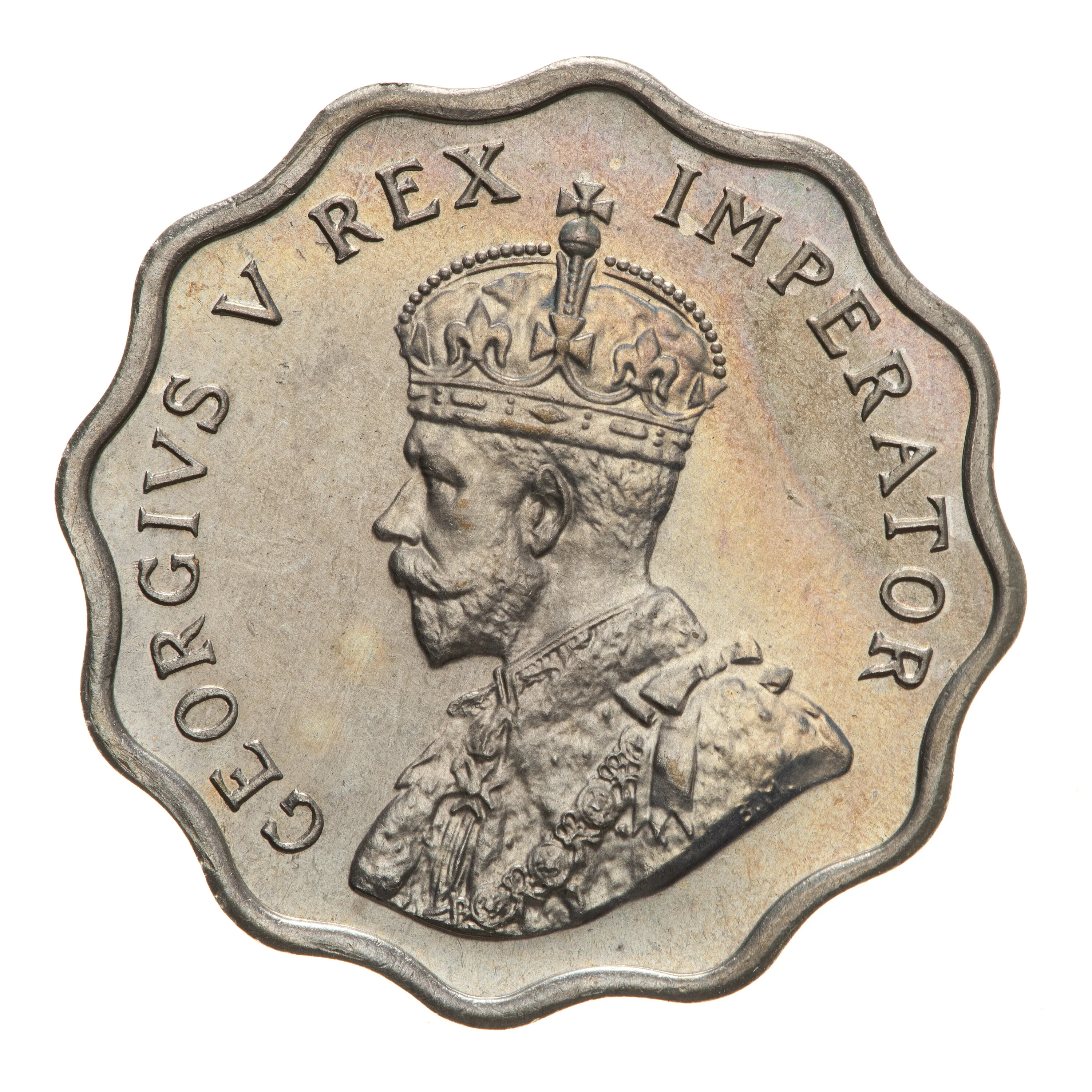
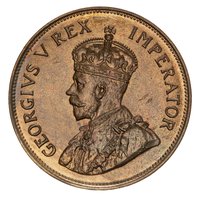
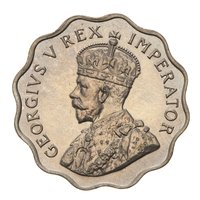
George V left-facing crowned bust.
Inscription:
GEORGIVS V REX IMPERATOR
B.M.
B.M.
Translation:
George V, King and Emperor.
By the Grace of God.
By the Grace of God.
Script: Latin
Language: Latin
Engraver: Edgar Bertram MacKennal
Reverse
Description:
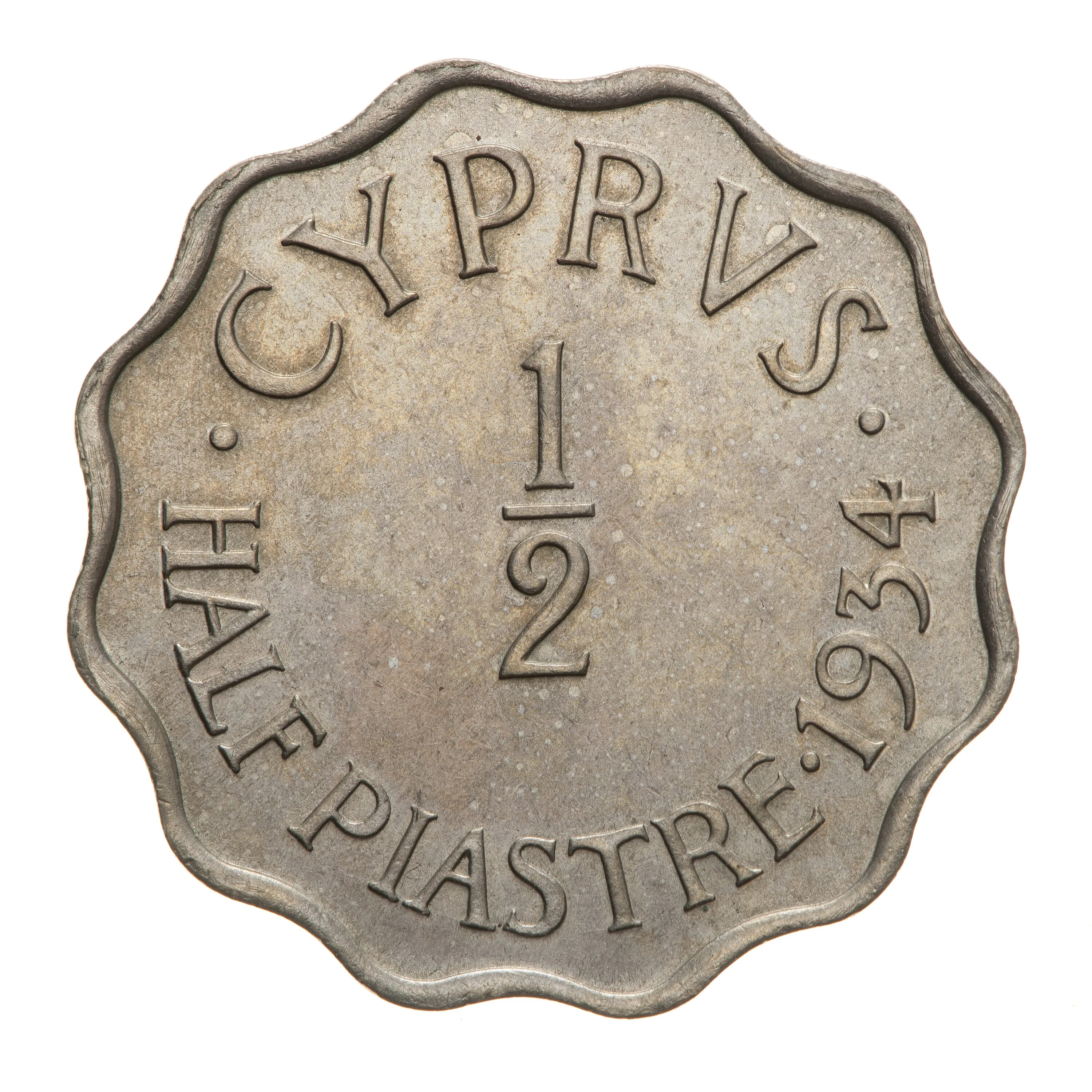
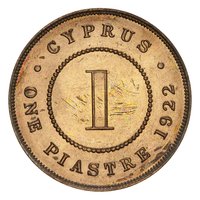
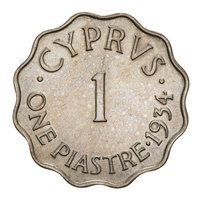
Denomination right, date right.
Inscription:
· CYPRVS ·
1/2
HALF PIASTRE·1934
1/2
HALF PIASTRE·1934
Script: Latin
Edge
Plain
Mints
| Name | Mark |
|---|---|
| Royal Mint (Tower Hill) | — |
Mintings
| Year | Mint Mark | Mintage | Quality | Collection |
|---|---|---|---|---|
| 1934 | — | 1,440,000 | ||
| 1934 | — | — | Proof |
Historical background
In 1934, Cyprus operated under a complex and somewhat fragile currency system as a British Crown Colony. The official currency was the Cypriot pound (C£), which was pegged at par with the British pound sterling. This peg meant that the island's monetary policy was effectively dictated by the Bank of England in London, with the colonial administration managing local issuance. However, the reality in circulation was a mix of British gold sovereigns, British paper notes, and locally issued government notes, creating a system reliant on external stability.
The period was marked by economic strain, largely due to the global Great Depression. A sharp decline in the prices of Cyprus's main exports, like copper and agricultural products, reduced the colony's income and led to deflationary pressures. Furthermore, a crisis in 1931 had resulted in the dissolution of the Legislative Council and the imposition of stricter colonial rule, which included austerity measures. These economic hardships put the currency peg under indirect stress, as the colony's ability to earn foreign exchange and maintain sufficient sterling reserves to back the local currency was weakened.
Despite these underlying challenges, the currency arrangement itself remained formally stable throughout 1934. There was no devaluation or banking crisis specific to that year. The situation, however, highlighted Cyprus's vulnerable position as a small, export-dependent economy within the Sterling Area. The reliance on sterling meant that Cyprus was insulated from isolated currency collapses but was fully exposed to the broader economic winds affecting Britain and the global market, with little autonomous monetary tools to address local economic distress.
The period was marked by economic strain, largely due to the global Great Depression. A sharp decline in the prices of Cyprus's main exports, like copper and agricultural products, reduced the colony's income and led to deflationary pressures. Furthermore, a crisis in 1931 had resulted in the dissolution of the Legislative Council and the imposition of stricter colonial rule, which included austerity measures. These economic hardships put the currency peg under indirect stress, as the colony's ability to earn foreign exchange and maintain sufficient sterling reserves to back the local currency was weakened.
Despite these underlying challenges, the currency arrangement itself remained formally stable throughout 1934. There was no devaluation or banking crisis specific to that year. The situation, however, highlighted Cyprus's vulnerable position as a small, export-dependent economy within the Sterling Area. The reliance on sterling meant that Cyprus was insulated from isolated currency collapses but was fully exposed to the broader economic winds affecting Britain and the global market, with little autonomous monetary tools to address local economic distress.
🌱 Common